30 27 えご
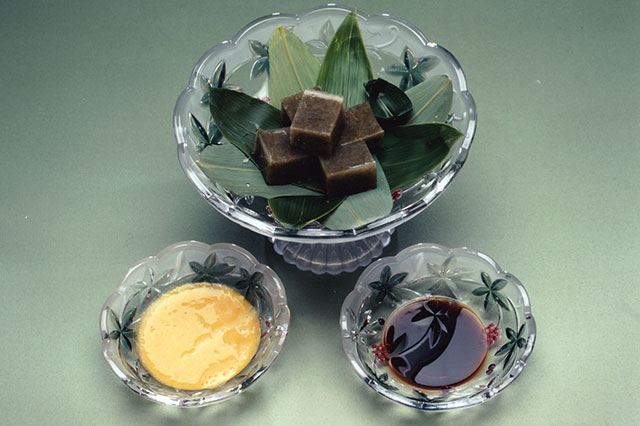
| Prefecture | Fukushima (福島県) |
|---|---|
| Region | Tohoku |
| Japanese name | えご |
| Home area | Nishi Susu, Osaka City. |
| Main ingredients | Oh. |
History and Origins
"Seed" is a dish that boils, melts, and hardens the algae called "Ego plant." It's a dish that has a sense of food like cold weather and jelly and eats with soy sauce on it. It is mainly native food eaten on the Japanese coast and is said to have been carried on since the late Edo period, from the Shinkankai to the wine bowl and since it was a residential town. They say that they are often eaten in the Ega River, as well as now in the West Sushi. It was during the Meiji period that I was able to make it. It is also said that the merchants from the Shinkaga have sold their eggs to the farmers. By the way, sometimes in localities they call them "primary."
When It Is Eaten
It's associated with people meeting on affairs, such as wedding feasts, plates, New Year's Eve. During the year, and especially on a bowl gift, it was almost always used to prepare a thorough dish, and the rest was soaked.
How It Is Eaten
After placing the nauseous in water, cleaning it, and boiling it in a pot for about half an hour until it melts, then pour it into the bat and seal it in the refrigerator. It's said that when you eat, you cut it in the style you like, but the texture of the food changes slightly according to the way you cut it. It's also possible to add soy sauce or pepper, or soy sauce, or soy sauce, or soy sauce. I'm told that in some areas it's a lot of sugar.
Recipe — Serves 4
Ingredients
- 20–30 g えご
- Japanese mustard, to taste
- soy sauce, to taste
Method
- I'm going to wash it and clean it well and soak it in the water for 10 minutes. "It's cold in winter," and if you leave it in the snow at night, it will turn white.
- I'll put enough water in the pot to get enough water to boil. If you don't melt it slowly, you'll have one teaspoon of vinegar.
- If you start to run with the product and start to pick it up and get it so thick, you'll get out of the fire.
- I'll sink into a square bat. As akin to the cold weather, summer will solidify in about two hours and in winter in about an hour.
- Cut it in the shape you like, and eat it with soy sauce. When you leave, you can taste it lightly and the next day you can enjoy it differently. In other areas, there are places where you eat sweet rice over sugar.
More About 30 27
Yuuki and Mauri, or Mako, is a local dish eaten mainly on the Japanese Seaside and in Sadoshima. It's an algae-processed food.
Overview
Ishikawa Prefecture climber ZX080X MAC, SAUC) eaten in large areas, such as Yamagata Prefecture066X064X XZZQQ58X and Nagano Prefecture NorthX. In Sado districts, such as the "father" and the other areas, it is called the "Sip" and so on. It is said that the Kyushu padlocks, by the traffic of ships and fishing ships, were passed from Hakata through the Isle of the Isle of Tsukishima to the Sadami, and from there to the other parts of the country. Even so, similar foods are found all over the country.
Because of low calories and abundant fiber, more people are eating for diet.
In Nagano Prefecture I've chosen the name "Syapama" for "Choose Un-Currential Cultures."
Processing
The traditional food that we eat is a traditional dish that is boiled into dried grass, and is made by cooling the well-finished food. Some sites introduce them as box-shaped, while the pupa is thin.
How to Eat
In Sashishima and the mainland, eating a thin form of food is common on a thin strip, and on a thin piece of sashimi, and on a thin piece of soft - mouthed or raw oil, but on the soil it is common to cut the box into sashimi and eat it with pontoons and citrus and citrus oil.
It can add flavors such as plywood to your taste and add to the harmony.
Text adapted and translated from the Japanese Wikipedia article いごねり by its contributors, licensed CC BY-SA 4.0.
Dish data: Ministry of Agriculture, Forestry and Fisheries (MAFF), “Uchi no Kyodo Ryori” (Our Regional Cuisines) database, used under the Public Data License (PDL1.0); translated and adapted from the Japanese original.