Bandaimochi 板台餅
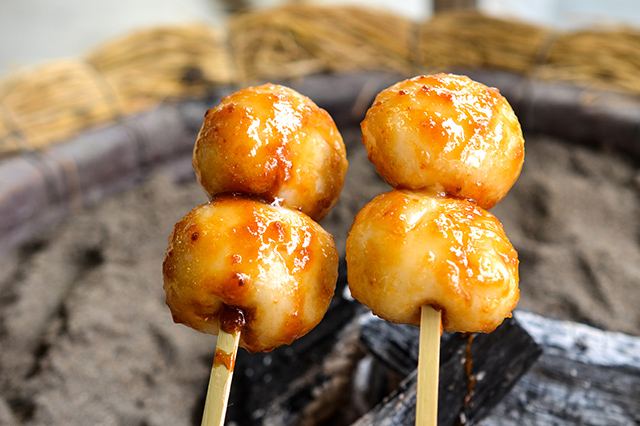
| Prefecture | Tochigi (栃木県) |
|---|---|
| Region | Kanto |
| Japanese name | 板台餅/ばんだい餅(ばんだいもち) |
| Reading | Bandaimochi |
| Home area | SUN MUNIZAMIA, SUN |
| Main ingredients | I'll tell you what. I'll tell you what. |
History and Origins
It's an old local dish in the Tochigi Prefecture City of Sun. It is characterized by hard rice, not rice. It is called "Things" because it is originally called "Things" because it is used as a drum by beating on the top of an ax on the top of a mountain hut. It's more persistent than rice, and it's more difficult to become solid in time, and it's characterized by smoothness. In the Sung Mountain region, the way you eat is different.
When It Is Eaten
It's grown and eaten annually, but originally it was used as a gift to the family when returning home from a mountain god's festival in a cabin or from a cabin. In the old Yamamura River, it is still passed on as an essential dish, such as the day of the mid-year's holiday and the summer festival of the Kasin after.
How It Is Eaten
If you're going to use a good time, you should work hard until you're holding on with your elbow. The bowl is rolled up and burned in the hearth, and has a thick coat, as you like, and a rag. It's baked, baked, or other. It's stuck in the soup and eaten like a stew. In the Yusai River, "Steak" is still left, and it contains fish, vegetables, and other ingredients, but it is put in the juice. It's also good to eat in an oven in a steamed sabba soup, gravy juice, and so on.
Recipe — Serves 4
Ingredients
- 500 g regular rice
- 400 g edamame (さやつき)
- a pinch salt (ずんだ用)
- 50 g perilla seeds (perilla seeds)
- 40 g sugar
- a pinch salt (じゅうね用)
Method
- The rice that I put in the water is solid and steamed.
- I'll use the crescendo to make it into a type of a suitable machine and a mold of 25 gg.
- I'm going to boil the citrus beans in a boiling pot, dip the rice in a blender, break it in fine pieces, and taste it.
- I'll put it in a pan, slowly roast it, and put it in a bowl, so it doesn't burn with a weak flame. As you do it, add two tablespoons of hot water in two pieces, and add sugar and salt to it, and you will get even better.
- Put three or four fingers on to each and eat while you're warm.
Dish data: Ministry of Agriculture, Forestry and Fisheries (MAFF), “Uchi no Kyodo Ryori” (Our Regional Cuisines) database, used under the Public Data License (PDL1.0); translated and adapted from the Japanese original.