38 6 みょうがぼち
| Prefecture | Gifu (岐阜県) |
|---|---|
| Region | Chubu |
| Japanese name | みょうがぼち |
| Home area | Northtown, Gifu City |
| Main ingredients | The leaves of wheat, mustard and hoofs. |
History and Origins
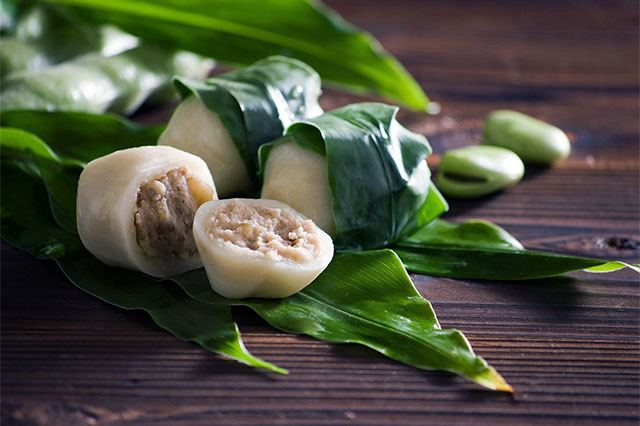
The "Schiki" is a simple taste treat made from mustard beans made from flour made from flour and boiled with leaves of mustard leaves. Lun means "shoe" and usually means dumplings with their rice, but around the traditional area, they call the dough "pig." In the first summer when the leaves grow, each family has been told that they used to eat their own rice as snacks during the day of planting and farming. The leaves are essential to the walrus, because they have a poisonous effect, so they are often used for portable foods from first summer to summer, where food can be damaged, and the wisdom of the predecessors of the era when there are no refrigerators and other food storage devices. In addition, because of its iron and protein content, the mustard beans used in the garden were the best to heal the fatigue of farm work.
When It Is Eaten
From early summer to fall, the leaves of the leaves are made when they are turned around. It is said that in the meantime, he would rather sit down and eat a bowl of rice on the side of a rice field or a field than put it on the side of the field.
How It Is Eaten
Add the finely boiled mustard beans in the water and add sugar to make garlic, add water and sugar to the flour, and paste it and hide it. If I shape the orange in a round shape with a leather, I will soak it in the leaves of the orange. It is made between June and October when the leaves of the walrus appear, but it is said that during the early days, the flavor of the leaves is better. The "bump" part of which is a bowl of mustard beans, but there are areas where the flour is mixed as well as the rice.
Recipe — Serves 4
Ingredients
- Bean paste: 90 g broad beans
- Bean paste: 50 g sugar
- Bean paste: a pinch salt
- Bean paste: 170 ml water
- Bean paste: myoga leaves, to taste
- Mix: 120 g wheat flour
- Mix: 10 g sugar
- Mix: a pinch salt
- Mix: 20 ml water
Method
- Wash the beans well and dip them three hours in a 170 cc water.
- Put it on the fire until it boils.
- I'm going to open the bean and wash it, change the water, and cook it until it's soft in the middle. Then add water if there is not enough water.
- Add sugar and cook with a weak fire until you see the bottom of the pot. Put some salt in before you stop the fire.
- If it's cool, I'll round it to the right size. (25 grams)
- Add flour, sugar, salt, and mix well.
- We boil the cc water and then add it to it. I'd like to have it thrown in half an hour after I've gone through.
- I'll wrap it up with a wide spread and a jar.
- We wrap it in the leaves of the walrus, and we'll steam it for eight minutes with a steamer.
More About 38 6
Miyumi is one of the first local sweets found in the summer from the middle of Gifu Prefecture.
It's a Japanese candy with empty beans in the dough that is made mainly of flour and wrapped in water leaves.
The word "pig" is the accent of "benji" and is the dialect for konako on the ground.
It's not a dish called "Singuji" but that is based on rice.
Processing
A mixture of flour and rice powders are mixed mainly with boiling water and then mixed with fabric leather.
After the dried air beans have been returned in water, they are boiled and peeled, and they are made by adding sugar and a little salt.
It's made by wrapping the dough and then rolling it with water from the leaves of the water moth.
Areas & Times
Mainly, it's sweets found in the Gifu City northwest of the main state town.
It's a candy that was prepared and eaten during farm work during the first summer of the agricultural season, which is originally during the season of rice, wheat and barley harvest in each farmer's home.
It was made from the fact that wheat and empty beans were harvested at that time and the leaves of the moth were readily available. It was originally a family cake made from the food and equipment of the season.
Now, in the West and West, Gifu Prefecture, it's made by families, as well as made and sold by Japanese sweets, and also sold by supermarkets and agricultural cooperatives.
Since commercials are only available during the first summers, as well as in the home, production and sale are limited in the season of May to June.
Text adapted and translated from the Japanese Wikipedia article みょうがぼち by its contributors, licensed CC BY-SA 4.0.
Dish data: Ministry of Agriculture, Forestry and Fisheries (MAFF), “Uchi no Kyodo Ryori” (Our Regional Cuisines) database, used under the Public Data License (PDL1.0); translated and adapted from the Japanese original.