Detchiyōkan 丁稚ようかん
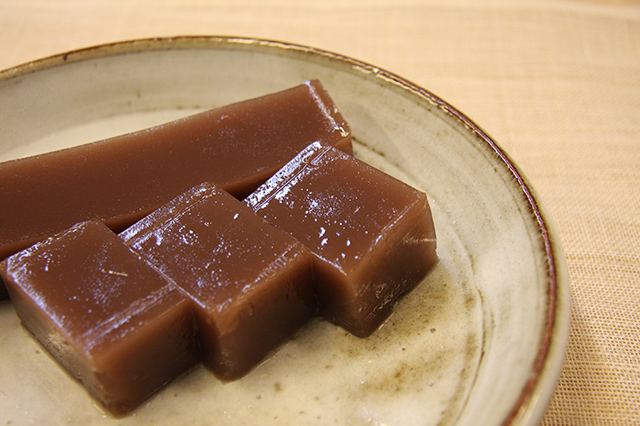
| Prefecture | Osaka (大阪府) |
|---|---|
| Region | Kinki |
| Japanese name | 丁稚ようかん(でっちようかん) |
| Reading | Detchiyōkan |
| Home area | Northern Reservation |
| Main ingredients | It's cold, hot. |
History and Origins
In the mountain villages of North Africa, after successful making cold weather during the late Edo, it was possible to make cold weather during winter's cold season. The cold weather freezes the grass from its source, melts it with water, removes the impurities and makes it dry even more. Some of the cold weather created in the northern quarter is said to have been exported abroad through Nagasaki. It is the Japanese haiku that was created using local cold weather. A sheep with a lot of expensive sugar was eaten in winter because sugar was scarce. It's sweet and modest and a simple taste. There are theories that the name comes from a semimanager whose name comes from a gift when he comes home from school because it's half-manly, like a well-boiled sheep. Even though it's not cold weather in the river for a sheep in the river, the food is different for the use of flour and for making it in steam.
When It Is Eaten
Since the cold weather was created in the winter during the winter of the year of the northern part of the country, and because it cannot be preserved, the Sengyu has been eaten in the winter. It's still being produced and sold in local candy stores and other locals as winter's limited sweets.
How It Is Eaten
We're going to burn the water-soured thread-cold weather and melt it completely. Put a little sugar in there, mix it well, and boil it and get it off the fire. It's steamed and cooled, poured into molds and hardened. If it hardens, remove it from the mold and cut it into a rectangle.
Recipe — Serves 4
Ingredients
- 15 g( 8 g) cygnus
- 1ℓ water
- 500 g smooth bean paste
- 250 g sugar
Method
- I'll keep the linoleum warm and narrow and boil it in 1l of water.
- I'm going to boil it completely. Put a little sugar in it, mix it up and boil it.
- It cools down to about 40 degrees C, and pours it into the mold and hardens it.
- If it hardens, remove it from the mold and cut it into a rectangle.
Dish data: Ministry of Agriculture, Forestry and Fisheries (MAFF), “Uchi no Kyodo Ryori” (Our Regional Cuisines) database, used under the Public Data License (PDL1.0); translated and adapted from the Japanese original.