Sakuramochi 桜餅
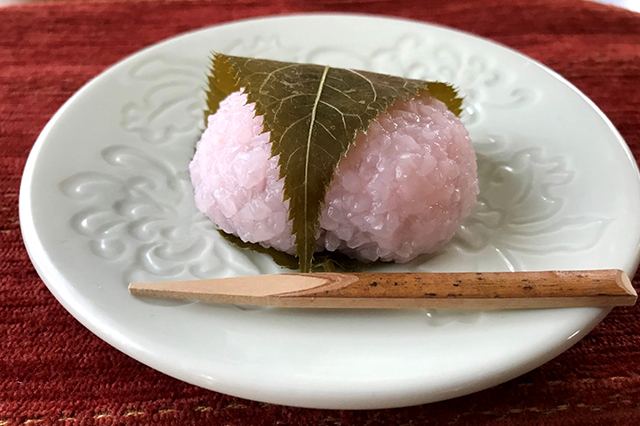
| Prefecture | Osaka (大阪府) |
|---|---|
| Region | Kinki |
| Japanese name | 桜餅(さくらもち) |
| Reading | Sakuramochi |
| Home area | All within Osaka Prefecture |
| Main ingredients | The leaves of the cherry tree. |
History and Origins
It's a sweet, pink-colored cherry leaf with pink peppers, and it's spring season. It's common to wrap the leaves with salted cherry leaves to finish. In the first place, it was invented by Shinomoto Yamamoto, who was the doorkeeper of the chief temple at Kashita River during the Edo. The new six thought that they might be able to use the falling cherry leaves, so they were salted and sold with a bowl of salt, and it became a great reputation and it spread throughout the country. In Osaka, which includes Kansai, the main stream is the citrus that is made using the temple powder. The way to do this is by boiling rice and drying it down, which is often used in Japanese sweets. It was first built over a thousand years ago at the temple of Akira in Osaka Fujii, and was prized as a food preserve. The pink petals and the smell of a few cherry blossoms. Sakura is the windy sweets that both look and taste spring.
When It Is Eaten
During the spring season of February to early April, it will be sold at candy stores and so on. It's been widely enjoyed as a seasonal sweet.
How It Is Eaten
The salted cherry leaves are soaked in water and salted out. The way I choose to mix powder, sugar, water, and red with steam, or boil, and mix it into a bowl. I rip off the broom and wrap it in a circle and wrap it around. I'll roll it with cherry leaves. The cherry leaves don't have to be eaten or eaten.
Recipe
Ingredients
- 125 g 道明寺粉
- 250㏄ water
- 30 g sugar
- 食紅 少量
- 200 g smooth bean paste
- 10 桜の葉の塩漬け
- Water: 50 ml water
- Water: 3 g sugar
Method
- Wash cherry leaves with running water, dip them in plenty of water for about 30 minutes, salt out, and leave the water out with kitchen paper.
- I'll round up the shower.
- In the pan, fill it with water, sugar, and powder, and then cook it up. When it is boiling, put it in the Hakaji Temple and mix it quickly.
- When it is boiling again, it's vulnerable, and after about six minutes, it's easily cooked.
- Using hand water, we use a circle around 4 inches in diameter, and we place a center of 2 inches, and then we cut through the edge of the bowl and then we pull the pot to the center and form it.
- When the (5) plant cools, it will roll outside of the cherry leaf.
More About Sakuramochi
Sakuramochi (桜餅) is a Japanese confection (wagashi) consisting of sweet, pink-colored rice cake (mochi) with red bean paste (anko) filling, wrapped in a pickled cherry blossom (sakura) leaf, which may or may not be eaten depending on individual preference.
Traditionally, the sweet is eaten during the spring season, especially at the annual Hinamatsuri celebration on March 3 and flower viewing (hanami) parties.
History
The invention of sakuramochi is traditionally attributed to the Mukōjima neighborhood of Edo (today Tokyo) in the second year of the Kyōhō era (1717 AD), when Shinroku Yamamoto, who had worked as a gatekeeper at Chōmei-ji Temple since 1691, established a teahouse named Yamamoto-ya in front of the temple.
Originally meant for those visiting their family graves in the Chōmei-ji cemetery, the sweet was wrapped in cherry blossom leaves Yamamoto collected while cleaning up the temple grounds. The sweet grew popular among the crowds of hanami-goers, many of whom were attracted by the cherry blossom trees planted along the Sumida River by the order of the shōgun Tokugawa Yoshimune.
Yamamoto-ya remains in business to this day and is often simply referred to as Chōmeiji. Available all year, its sakuramochi is made from wheat flour, adzuki from Hokkaido, and Oshima cherry leaves from Matsuzaki, Shizuoka, using a recipe largely unchanged since the Edo period.
Types
There are two major types of sakuramochi: Chōmeiji and Dōmyōji. Though their origins are regional, both types are often available at wagashi shops and supermarkets.
- Kanto style
- Sakuramochi common in the Kantō region, particularly in Tokyo, also known as Chōmeiji-mochi. This type is a kind of crêpe made from shiratama-ko (glutinous rice flour), though the original sakuramochi at Chōmeiji Yamamoto-ya uses wheat flour.
- Kansai style
- Sakuramochi common in the Kansai region, also referred to as Dōmyōji-mochi after the Buddhist temple in Osaka where its nuns made the famous Dōmyōji-hoshii (dried glutinous rice). It is somewhat similar to ohagi.
Text adapted from the English Wikipedia article Sakuramochi by its contributors, licensed CC BY-SA 4.0.
Dish data: Ministry of Agriculture, Forestry and Fisheries (MAFF), “Uchi no Kyodo Ryori” (Our Regional Cuisines) database, used under the Public Data License (PDL1.0); translated and adapted from the Japanese original.