Home / Okayama / Hiruzen'okowa
Hiruzen'okowa 蒜山おこわ
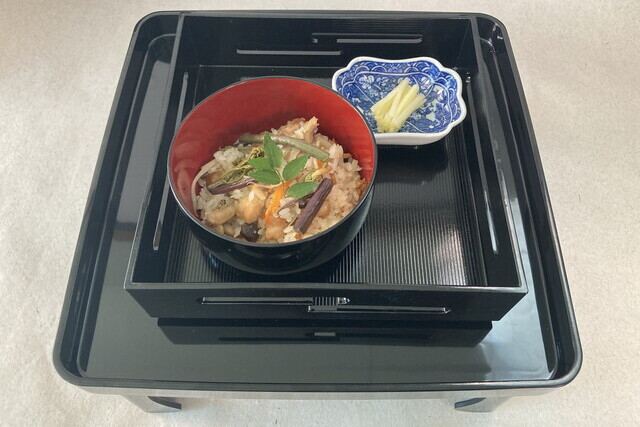
| Prefecture | Okayama (岡山県) |
|---|---|
| Region | Chugoku |
| Japanese name | 蒜山おこわ(ひるぜんおこわ) |
| Reading | Hiruzen'okowa |
| Home area | I'm from the state of Honshu, Yamayama. |
| Main ingredients | I'm going to have to make sure that you're not eating rice, chicken, lentils, lentils, beans. |
History and Origins
Yamayama is full of tools commonly called the Fiveth Sting. The native dish representing the Sasayama, which always appears to be a part of festivals and celebrations. It is characterized by the gorgeous content of the four seasons of vegetable life that is harvested around the mountains of Kofu, yams, beans, beans, and so on. It seems that the native dish of the Great Mountain is rooted in the surrounding area of Tsukiyama, and when you cook red rice, you accidentally put in sushi equipment, and then you steamed it because it's too waste, it's said that it's a delicious five-eye product. The history of Tsukayama, Japan, dates back to the mid-30s, when a cry went out that we would make a fifth rise using local materials. In about the year 47 of the Showa festival, when we conducted the "Feel Food Movement" campaign in the diet, the Yakichi Council tried to put it in white rice and recommended that 20 percent of the wheat be put in because it was a good taste for stomach and stomach.
When It Is Eaten
They're made to sit on "Creemete"'s events, festivals, and celebrations after the plantplants.
How It Is Eaten
Heat oil in the pan, and cook it with chicken, dried meat, oil, water, and garlic. Add sugar, soy sauce, salt, and boil it, and divide it into soups and dishes. We will steam rice, wheat and tools, beat the soup instead of water, pour it in a pot, and scatter the rice.
Recipe — Serves 4
Ingredients
- 4 × 180 ml glutinous rice
- 0.5 × 180 ml tiber
- 80 g chicken
- 80 g carrot
- 300 g chestnuts (皮付き)
- 40 g green beans
- 1 tbsp(12 g) oil
- 80 g burdock root
- 80 g butterbur
- 1 g dried shiitake mushrooms
- Mix: 1(30 g) aburaage (fried tofu pouch)
- Mix: 1/1 cups water
- Mix: 2 tsp mirin
- Mix: 1 tbsp sugar
- Mix: 1 tbsp 1/3 soy sauce
- Mix: 1 tsp salt
- 1 tbsp(12 g) oil
- 6 g salt
Method
- The silks are skin, abscess, and a day's sun.
- Wash your rice and soak it in water all day and night.
- We'll soak the straw in water for about 30 minutes.
- I'll keep the dry water.
- Cut the chicken into small pieces. Your bladder is small and your floor is small.
- You can dry it, cut it by a handful of 1/2 inch [1.5 cm], and fill it with carrots by a small slice, salt rice, and cut it on an angle.
- Hot oil in the pan, roast the chicken, add a sieve to it, and cook it. Add a bowl of citrus B, boil it down, boil it up, and divide it into soup and sauce.
- I'm going to go up and down without rice and barley. This is mixed with three ingredients, carrots, lentils, and steamed with a steamer. After the steam has gone up to the top, it should be steamed for about 30 minutes, hit the three soups instead of the water, and steam it for about 15 minutes.
- I'm going to make sure you're okay. I'm going to make sure you're okay.
More About Hiruzen'okowa
Yamayama is the native dish of the Okayama Prefecture garden city.
It's a local dish representing the Chromite, which is eaten at the party, at the festival, and at the celebration, which is chosen for a quarter of a year's season after the plant is finished. And now they're helping to start town. It's possible that you can go to and attend events at Tsuoyama and be served in local restaurants. It's also a dish where recipes are published and spread throughout the country, such as on the Internet.
It is also characterized by the many varieties of chicken, carrots, yans, sea cucumbers, sea cucumbers, and other foods that are common for the fifth meal, as well as the variety of vegetables that are grown around the fakis, beans, lentils, lentils, and other foods that are grown around the mountain range, which are mixed with soy sauce and mixed with about 20 percent of the wheat in the rice, which is steamed into the taste of the oil, which is added to the taste of the sauce.
Text adapted and translated from the Japanese Wikipedia article 蒜山おこわ by its contributors, licensed CC BY-SA 4.0.
Dish data: Ministry of Agriculture, Forestry and Fisheries (MAFF), “Uchi no Kyodo Ryori” (Our Regional Cuisines) database, used under the Public Data License (PDL1.0); translated and adapted from the Japanese original.