Home / Osaka / Benizuiki to Aburaage no Taitan
Benizuiki to Aburaage no Taitan 紅ずいきと油揚げの炊いたん
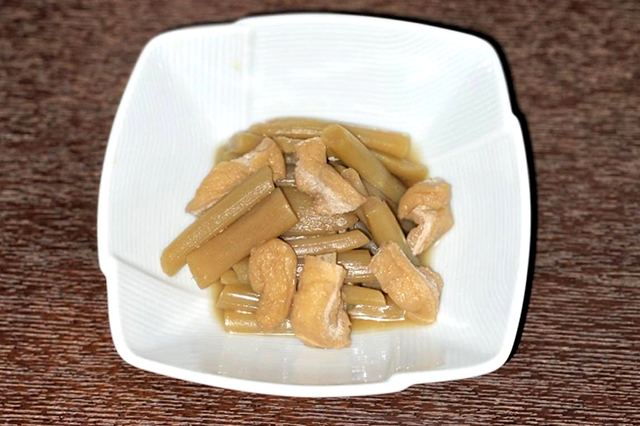
| Prefecture | Osaka |
|---|---|
| Region | Kinki |
| Japanese name | 紅ずいきと油揚げの炊いたん(べにずいきとあぶらあげのたいたん) |
| Reading | Benizuikitoaburāgenotaitan |
| Home area | Senshu and Minamikawachi regions |
| Main ingredients | Red taro stems (beni-zuiki), aburaage (fried tofu) |
| Recipe yields | Serves 4 |
History and Origins
In fact, it's a foster potato stem, and in Kansai it's been known as a traditional summer vegetable. Among other things, it is produced centered around the spring and the south rivers where the stem stem is redish. The larger ones are about two meters tall, the leaves are about 70 centimeters tall, and they are rich in fiber, calcium, and potassium. It's a spongy food, and it's inside, so it's easy to taste, and it's often used in rice and stew. It's the usual glee with the red breeze. "Cooking" is a Kansai word for "boiled" in the language of the region.
When It Is Eaten
The blooms are in July and August, and when that time comes, the colorful reds will line the local resales and supermarkets.
How It Is Eaten
Add a freshly cut red tin, with a short slice of oil, but with flavored flavors such as soup and soy sauce.
Recipe (Serves 4)
Ingredients
- 400 g taro stems
- 1 tbsp vinegar
- 1 aburaage (fried tofu pouch)
- Mix: 2 tbsp soy sauce
- Mix: 1 tsp sugar
- Mix: 2 tbsp sake
- 1 cups dashi stock
Method
- The red peas are peeled and put on (over the amount of vinegar water).
- A good amount of hot water is filled with 1 teaspoon of vinegar and is served with a red pepper. Cut to the length of four centimeters. The fat ones are cut in half, and the water is cut out.
- Oiling is boiling water, oiling, and then cutting into short volumes and cutting off the moisture.
- When you boil it in a pot, it will be served with soup, red, hot oil, and boiling.
Source: MAFF “Uchi no Kyodo Ryori” (Our Regional Dishes) database.