30 26 はっとう
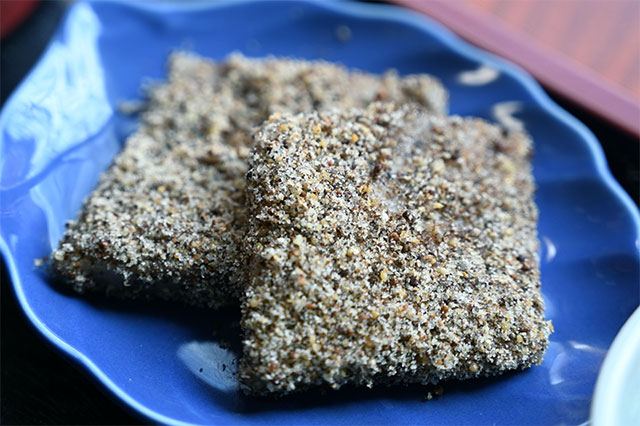
| Prefecture | Fukushima |
|---|---|
| Region | Tohoku |
| Japanese name | はっとう |
| Main ingredients | Falk, rice powder. |
| Recipe yields | Serves 4 |
History and Origins
There was a movement to ban the eating of food so as not to eat too much food, such as Edo, rice and rice. At this point, it is said that we were cooking and secretly eating with a falsity or rice flour, which is essentially "law" and so forth, and that we were going to say, "I'm sorry." There is also the theory that, in the past, when I took my place to a local lord, it was so delicious that it was said, "It's lawful to eat." In recent years there has been a great deal of variation in the shape of the rectangles, such as "stammer" and "shoe" and "suck" and "suck" and "suck" and "suck" and "suck" and "sow" and "sow" and "sow" in the process.
When It Is Eaten
We eat when the work is finished. Also, when officials who came to the study at the University of Chiba said that they allowed them to eat only on Hale's Day, they were told that they could eat only on festival days and celebrations.
How It Is Eaten
Half of the rice flour and flavour are melted in boiling water, and they are made hard enough to make your ears hard. Then, with a noodle stick, I spread it out to about an inch thick, and then I cut it into a shape. I eat with salt and sugar seasoned on the carpet.
Recipe (Serves 4)
Ingredients
- 1 cups buckwheat flour
- 1 cups rice flour
- 2 cups boiling water
- Miso: 1 cups perilla seeds
- Miso: 1 cups sugar
- Miso: 1/2 cups miso
- Miso: a pinch sake
Method
- I'll make you a bowl of rice.
- I'll put my eggs in the bread and boil them until they're ready to boil, until they're ready to boil.
- I put boiling water in the mixture and make it as hard as ear hard as a piece of powder.
- With a noodle stick, it should be stretched to the thickness of about three-tenths of a millimeter and then cut into a spiral.
- If I float in boiling water, I'll take it out and drain it.
- You'll have a full meal for me.
Source: MAFF “Uchi no Kyodo Ryori” (Our Regional Dishes) database.