Home / Ibaraki / Garigarinamasu
Garigarinamasu がりがりなます
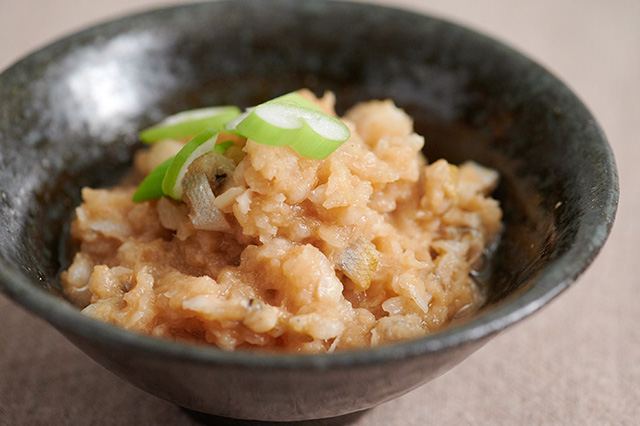
| Prefecture | Ibaraki (茨城県) |
|---|---|
| Region | Kanto |
| Japanese name | がりがりなます |
| Home area | All within the province. |
| Main ingredients | It's a big fish. |
History and Origins
Ibaraki Prefecture is a farming district where the mild climate and rich water have been cultivated over the past year, where there has been more farming and the harvest of various vegetables. On the other hand, the coast of prefecture is a rich fishing area where parental and black tide are crossed, and it is also called the Guangdong prefecture, where various fish are watered every season. "I'm grateful" is a local dish made of Ibaraki Prefecture, which is a food item. You can use these mountains' mountains 'in the season of Ibaraki Prefecture' and the sea'. "Knitting" is a dish made of vinegar, which is a dish that is made from a basic flavor, as well as a small cut of fish and vegetables, but its features are in the cooking dish. As the name suggests, we use the tool "singing" to push the root away with the force and force. "Zu" means "sung" with a sharp bamboo blade on it. The name came from the association of the teeth of the demon. In areas where "stumble" is being eaten, many families have sceptres. Because of the bamboo, heat is difficult to transmit to the material, and it is lower than the common root, so you can drop the material with water and food. "Knitting" is eaten all over the province, but it is eaten well in Hale's Day in Ibaraki Prefecture, South rice fields.
When It Is Eaten
You can always act on New Year's Day and on the other occasions when people gather together. Sometimes I eat as a everyday family dish.
How It Is Eaten
"Knitting" is a way to cut down the main root with a smudge, so the sense of food is characteristic. It's also said that in the past, people often made them with Bora and Little Funa. Sometimes they can be made up of koi or octopus if they care about bones. When you eat raw meat, you can enjoy the taste of materials, but it can be delicious even after they have become so familiar.
Recipe — Serves 4
Ingredients
- 300 g daikon radish
- 100 g fish
- Mix: 2 tbsp vinegar
- Mix: 2 tbsp sugar
- Mix: 2 tbsp miso
Method
- The main root is a bamboo rough caster (scrolling the wood) with a sharp, low, and thin salt.
- I'll prepare a small pickled fish. I'll have a bowl, a head, a stomach, a five-millimeter cut, and a half-millimeter of salt and vinegar.
- The fish can be reduced to a small amount of water and a small amount of water.
- When you have a piece of paper on top of it, you can make it with a thin slice of string.
Dish data: Ministry of Agriculture, Forestry and Fisheries (MAFF), “Uchi no Kyodo Ryori” (Our Regional Cuisines) database, used under the Public Data License (PDL1.0); translated and adapted from the Japanese original.