Home / Yamanashi / Houtou (Yamanashi Noodle Hot Pot)
Houtou (Yamanashi Noodle Hot Pot) ほうとう
| Prefecture | Yamanashi |
|---|---|
| Region | Chubu |
| Japanese name | ほうとう |
| Reading | Houtou |
| Home area | Throughout Yamanashi |
| Main ingredients | Wheat noodles, kabocha squash, miso |
| Recipe yields | Serves 5 |
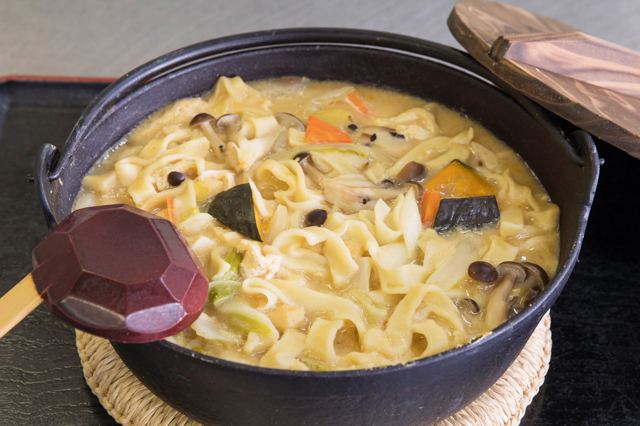
Houtou is Yamanashi's miso hot pot of wide, flat, un-rested noodles cooked directly in the broth with pumpkin, potato and root vegetables. The noodles are cut and dropped straight in, so their flour thickens the soup as it cooks.
History and Origins
In mountainous Yamanashi, where wheat rather than rice was the staple, flour noodles simmered with vegetables in miso became the everyday one-pot meal. Local tradition links the dish to the warlord Takeda Shingen's field kitchens; what is certain is that it warmed farm households across the prefecture for centuries.
When It Is Eaten
A cold-season, everyday one-pot meal, eaten throughout Yamanashi.
How It Is Eaten
A niboshi (dried sardine) dashi is made first. The dough — flour kneaded with lukewarm water to a little firmer than an earlobe — rests for 30 minutes, then is rolled thin and cut wider than udon (about 1 cm). Hard vegetables simmer first; the noodles, abura-age and half the miso go in together, and the rest of the miso adjusts the flavour at the end, with spring onion scattered in before a short covered rest.
Recipe (Serves 5)
Ingredients
- 400 g flour
- 150–200 ml lukewarm water
- 100 g potato
- 75 g kabocha squash
- 60 g daikon radish
- 25 g carrot
- 100 g napa cabbage
- 5 shiitake mushrooms
- 35 g spring onion (naganegi)
- 25 g abura-age (fried tofu pouches)
- 75 g niboshi (dried sardines), for the dashi
- 2.5 litres water
- 180–200 g miso
Method
- Put the niboshi and water in a pot and make the dashi.
- Add the lukewarm water to the flour a little at a time and knead to a dough ball a little firmer than an earlobe. Cover with a damp cloth and rest for about 30 minutes.
- Cut the potato and squash into rough chunks; the carrot and daikon into quarter slices; the shiitake into thick strips; the cabbage roughly. Cut the abura-age into strips and the spring onion into thin diagonal slices.
- Simmer the vegetables in the dashi, hardest first, until tender.
- Dust the dough with flour, roll it thin, and cut it into strips wider than udon (about 1 cm) to make the houtou noodles.
- Add the abura-age, half the miso and the noodles to the pot and simmer. When the noodles turn translucent, add the remaining miso to adjust the flavour, bring back to the boil, scatter in the spring onion, turn off the heat, cover and rest for 2–3 minutes before serving.
Source: MAFF “Uchi no Kyodo Ryori” (Our Regional Dishes) database. Recipe quantities are as published in the MAFF source data; the text has been re-edited for this guide.