Iseudon 伊勢うどん
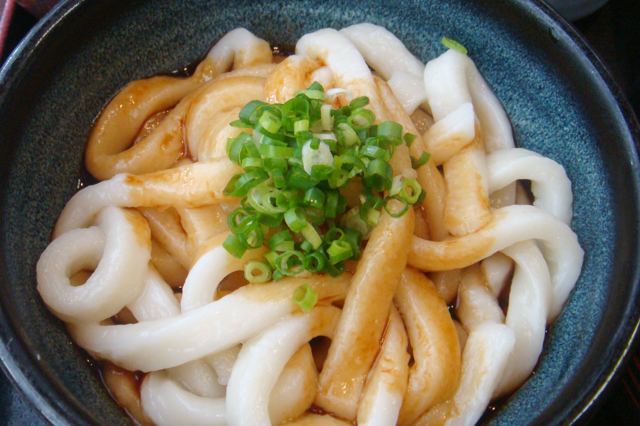
| Prefecture | Mie (三重県) |
|---|---|
| Region | Kinki |
| Japanese name | 伊勢うどん(いせうどん) |
| Reading | Iseudon |
| Home area | Iseshima Hotel. |
| Main ingredients | (Iseshima Hotel) This material is made from sauerkraut, sauerkraut, squabbles, soy sauce, sugar. |
History and Origins
In the Ise-Change culture, people have made untidy thick rice without long-term demands and have eaten it with a tasteless mixture. In the Edo, when Iseshima was in the bloom, we had a restaurant where we could easily eat a piece of boiled noodles, so that we could always eat at any time. It seems that Yoshimoto Kimoto from Japan's Pearl of Japan was a poor shop, so since the hand-salt dishes that he used at the shop were left over, he was eating them in small pieces at the time. And it was not old - fashioned, or even officially called "Ishi" or "Ishi" or "Ishi" that came to be officially called "Ishi" - it wasn't old - it wasn't until the early 40s, when a famous author spoke on the radio saying, "I'm not good to be around anything that's strange to me. " This is how you eat, but your name is a model of new native food.
When It Is Eaten
Iseu is a citizen's soul food and can be sold in supermarkets and other supermarkets all year long. In 1976, when I was a boy, I was born in the United States, and I was born in the United States.
How It Is Eaten
Since the thickness of the noodles is three times as thick as that of ordinary rice, it takes a little more than an hour to boil them. Since this isn't practical, the commercials are sold in "snap-snap" for sale. Iseshima Hotel (Iseshima Hotel) can be built and stored on its own, but it can also be used for commercial goods once a time. There are many subtle tastes in the shop, so you should look for the flavor you like. If you use a "nut with rice" pack once, it will be easy for children and others who have never cooked before.
Recipe
Ingredients
- Mix: 20–30 g laundry
- Mix: 2 g kelp (konbu)
- Mix: 450 ml water
- Mix: 400 ml tamari soy sauce
- Mix: 400 ml mirin
- Mix: 20 g( to taste ) sugar
- Mix: 400 ml dashi stock
- Mix: 1 heads udon noodles
- Mix: 40–50 ml 伊勢うどんつゆ
- Mix: a pinch chopped green onion
Method
- It's used for boiling, and the gravy procedure is to put a cloth in the water and hold it for half an hour.
- It's a recipe for steaming, two jiffys on the fire, and when it is boiling, put in a sieve, then put in a reheated flame, and then get a mild heat. I'm going to take a thick spot with a smudge. (Singing on boiling, as you like)
- I'll put a recipe in a pot and put it on fire, and I'll blow alcohol.
- Add two citrus oil and sugar and boil to about two-thirds.
- I made the procedure three years ago, but if you add the juice and boil it up, you can do it. It's okay to boil a little, if you like. That's enough for 20 people.
- I'll boil it in hot water and cut it off.
- I'll take a cup of rice and I'll cut it off with my favorite style. I'd like to stir it up in a bowl and wrap it around the noodles.
More About Iseudon
Iseshima is a dish that can be eaten around Mie Prefecture. The main source of food comes from thick, soft noodles, a small amount of citrus sauce, and a tip made with citrus juice. Iseshima Council has set up a standard of registration for noodles and for girls.
By application of the Mie Prefecture - made Noodle Cooperative Association, it's registered as a regional trading sign.
Characteristics
By the registration standards of the Iseshima Council, noodles are "more than six millimeters square and over 25 minutes in manufacturing process," and the characters are "based on a pile."
- It's been taken.
In Isezu's shop, after a long time of cooking, there are often times when hot water is served again in an instrument called "Yuji" after having received orders from customers, especially after having eaten soy sauce for a long time. The sense of food is very soft, very strong. Strong rice is very different from the characteristic praise of the Shiba or the Ninoshima, but it is readily accepted by people in areas that like it soft as Tobashima.
The characters are made from one store to another, and they are not only served with gravy, but also with boiling and slatting, and some of them are burned or added to them. The sesame oil has been brought from the region where the taste is celebrated. The dark hints of semblance are very thick, but there is no salt as salty as the salty looks, and, by and large, the flavors and sweets and the latter taste very good.
The fact that we continue with the cucumbers makes it possible to provide quickly and we can finish our meal immediately because there is no soup, makes it suitable for one crowded person to be served at Iseshima.
There are many stores that have only twirls or topping raw eggs to their liking, but there are not many places where they serve them with a fork. Local people sometimes eat on-stamps with Ise-yaki.
It's very different from the general citrus that was soaked in large quantities of citrus (sun) and used in it, but there are also shops that offer it in tsui. There are few stores, but there are also stores that provide raw rice.
History
His farmer has a history of growing wheat as a background for rice since before the time of Edo. At that time, they called it "Nazi." Some people think that originally the farmers made thick noodles, which did not have to be prolonged as long as they could, as well as a cheap tofu, but in fact, rice and other cereals were their daily diet, and the dough they ground into flour was considered the best meal of the day and the best meal of the Hare.
This daisy has been modified to be a member of Isemiya's court, and it is thought that during the mid-Edo, it was shaped as it is today. It is generally said that the first of Iseji's haiku houses was opened by a small man, the seventh son of Akita Toshimoto, who was generally the seventh of the Hashimoto family.
In the late Edo, the famous Izuzu shop appeared and was particularly famous in the city of Old Town.
At the end of the day, Iseshima's shop was spread out, and the restaurant was open right before the Seyashi Bridge.
Miymoth Pearl Island displays a plate - size plate used at a restaurant in Iseshima, Japan. It might be that at that time it provided only enough Ishiji to support its needs.
There are theories that Iseshima is a fast food designed to keep a large number of Iseshima visitors away. However, there is also the point that it is a pretty slow food in that it takes an hour for the noodles to grow fat.
Since Iseshima was a difficult place to live, it was common for me to eat in stores until about the 1960s, but with the help of the president of the Western Market Company of Miyamoto-san's Oil Mining Company, the "Ise-Sai" company was developed, and the "Ise-Sai" was easily developed in his home, so that it was possible to eat "Ichi" in the refrigerators of many families of his people. It became obvious that Iseshimaese children would eat Ishizu with their baby food, eat it as their first meal, eat it as their own food, eat it at night or, when there was nothing else, eat "Ise-do" instead.
At Ise At the Ise At the Ise At the Ibubu Sumit in 2016, there were shops that supplied seven different kinds of equipment and pine cows to suit the number of participating countries.
According to the "Special Edition of the Book of Mishran's Guide"
The store that Iseshima Iseshima Hotel served is at the point of 2021, about 200. There were many shops that only older couples could sell, and 140 stores in the peak season.
Name
The name "Iseshima" is said to have been used in the mid-60s. Until then, it was simply called "snack" or "snap of Yamada" and was shown in the shop as "snap" and "snap" and "snap" and "snap" in the local home. The Iseyu Food and Agriculture Union decided to call it "Iseshima" in 1972. So they put it on their list of contributions for the union.
It is claimed that in the name of that name, he introduced to the media what was simply used here as "Iseshima."
In 2008, the Mie Prefecture Association of Noodle Cooperatives, headquarters in Matsumoto, was registered as a regional trading label. The purpose of protecting the taste of souvenir noodles as a three-to-three masterpiece is not to affect the sales of Iseshima's restaurant.
What kind of wheat?
In this region, the "61 Forests" was the main source of wheat growing, but in the activities of regional industrial development, it was evident that the lower amylose breed was suited for this growth. In 1999 it began testing at Mie Prefecture and was adopted as a more lucrative product than it was in 2003. The e-marks of the district-specified company of Mie Prefecture are used by the Izus using both species.
Iseshima Hotel.
Iseshima City's "Iseshima Council" registered 28 restaurants in Iseshima City as "the best in the field." Also, at the council, they issued the book book book, "Iseshima's National passport." It was distributed free of charge at registered stores and city tourist stations. I collected stamps to get peppers and peppers and so on.
Provided Areas
In addition to Iseshima City, with Isemiya, there are also stores that offer nearby Matsumoto, Kibera City, and Tsu City. There's an example of this in the first dining room of 3rd University.
Nowadays, it's sold on the highway SAPA in Mie Prefecture.
In supermarkets, such as supermarkets in Mie Prefecture and within neighboring states from around Ise City, noodles are built so that they can taste the warmth of food. It's like a small bottle or a bag of meat, and it's sold as or as separate as it is for the noodles. Also, a vacuum - and - open product with a vacuum pack that allows for long - term storage for souvenirs is also sold in department stores such as Mie PrefectureX and Tokyo-Cymbong, and in other places as well.
There are stores that provide Izuzu from New Bridges, Ginza, Shibuya, Takada's stables, and so on.
Caulula, Vietnam.
There's a theory that Iseshima passed on to Yoo An in Vietnam and became a kalau. Koura is a meat made from wheat, and is made from a dish that was brought in by the Ichizo and the Seven Tavern Guards of the 17th century B.C.E.
Text adapted and translated from the Japanese Wikipedia article 伊勢うどん by its contributors, licensed CC BY-SA 4.0.
Dish data: Ministry of Agriculture, Forestry and Fisheries (MAFF), “Uchi no Kyodo Ryori” (Our Regional Cuisines) database, used under the Public Data License (PDL1.0); translated and adapted from the Japanese original.