Okonomiyaki お好み焼き
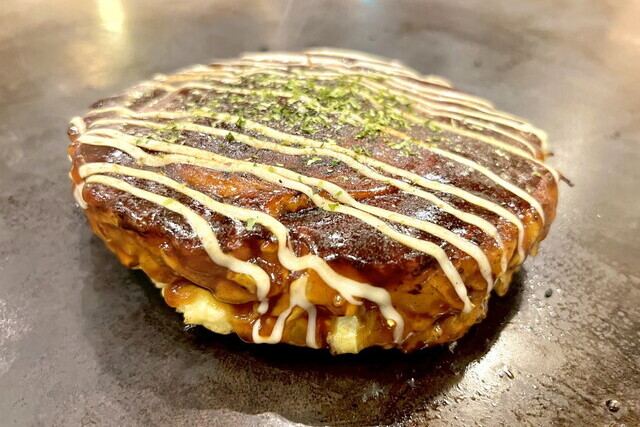
| Prefecture | Osaka |
|---|---|
| Region | Kinki |
| Japanese name | お好み焼き(おこのみやき) |
| Reading | Okonomiyaki |
| Home area | Throughout Osaka Prefecture |
| Main ingredients | Wheat flour, dashi stock, egg, cabbage, tenkasu (tempura crumbs) |
History and Origins
It was made of flour melted from the sauce, made of finely cut cabbage, meat, squid, and baked sides with iron. It's a dish that represents a culture that's side by side with the roasting of kites. The root is said to be the tea treat called "Fnoyaaki" that was served at a tea party held during the Fukuyama season. Fnoyakis were used to spread molten flour on a copper plate, and they were baked thinly, mixed with rice, or ground with crepes. During the late Edo, the custom of roasting and eating molten flour with iron plates spread among the common folk. In the late Meiji period, there will be Meridian powder, cabbage, and sauce-soured "Cook of the Sea." This was like a sweet, easy-to-eat cake, but in time each store became a cook and evolved as a favorite. At first, it was a "heap" style with the material on top of the baked dough, but it also spread the "cook" by mixing the material with the ingredients. It was during the late '30s and '40s that Koyakiyaki became widely known throughout the country as a masterpiece of Osaka. It is said that the chained-up kimchi shop has been sold as a product for Osaka.
When It Is Eaten
You can eat any time, any season. There's shops in various parts of Osaka Prefecture that provide the favorite cooking. It's also eaten on a daily basis for home cooking. It's popular among tourists as a Osaka masterpiece.
How It Is Eaten
The flour is melted to make fabric. Mix the bowl with cabbage, fabric, and cabbage. Put oil on the hot iron plate at 200°C, put it back in place, put it back together, put it back together, put it back together again, put it back together, and cook it for about ten minutes.
Recipe (see source)
Ingredients
- Dough: 100 g flowers (cake flour)
- Dough: 100 ml dashi stock
- Dough: 40 g grated (daikon etc.)
- Dough: a pinch salt
- Mix: 5mm) 240 g cabbage
- Mix: 2 egg
- Mix: 4 tbsp tempura scraps
- Mix: 4 tbsp green onion
- Mix: 3mm 4 160 g pork belly
- Mix: pickled red ginger, to taste
- Mix: oil, to taste
- Mix: aonori seaweed, to taste
- Mix: mayonnaise, to taste
Method
- The fabric is made by adding the ingredients of the citrus.
- A bowl with cabbage and a piece of dough from above, eggs, a little air, thumbs on the bowl, and a curry spoon. If you stick eggs and fabrics into pieces of cabbage three times, you can put them all back in the bottom, and then, after five times and six times, the cabbages can take the dough and form them into one. If you leave it too thick, it's the point to put it on the board quickly because the cabbage water will come out and it'll be a heavy roast.
- The steamed steel pans are made of medium fire or hot plate. The oil is thin, and the two pieces are placed in the colon and the middle, and spread out from the center to about 1516. It's important to do this far, since it's said that you're going to have to put the fiesta on a board, and it's going to be 70 percent of the flavor.
- When you know it, put it in a treat, make sure it has a tanned brown, line it up in the river so the pig rose's fat is outside, turn it over to you, cover it up, and burn it for four minutes.
- Open the lid and return it with a minute, a little topping and so on.
Source: MAFF “Uchi no Kyodo Ryori” (Our Regional Dishes) database.