Shimotsukare しもつかれ
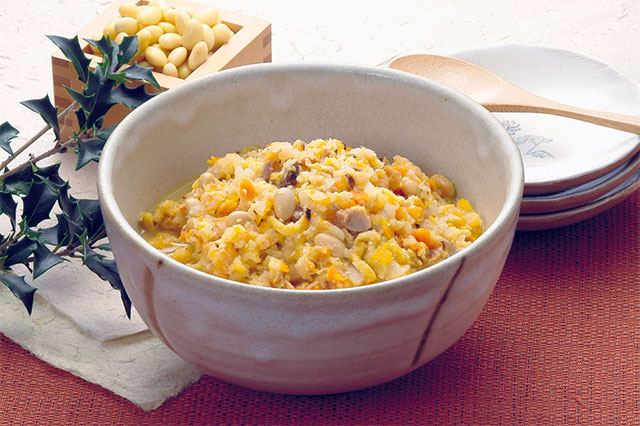
| Prefecture | Tochigi |
|---|---|
| Region | Kanto |
| Japanese name | しもつかれ/シモツカレ |
| Reading | Shimotsukare |
| Home area | All Tochigi Prefecture |
| Main ingredients | It's a lot of fun. It's really fun. |
| Recipe yields | Serves 5 |
History and Origins
One of the native dishes representing Tochigi Prefecture. It's one of the smart ones who used leftovers, such as the salt-sharp heads he had eaten on New Year's Eve and the rest of the serving beans he had roasted in season. In the past, when it was the first of February of the old calendar, it was made as a gift to the rice shrine, and there was a prohibition not to make anything else except at that time. When I was a kid, it was the end of the vegetable season and it was difficult to get food. Having and having with the leftovers is not something that is necessarily suitable for a gift to God. So by not making it normally as something "sacrificial" to God, it is thought that he made it rise up to the rice shrine. Foods vary from region to region. It is said that the use of alcohol came about during the middle of the Edo period when a liquor shop began to appear and the wine was flowing.
When It Is Eaten
It was made on the first day of February, and served for the first time. But not only in recent years, but in winter, it's made at home. We're told that "eat seven bottles of food will not make you sick." We're told that "you won't get sick if you eat seven dishes," and we'll start with the diasterases in you, such as the protein from the peas, the calcium from the salt-sharp heads, the sugar from the wine, and so on.
How It Is Eaten
The head of the salt-stained seams often washs well and spills water once, taking out the smell. After boiling the head of the bowl in a pressure pot, add ingredients to a thick pan and boil it for about an hour. When the taste is good, I put in a liquor bowl and prepare it with a flavor. You can use it by boiling the salt from the salt from the salt from the sauerkraut. You can use the salt from the salt from the salt from the salt from the salt from the salt from the salt from the salt from the salt from the salt from the salt from the salt from the salt from the salt from the salt from the salt from the salt from the salt from the salt from the salt from the salt from the salt from the salt from the salt from the salt from the salt from the salt from the salt from the salt from the salt from the salt from the salt from the salt from the salt from the salt from the salt from the salt from the salt from the salt from the salt from the salt from the salt from the salt from the salt from the salt from the salt from the salt from the salt from the salt from the salt from the salt from the salt from the salt from the salt from the salt from the salt from the salt from the salt from the salt from the salt from the salt from the salt from the salt from the salt from the salt from the salt from the salt from the salt from the salt from the salt from the salt from the salt from the salt from the salt from the salt from the salt from the salt from It's also good to use soybeans in place of roast beans. If you eat with a hot red meal, the salt and the cold are good for you, and the cold is too cold for you to smell.
Recipe (Serves 5)
Ingredients
- Mix: 1 kg daikon radish
- Mix: 150 g carrot
- Mix: 40 g soybeans
- Mix: 1 aburaage (fried tofu pouch)
- 1 tbsp vinegar
- 1 cups water
- Seasonings: 50 g–75 g sake lees
- Seasonings: soy sauce, to taste
- Seasonings: salt, to taste
- Seasonings: sugar, to taste
Method
- The head of a salt-silver is washed well, cut to about two centimeters, and spilled with a boil once to smell.
- I'll put a head, vinegar and water in a pressure pot and boil it in a medium fire for about 20 minutes.) Stop the fire and pull out the pressure with natural cooling.
- The carrots are dropped under the sieve.
- The beans are wrapped in a cloth and removed from the skin.
- Oiling is cooked to the point where it burns so thinly that it will burn, cut it into half the height and then cut it into strips.
- The wine bowl is small, torn, soaked in boiling water, and made soft.
- Put all the ingredients in a heavy pot, two, three, four, five, and boil them from a fire to a fire. If you boil it down, it will boil for about an hour.
- If the taste is soft and soft, you can add wine to it, oil, salt, and taste sugar to make it taste.
Source: MAFF “Uchi no Kyodo Ryori” (Our Regional Dishes) database.