Home / Akita / Shottsuru Nabe (Fish-Sauce Hot Pot)
Shottsuru Nabe (Fish-Sauce Hot Pot) しょっつる鍋
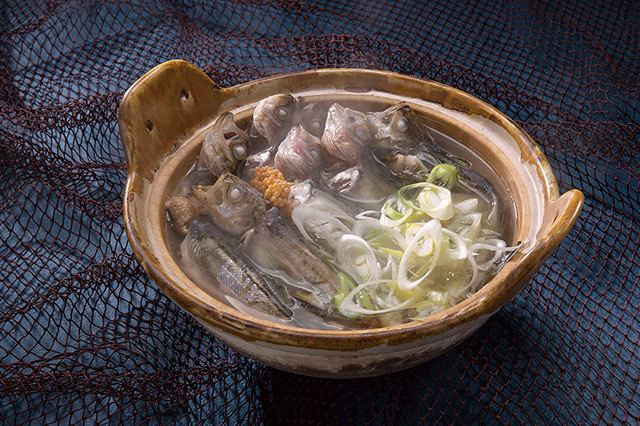
| Prefecture | Akita |
|---|---|
| Region | Tohoku |
| Japanese name | しょっつる鍋(しょっつるなべ) |
| Reading | Shottsuru nabe |
| Home area | Throughout Akita, especially the coast |
| Main ingredients | Hatahata sandfish, shottsuru fish sauce |
| Recipe yields | Serves 4–5 |
Shottsuru nabe seasons its broth with shottsuru, Akita's fish sauce made from fermented hatahata sandfish — and then puts the hatahata themselves in the pot, with tofu, cabbage, greens and mushrooms. Two layers of the same fish, in sauce and in flesh.
History and Origins
On Akita's coast, hatahata were so plentiful they were fermented into shottsuru, one of Japan's three great fish sauces. The winter pot that uses both the sauce and the fish became the representative hot pot of coastal Akita.
When It Is Eaten
A winter hot pot, made in the hatahata season along the Akita coast.
How It Is Eaten
Water and kelp wait in the pot. The hatahata are beheaded, tailed, gutted, washed and drained; the vegetables and tofu are cut to bite size. When the pot boils, miso, sake, mirin and the shottsuru season the broth to taste, the fish and vegetables go in, and after one boil the lid goes on to steam everything through.
Recipe (Serves 4–5)
Ingredients
- 10 hatahata (sandfish)
- 1,000 ml water
- 15 cm dried kelp
- Seasoning A: 1 1/2 tbsp miso
- Seasoning A: 2 tbsp sake
- Seasoning A: 2 tbsp mirin
- 4 tbsp shottsuru (fish sauce)
- Spring onion, tofu, napa cabbage, seri, mizuna, mushrooms, etc., to taste
Method
- Put the water and kelp in a pot and leave them to soak.
- Remove the heads, tails and innards from the hatahata, wash them, and drain.
- Cut the vegetables, tofu and other ingredients into bite-size pieces.
- Heat the pot. When it boils, season to taste with Seasoning A and the shottsuru, and add the fish and vegetables.
- Bring to a single boil, cover, and let it steam through. Serve.
Source: MAFF “Uchi no Kyodo Ryori” (Our Regional Dishes) database. Recipe quantities are as published in the MAFF source data; the text has been re-edited for this guide.