Takoyaki たこ焼き
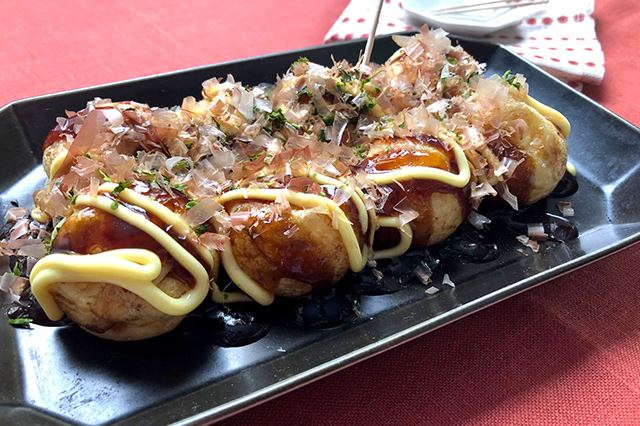
| Prefecture | Osaka |
|---|---|
| Region | Kinki |
| Japanese name | たこ焼き(たこやき) |
| Reading | Takoyaki |
| Home area | Osaka City |
| Main ingredients | Wheat flour, dashi stock, egg, boiled octopus, tenkasu (tempura crumbs) |
| Recipe yields | Serves 4 |
History and Origins
The taste of Osaka would be the first thing you can think of. It was a round bowl of iron plates, which was poured with flour melted with raw nuts and eggs, and then baked with chopped kites. It's the soul food of the people of Osaka Prefecture. From the end of Meiji's life to the age of the Great Fukuoka, it was offered at candy stores and on the stand for the day's end, and it is also known as a sect from Chobo, which was popular with children. It's said that the fixed tools were connac, dry or dry, and that the flavoring was made with soy sauce in the dough and baked into flour. When radio broadcasts begin in Japan at the end of the great term, there is a "goo-roo-coo" restaurant named after the most advanced radio of civilization. Kuichi, in early Japan, in a barn in Osaka City, began to be sold "Kaki-Kaki" using a kite for radio cooking. In time, it became known throughout the country as a Osaka masterpiece and became the nationally beloved food table.
When It Is Eaten
It's a local snack that you can easily eat. It's also widely absorbed in home cooking and many families own a kimchi shop. Today, more stores are providing burnout to major cities of the world, as well as to all parts of the country. Also, frozen cicadas, such as the United States and other restaurants and ramen stores have established themselves as side menus.
How It Is Eaten
Heat the cooking pot in the kite cooker and lower the oil. Place the fabric in the mold of the kite-burner until the skin of the wax is hidden. Put a piece of the kite in one piece and then put it in the oven. Take it out into a vessel and apply a thick sauce with a brush and then place a blue powder on top of it and a sharpener on it.
Recipe (Serves 4)
Ingredients
- Dough: 300 g cake flour
- Dough: 1,100 ml dashi stock
- Dough: 3 egg
- Dough: 2–3 g salt
- oil, to taste
- 200 g boiled octopus
- 60 g tempura scraps
Method
- The eggs are melted well in the citrus, and then put in the order of thin powder and salt. The powder is sunk in the whole body and then mixed with it like a cut.
- Heat the kite-burner to 220 degrees Celsius and squeeze the oil thinly.
- Drop a little fabric into the hole, and if it sounds "Ji-j-j-n-n-n-n-n-n-n-n-n-n-n-n-n-n-n-n-n-n-n." The whole plate is poured in so that it's buried in fabric. The fabric is often mixed before it sinks in because the flour is easily sunk.
- Soon put in the octopus and scatter the air over the whole thing.
- Don't give it back at once, but first you give it back 90 degrees and then you return it all. By returning 90 degrees before the whole fire goes through, the fabric in it can flow out and make a round roast. )
- There's holes, and there's little fabric, and you'll have to take over the fabric.
Source: MAFF “Uchi no Kyodo Ryori” (Our Regional Dishes) database.