Home / Tochigi / Morononitsuke
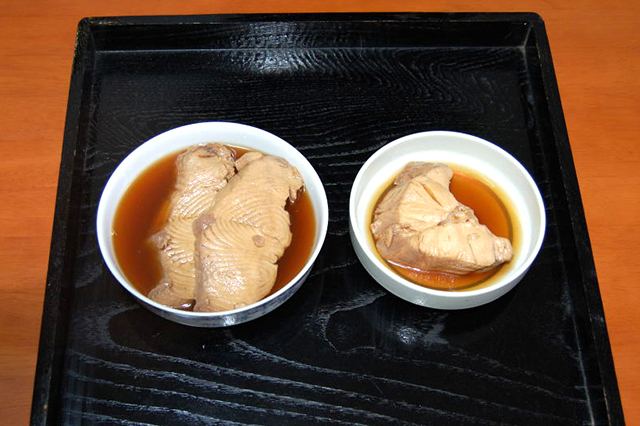
Morononitsuke モロの煮付
| Prefecture | Tochigi (栃木県) |
|---|---|
| Region | Kanto |
| Japanese name | モロの煮付(もろのにつけ) |
| Reading | Morononitsuke |
| Home area | All Tochigi Prefecture |
| Main ingredients | (Slatches) |
History and Origins
"Moro's stewing" is a dish that is gently boiled with soy oil and sugar and is known by everyone in the family. In the first place, shark food is often eaten as a valuable source of protein in far inland areas. The reason is that in the port around the ports where sharks are being washed, shark meat was not popular and was not eaten very much. Because sharks store uretoxic acid in their bodies, and when life runs out, their uretrates spread and turn into ammonia and decay, they were prized as raw fish in the inland areas where fresh sea life was given them. In Tochigi Prefecture, the salmon shark, besides the Moro, is also eaten, and both are eaten easily and are of the taste of being side by side at the table.
When It Is Eaten
Generally speaking, "surgeon shark" in April is a year's waterlogged and available throughout the year for Tochigi Prefecture.
How It Is Eaten
For Moro's stew, cuts are used, and even supermarkets can be bought easily. High - fat sharks taste good, not only on stews, but also on fried pieces like fried cabbages. In recent years they are provided with a variety of ovens, such as the potato pine and apple sauce.
Recipe — Serves 4
Ingredients
- 4 slices moro (ネズミザメ)
- 1 pieces ginger
- Mix: 2 tbsp soy sauce
- Mix: 1 tbsp sugar
- Mix: 1 tbsp mirin
- Mix: 100 ml sake
- Mix: 100 ml water
Method
- Half of the ginger is cut and half of the others are cut into pieces.
- I'll mix the seasoning juice and boil it in the pot.
- Put a slice of pepper and Moro's cut into two pans and include the soup in a medium fire for about ten minutes.
- I'll wear a bowl and a piece of mustard on a bowl.
Dish data: Ministry of Agriculture, Forestry and Fisheries (MAFF), “Uchi no Kyodo Ryori” (Our Regional Cuisines) database, used under the Public Data License (PDL1.0); translated and adapted from the Japanese original.