Wasabizuke 山葵漬け
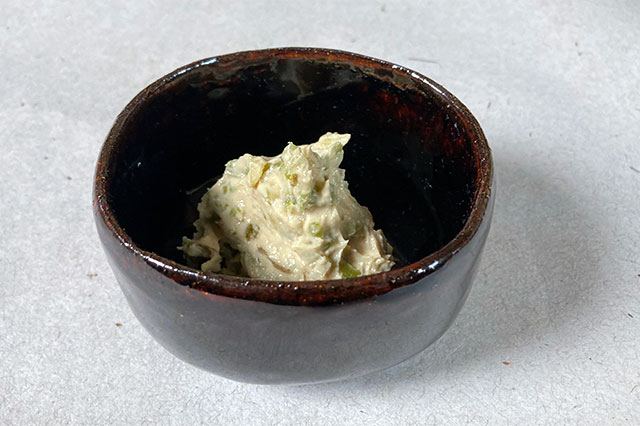
| Prefecture | Shizuoka (静岡県) |
|---|---|
| Region | Chubu |
| Japanese name | 山葵漬け(わさびづけ) |
| Reading | Wasabizuke |
| Home area | (Shizuoka City) (Izu Peninsula Izu Izu City) |
| Main ingredients | I'm sorry. |
History and Origins
The dish is made from leaves, stems, and roots covered with wine. After that, the Tokugawas, who had spent the evening in Miyagi, forbade the village to bring a train from the area, and for a long time, they never left the Toshigi District. However, in the middle of the 18th century, when Izu was introduced to the Izu region, and then in the Izu region developed a process called "mid-rock" that spread throughout Shizuoka Prefecture and even throughout Japan. The Shizuoka Prefecture angle is the best yield and quality of Japan, since rain and earth, and water from the north to the south, is suitable for growing lions throughout the year. Now, we have a staircase-like rice paddies in the mountains where the water is flowing, growing without the use of extreme fertilizers, and the "traditional cultivation of the Sequoia Sakura" is recognized by the World Agriculture and Japanese agricultural heritage. It's said that Yamanaka Yamanaka began to be sold in the area of Shizuoka Station, which opened in Iseshima in 22 years. It's a dish that is mainly liked by adults because of the bitterness and the flavor of the wine. (Applause)
When It Is Eaten
It's eaten through the year. We'll put them on warm rice, put them on a bottle of wine, and sit on our daily table.
How It Is Eaten
The stem roots of the Japanese walnuts are finely chopped and salted overnight. Put sugar in the wine, and when it is smooth, put salted mustard in the wine often. I'll stir it up so it fits well. When you move to a sealed container, you get a few days of pain and eat.
Recipe — Serves 2
Ingredients
- 250 g sake lees
- 450 g wasabi (茎)
- as needed sugar
- as needed sake
- a pinch salt
Method
- (The stem root of the walnut is about three millimeters fine, two percent salt, and more than six hours of the night).
- Pack it up in a pan and narrow down the water.
- Put sugar and salt in the wine bowl and rub it a lot. Put two in a little bit, and try to fit it well with the sake of the wine.
- When you move to a sealed container, it's only two or three days before the pain comes out and you eat it. If it's done too hard, keep the lid open and it'll soften.
More About Wasabizuke
A dish that has been carved with leaves, stems and roots. It's a kind of condiment that is used as a flavor for wine and rice and so on.
Spring season.
I'm not sure if it's true, but it's true.
Processing
By an editorial in Japan's Agriculture News.
The roots and stems of the ingredients are cut finely. I'll do it in half an hour with salt. It's cooked in wines with a mixture of salt, sugar, garlic, and wine. I'm going to sleep in the fridge for two or three days.
The Birth
Shizuoka Prefecture weeded.
The present arrival of squirming was the Edo and the treasurer's Year 1751 - 1763. It is believed that Tadashi Takugi, a merchant of the Shizuoka PrefectureEXC, began to develop and sell from the roots of the wavy plant that runs from what is now Shizuoka City. Then, in 1889, when Shizuoka Station's construction began, a wooden makeup can be sold through a car window. This led to popularity, and to widespread duplicity in Japan.
Nagano Prefecture
Since Meiji's rule, growing wax has been a success since then, using abundant water. It's about 1892 that we learned how to make a trapper from Shizuoka to this land. Up until then, there was a tendency to drink sweetly, but not daily. The wasabi's squawk had a reputation and expanded its trade route from the Shinga on shiploads and railroad tracks.
Materials
There's the leaves of the walrus and the root stem as well as the sea cucumber with the seagulls attached to it and the number of young children attached to it.
Text adapted and translated from the Japanese Wikipedia article わさび漬け by its contributors, licensed CC BY-SA 4.0.
Dish data: Ministry of Agriculture, Forestry and Fisheries (MAFF), “Uchi no Kyodo Ryori” (Our Regional Cuisines) database, used under the Public Data License (PDL1.0); translated and adapted from the Japanese original.