Masuzushi ます寿司
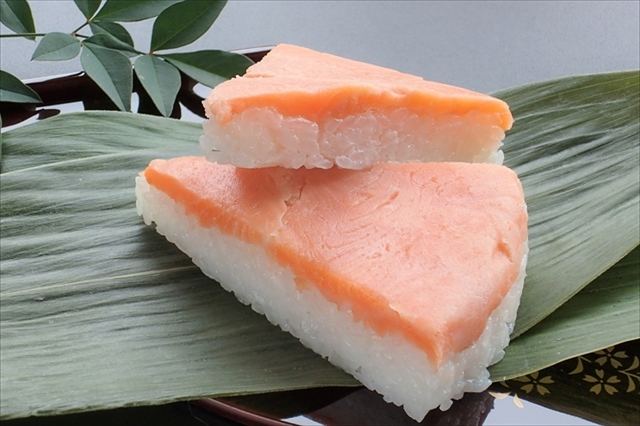
| Prefecture | Toyama (富山県) |
|---|---|
| Region | Chubu |
| Japanese name | ます寿司(ますずし) |
| Reading | Masuzushi |
| Home area | All within the province. |
| Main ingredients | Masses, rice. |
History and Origins
A pale - red mass is a sushi on a rice bowl. Sushi is the most famous local dish in Tokuyama. The history of the birth goes back to the year of the Edo's Prosperity. Shinichi Tokumura, who was then an expert in cooking, and Shinichiro Tokuta, made the third generation of Master and Akita. That General Yoshitori praised the taste of good, so that he may be called Toyama's masterpiece. Then, instead of Ayu, he used the Samramus, which comes to the Kanagawa River in the spring, and this is considered the original type of what is now called "Sushi." It wasn't until the Great War and the Station Express were sold that the country's most widely known flavor was spread as railways spread throughout the country. I put a round wooden circle in a pot, salted rice, rice, and packed it with rice. Like the thickness of a potato, the amount of vinegar, the pitch of a rice meal, and the taste and style of each store. A lot of local people say there's their favorite store.
When It Is Eaten
It's an annual meal, and it's not so much a house-to-house cooking as it is a shop where most people buy it and taste it. There are more than 20 shops in Toyama City alone. I don't usually eat much, but I'm eaten when I have something to eat - the festival, the tray, the year after the year. And many people buy them as souvenirs or gifts.
How It Is Eaten
Place the rice on a bent piece with radiation, and spread the rice on top of it evenly. The vinegared mass is placed on the ground with the shape of the paste, and then on top of the dish, and the slats are folded in turn, and then the heavy stones are put on. A wrap in a bowl will mature the flavor.
Recipe — Serves 2
Ingredients
- 150 g trout
- 1 tsp salt
- 3 tbsp vinegar
- 1 × 180 ml rice
- vinegar, to taste
- bamboo leaves, to taste
Method
- I'll add sushi to the rice for the cooked rice and cook rice for you.
- If you open three pieces of potatoes and slice them thin, shake the salt.
- If you feel that you have water coming out of the water, you should clean it up and dip it in the vinegar for about 30 minutes.
- We spread rice on top of rice and put three on top of it with water in it.
- We're going to put a heavy stone on the leaves of the walnuts for a few hours.
More About Masuzushi
Masuzushi (鱒寿司, literally 'trout sushi') is a kind of Japanese ekiben boxed meal sold on trains and train stations in Japan. It is a type of oshizushi (pressed sushi) and a well-known souvenir of Toyama.
Masuzushi is made of vinegared trout sashimi on top of vinegared rice and wrapped in bamboo leaves. Once the fish and rice is wrapped in bamboo leaves, a weight (often a heavy stone) is kept on top for several hours in order to compress and complete the dish. It is traditionally kept in a round bentwood box known as a mage-wappa, which is then sealed by two bamboo sticks. There are also masuzushi which consist of two layers of fish and rice.
History
Masuzushi originated in the Edo period, with its preparation and storage technique remaining relatively the same as when it was first made.
Masuzushi was originally prepared by samurai Yoshimura Shinpachi for Maeda Toshioki, third lord of Toyama. It was then presented to Tokugawa Yoshimune.
It was during the Taishō era that masuzushi was first marketed as ekiben at the opening of the Hokuriku Railroad, popularizing it in other areas of Japan.
Masuzushi is most often eaten on special occasions such as Obon and New Year's in Japan.
Text adapted from the English Wikipedia article Masuzushi by its contributors, licensed CC BY-SA 4.0.
Dish data: Ministry of Agriculture, Forestry and Fisheries (MAFF), “Uchi no Kyodo Ryori” (Our Regional Cuisines) database, used under the Public Data License (PDL1.0); translated and adapted from the Japanese original.