Nitakumoji 煮たくもじ
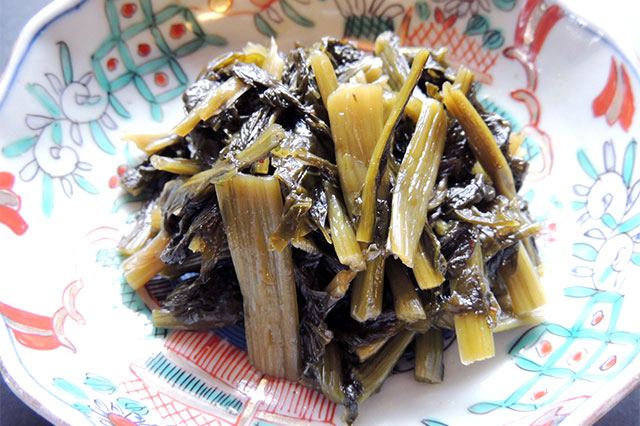
| Prefecture | Gifu (岐阜県) |
|---|---|
| Region | Chubu |
| Japanese name | 煮たくもじ(にたくもじ) |
| Reading | Nitakumoji |
| Home area | I'm from the Fukuoka region. |
| Main ingredients | The leaves of the pods are green. |
History and Origins
I had salted it in water, and cooked some vegetable leaves. It's one of the things that comes out of the heart that value the food that boils and eats instead of throwing away the stuff that becomes sour in spring. "The bow" is the word used in the temple during the period of peace, and it refers to a camel. There is a theory that once upon a time, the cucumber was called a "coast," but it was taken from the "screw" and called "screw" by the "screw," and it boils and eats the letter, so it is called "salted" because it boils and eats the letter.
When It Is Eaten
We'll boil and eat vegetables and other vegetables that are soaked in winter before spring. In times when food was scarce, local dishes were born with the wisdom of the former people to eat to the end without wasting food. If you have a bowl of rice in it, you can eat it as a cucumber first, then as a stew, then as a boil, and then as a season.
How It Is Eaten
We wash the salted leaves and drain them. When the salt is out, cut it to about three centimeters, roast it with oil, season it with flavor, boil it until the water is gone, and finish the oil and white with a fire.
Recipe — Serves 10
Ingredients
- 10 かぶらの長漬け (塩漬け)
- as needed vegetable oil
- as needed sesame oil
- as needed white sesame seeds
- Mix: 180㏄ soy sauce
- Mix: 180㏄ mirin
- Mix: 180㏄ sake
- Mix: as needed niboshi (dried sardines)
- Mix: as needed dried red chili
Method
- The salty leaves are removed from the tub and the water is washed off.
- I'll put these on the water. Two and three times I'll water and I'll salt-salt. The saltiness varies according to the amount of time it takes to get it. It's the point not to get it out completely, but to pull the salt out so well.
- I can cut the chops into about three centimeters and roast the garlic with salad oil.
- Put three in the pot (as much as a bowl of water and a bowl of water leaves) and cook it in medium cooking until the water runs out.
- To finish the finish, we'll put in soy sauce and white pepper and boil it in a broth.
More About Nitakumoji
Cooking rice is a Gifu Prefecture native dish. It's a cooked dish of salted cucumber.
Instead of throwing away the acid that was coming out of the spring, the leaves and other vegetables that were soaked in wintertime were boiled and eaten.
"The bow" is the word used in the temple during the period of peace. In ancient times, a cucumber was called a "coast," but when you take the "knit" and you call it "slic," it came to be called "sworn" because of boiling and eating the letter.
Text adapted and translated from the Japanese Wikipedia article 煮たくもじ by its contributors, licensed CC BY-SA 4.0.
Dish data: Ministry of Agriculture, Forestry and Fisheries (MAFF), “Uchi no Kyodo Ryori” (Our Regional Cuisines) database, used under the Public Data License (PDL1.0); translated and adapted from the Japanese original.