Ayunoshioyaki 鮎の塩焼
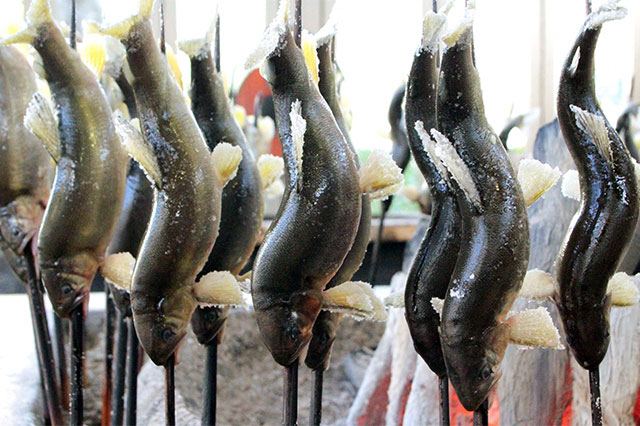
| Prefecture | Gifu (岐阜県) |
|---|---|
| Region | Chubu |
| Japanese name | 鮎の塩焼(あゆのしおやき) |
| Reading | Ayunoshioyaki |
| Home area | In the heart of the river, in the heart of the river. |
| Main ingredients | I'm so sorry. |
History and Origins
In Gifu Prefecture, which includes fresh streams, including Kigi, Nagagawa, and Sakura, each year, from June to October, they are served in various locations and taste fresh fresh rice. Speaking of Zheng He, the famous Sung of 1,300 years of history is famous, and the Nigigigi from Shizugi is dedicated to the Kagi and Isegigi. The Gifu Prefecture plant also has a traditional fishing method to stop the flow of the river and pour its fish into a wooden or bamboo trap. In the summer season, you can enjoy cooking with citrus, including the experience of citrus and citrus.
When It Is Eaten
The "salt-coasting" that has been burned with tarts, charcoal and other things, and the taste of the extra water has been reduced and condensed, is called the citrus's turquoise, and it can taste the aroma and flavor of the citrus. The salt-burning fish in the citrus is said to be good for fat-sized fish from July to August, but it is also said to be good for young fish with large eggs and large eggs after August.
How It Is Eaten
The salt is light on the whole bowl, and the salt is put in about five minutes, then the salt is applied to both sides with a coat and a tail.
Recipe — Serves 4
Ingredients
- 4 ayu (sweetfish)
- a pinch salt
Method
- The sieve is a light salt spread across the whole.
- After six minutes, I put makeup salt on my Hill and tail and burn both sides.
Dish data: Ministry of Agriculture, Forestry and Fisheries (MAFF), “Uchi no Kyodo Ryori” (Our Regional Cuisines) database, used under the Public Data License (PDL1.0); translated and adapted from the Japanese original.