Senbajiru 船場汁
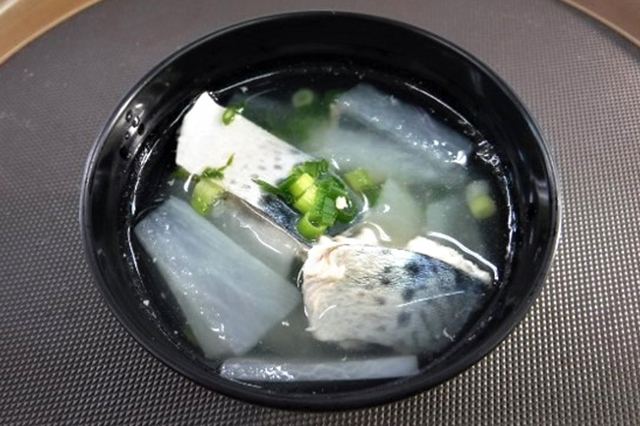
| Prefecture | Osaka (大阪府) |
|---|---|
| Region | Kinki |
| Japanese name | 船場汁(せんばじる) |
| Reading | Senbajiru |
| Home area | Osaka City |
| Main ingredients | Salty sauce, big root. |
History and Origins
It's a hot spring with a salt rose and a large root and has been known as a household dish on the boat for years. It's a product that enjoys a good taste of living and elegant, and it's called the "Shogun's Soup." It's a delicious dish like Osaka, which is used freely to fish. The docks are the warehouses that are truly the commercial center of Osaka. The food of the merchants, who had many servants at that time, was very simple in the morning and evening, and the noon meal, and only twice a month, salt and other fish were eaten. After you take the fish, it's the sea soup that you use the head, bones and stormes you use to take off and boil the large roots. From the fact that we can use fish to the full and make them available and timeless, we were very busy merchants and valued them and settled on as everyday food.
When It Is Eaten
In addition to being enjoyed at home as a daily food, it is provided at local eating establishments throughout the city. In the fall when the citrus is in season, in winter when the hot soup is falling in love, they are eaten.
How It Is Eaten
With the sauce of the cloth, the bone and root of the cucumber are boiled, and the salt is used to finish the process. Add onions as a spice. I used to use salt peppers and taste the salt and fresh fruits. But in recent years, I have often used fresh rice in cuttings, or add vinegar and oil to the finish.
Recipe — Serves 4
Ingredients
- 1(300 g) all
- 10cm(440 g) daikon radish
- 1(25 g) leaf green onion
- 6cm(20 g) green onion
- 1 cloves(70 g) ginger (すりおろす)
- 5cm(10 g) kelp (konbu)
- 1 water
- Mix: 2 tbsp sake
- Mix: 1 tbsp light soy sauce
- Mix: 1 tsp salt
- 4 g 柚子果皮
Method
- I wash the rice well, cut the salt to the right size, and put it on for about an hour.
- Wash the salt from the sieve and cut it into two centimeters.
- Put the head and bones of the bowl into the hot water, dip it in cold water, and drain the water.
- The radish cuts the skin in a short print with a length of 5 centimeters and rubs gently.
- We cut them into strips of fiber and expose them to water and gray hair.
- Put the amount of water, cloth and three roses in a pot and put them in a pot, and then boil them into a low fire, boil them, boil them, boil them with paper towels for about ten minutes, and add three radishes and middle bones, and then boil them and taste them with a taste of citrus A.
- I'll pour some of the peppers down and then I'll give you a gray hair and umbilical cord.
More About Senbajiru
The soup is a dish that was born on a ship at the docks of Osaka. The stew is boiling.
A lot of soup made from boiling fish and cicadas, such as salt sava, and other vegetables.
Cut the salt sabbatical, the head, the middle bones, put a diphtheria and convex in and boil from the water. Ara is a vital and can't taste anything without cutting.
When the material is cooked, I'll make the flavor with soy sauce. Sometimes you can put onions in as a spice. It's not like I'm going to play the pepper. It is good to have a warm body in winter when you have the smell of the sabbatical. I used salt sabbats and tasted the salt and fresh fruits, but in recent years I often substitute them with fresh sabbatical cuts, or add vinegar or so on to the finish.
It's not a waste of time to be able to spend all the time in the labs, including the loss of head and middle bones, the low cost, the time being eaten and the heat is on. It's a busy downtown treasure, development and fixed. In addition to being eaten at home as a daily food, it is provided by local diets and other items. In the fall when the mascots are in season, in winter when the hot soup is falling in love, they are eaten.
Text adapted and translated from the Japanese Wikipedia article 船場汁 by its contributors, licensed CC BY-SA 4.0.
Dish data: Ministry of Agriculture, Forestry and Fisheries (MAFF), “Uchi no Kyodo Ryori” (Our Regional Cuisines) database, used under the Public Data License (PDL1.0); translated and adapted from the Japanese original.