Home / Okayama / Amitodaikonnonitsuke
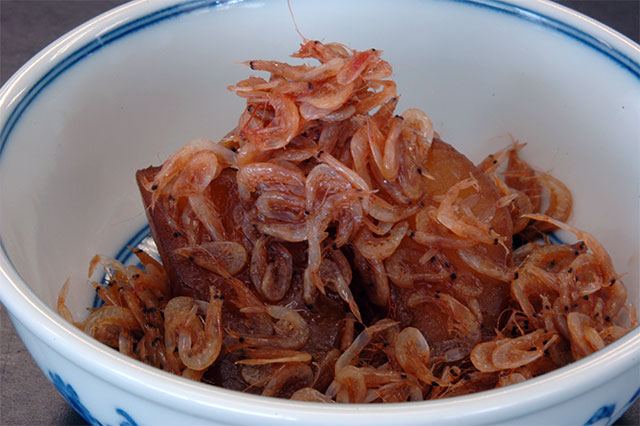
Amitodaikonnonitsuke あみとだいこんの煮付け
| Prefecture | Okayama (岡山県) |
|---|---|
| Region | Chugoku |
| Japanese name | あみとだいこんの煮付け(あみとだいこんのにつけ) |
| Reading | Amitodaikonnonitsuke |
| Home area | Inland Sea Coast |
| Main ingredients | Hey, Amy. |
History and Origins
The "Sun and Yun" is an old-fashioned flavor of the fall in Sedeo. It is estimated that he invented a plate that will be served together with a large root and an ami that will appear at the same time. Ami has so much fat that cooking with her is good and delicious. Amy is a small shrimp from the Sakura shrimps that are being washed up on the beach in Seto, and she will be in her early fall. In Seoji we are known as the Akimi and the Amis, but they never leave the province too soon. In Okayama, people sometimes eat raw stuff with soy sauce or boil it and eat it with soy sauce. It's also enjoyed by the salted Ammi.
When It Is Eaten
In the past, from November to February, I spent about four years trying not to go fishing alone because the wind was strong and the sea was rough. At this time of the year, we dried or salted them and stored them for storage.
How It Is Eaten
I'll have to put in an ami in and wash it clean with water and clean it up. I'll cut the skin into strips. Put sugar, wine, sedate oil in the pan, boil it, put ami, ami in the pot, and chop it down and boil it in a low-fire cooking pot. When the bowl becomes soft, add soy sauce and let it boil.
Recipe — Serves 4
Ingredients
- 400 g ami shrimp
- 1 daikon radish
- 2 tbsp sake
- 4 tbsp soy sauce
- 3 tbsp sugar
Method
- I'll have to put in an ami in and wash it clean with water and clean it up.
- I'll cut the skin into strips.
- Put sugar, wine, or soy sauce 3 teaspoons in the pot, boil it, put ami, a large root, and chop it down and cook it in a low cooking pot.
- If the bowl becomes soft, add one tablespoon of soy sauce and let it boil.
Dish data: Ministry of Agriculture, Forestry and Fisheries (MAFF), “Uchi no Kyodo Ryori” (Our Regional Cuisines) database, used under the Public Data License (PDL1.0); translated and adapted from the Japanese original.