Imoni 芋煮
| Prefecture | Yamagata (山形県) |
|---|---|
| Region | Tohoku |
| Japanese name | 芋煮(いもに) |
| Reading | Imoni |
| Home area | All within the province. |
| Main ingredients | I'm going to put in a lot of them. I'm going to put in a lot of them. |
History and Origins
The birth of potato soup is said to be old, even in the mid- 1600s. The area near Nagasaki, then said to have been the end of the highest river ship, was the location where the cargo brought from above was brought by way of the wine pad. However, since there was no means of communication at the time to inform us that the boat arrived, the ship's captains may be waiting for days before the receiver shows up, and they may have been holding a banquet in the river to get bored. There was a salt collection of the native potatoes near the docks, so I heard that they cooked and cooked the seismo potatoes and the port of the port. That's what's called the root of the present "mass soup." It is said that it was not until the beginning of the Shoichi that beef came into use. The "same potato" has different flavors and materials in different areas. It is said that the Japanese Sea's "same soup" is distinctive and that when the inland "sood" flavors reached the interior of the country, the pig business was so high that meat and flavorings were prepared for pork.
When It Is Eaten
"Spem soup" is one of the local dishes often eaten in the winter from the fall of the harvest season of the Asian potato. The "Spem Soup Party" is a soup party that carries pots and materials into the stream, that is made with family and friends, that is built out of the open after athletics and regional events, and so forth, and so forth. In Yamagata Prefecture, the "same soup party" is one of the annual events, along with the New Year's and Anniversary, and "same soup" is an essential local dish for the local people. At this time, food is sold in supermarkets and convenience stores for "spem soup" items, and it is common for rents to be set up with potato soup pots, firewood and Gozas.
How It Is Eaten
It's interesting to see that the basic ingredients are seismogras, beef, sweets and cucumbers, but there are differences in the variety of flavors and ingredients in different areas and homes. The main difference is in the Japanese Sea's interior area, where the tools use pork instead of beef, and other materials are thick, soft, and so on. It's standard to say that the seasoning matches the pork. Other inland areas are made of beefy - oily "susame" and so on, but in the best parts of the country, you can put in a rich variety of vegetable or citrus, and in the middle of the country, you can put in a large cut cotton tofu and use it as a hidden taste. In recent years, we have established that we can add rice to a pot with fewer tools and taste it as a sponge.
Recipe — Serves 5
Ingredients
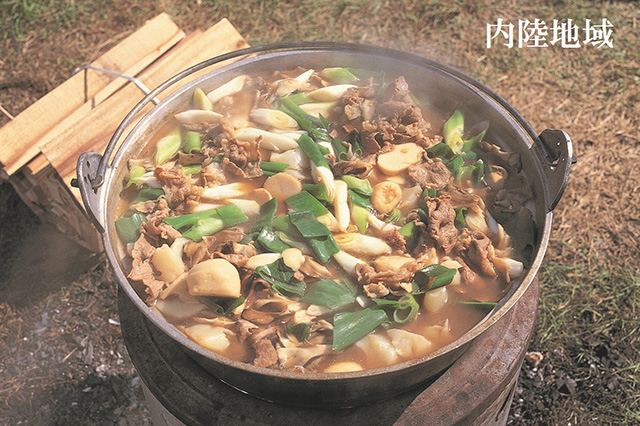
- <内陸地域の「芋煮」>
- 500 g taro (皮つき)
- 1/2 konnyaku block
- 150 g beef (バラ肉)
- 1 long green onion
- 4 tbsp soy sauce
- 1 tbsp 1/2 sugar
- 3 tbsp sake (sake)
- 800 ml water
Method
- The remora peels off and cuts into a large bite.
- The beef will be cut to about four centimeters, and the onions will be cut to a large diagonal.
- With my hands, I'll rip a small bite off the board. If it's made of cillus, then you don't have to use boiling to control spills. If you want to use raw potatoes, you need to boil and operate.
- Put in a pot full of water, ari potatoes and garlic, and cook it on fire. If you boil lightly, add 1 teaspoon of soy sauce and cook it.
- When the rye is tender, add beef and the rest of the flavored sweeteners 3 teaspoons [3 ml] of citrus, sugar, and Japanese wine, and cook it with a licking pot.
- Add a bow and stir until you are exhausted. You can boil and taste.
More About Imoni
Imoni (芋煮) is a type of taro and meat soup eaten traditionally in the autumn in the Tōhoku region of Japan. Yamagata Prefecture in particular is famous for its imoni, but other prefectures in the region also have their own different varieties.
Imoni is eaten like any soup, primarily during the late summer and early autumn, but is most famous as an outdoor food. In the autumn, groups of people preparing imoni around a fire near a river is considered a sign of the season, and convenience stores maintain a stock of firewood and other supplies just for the occasion.
Ingredients
The different recipes for imoni vary from prefecture to prefecture: for example, inland Yamagata imoni contains beef, sugar, and soy sauce and is sweet, while the imoni prepared in the neighbouring prefecture of Miyagi does not, but includes miso paste to flavour the soup. Similarly, even the Shōnai region of Yamagata features a pork and miso base rather than the beef and soy sauce base of inland areas of the same prefecture. However, several ingredients are considered standard parts of the recipe:
- Taro root (satoimo, Japanese: サトイモ/さといも, Kanji: 里芋)
- Thinly sliced meat, typically beef or pork
- Konnyaku, dense jelly made from the konjac plant
- Soy sauce
Other ingredients may include Chinese cabbage (hakusai), burdock root (gobō), daikon, carrot, negi (Japanese green onion), mirin sake, tofu, mushrooms - in particular shimeji, hiratake, shiitake, maitake - and region-specific modifications.
Culture
In Yamagata Prefecture in particular, and its neighbours in general, imonikai (芋煮会 "imoni parties") are an important autumn tradition. Tourists flock to Yamagata for the Autumn Imoni Festival (Akino Imonikai) where they join local residents on the banks of the Mamigasaki River on the first Sunday in September, to eat imoni from a gigantic iron kettle, which uses a building crane to add ingredients and stir the pot. In 2009 the festival served imoni to 30,000 guests before the pot was empty.
Many schools and work organisations in Northern Japan arrange imonikai for their students or employees. Through September and October it is common to see groups of imonikai revellers on the banks of rivers, even near major highways.
Text adapted from the English Wikipedia article Imoni by its contributors, licensed CC BY-SA 4.0.
Dish data: Ministry of Agriculture, Forestry and Fisheries (MAFF), “Uchi no Kyodo Ryori” (Our Regional Cuisines) database, used under the Public Data License (PDL1.0); translated and adapted from the Japanese original.