Katuonotataki かつおのたたき
| Prefecture | Kochi (高知県) |
|---|---|
| Region | Shikoku |
| Japanese name | かつおのたたき |
| Home area | All within the province. |
| Main ingredients | It's called the phlegm. |
History and Origins
Katuo, a local fish of Kochi Prefecture, is a food that is regularly eaten. It is said that the "and the dog" was passed on to the general public what fishermen were eating on board. It is said that in times of lack of preservation, and in order to eat the freshly dried cazoo on the ship, the cooking process of the citrus citrus has developed. Making it a "and-a-breast" also reduces the natural smell of the kattuo. "And the Lord's Prayer" means "His Name is Omnipotent." It is said that it comes from the fact that, when cooking, you used salt and chips to beat them and make them taste better. In Kochi Prefecture, where the cooking is high, you can eat it in a small amount other than cacao, such as seagulls, meat and pumpkins, in some areas. If you are a vegetable cooker, you eat with a tip or a flavor on something that is boiled or fried. Also, there are vegetables and fish mixed together, and fish combine with vegetables in season.
When It Is Eaten
Except for one winter season, they eat casserole all year round, but they say that the fall of autumn is fat and that it's perfect for chewing. The early summer morning cherry, which comes during the new green season, is also considered delicious and is popular. It's also a regular dishwasher for the Memorial or the Shinto festival as well as for the entire province.
How It Is Eaten
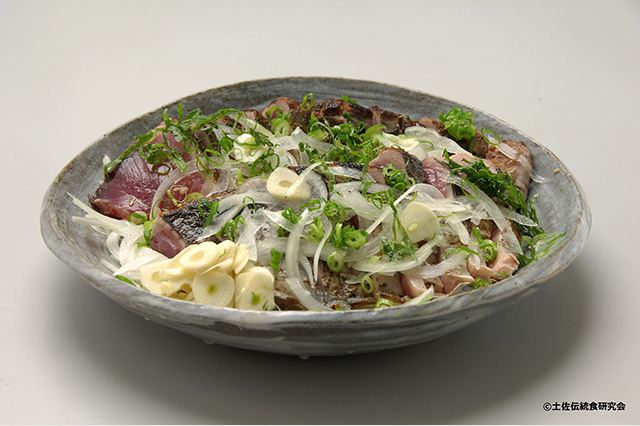
I cut the three-legged kattuo into my back and stomach and put it on a fire net and burn it in a flash. The skin of the oysters makes it easier to eat and the flavor rich by the fire. To make the fire go through, there is also a certain saving effect. It is recommended that you boil it in order to produce flavor, but in general homes it is often done with gas. I'm going to put a thick knife on the hot catto. I want to put my knife on a board, shake the salt, and hit it lightly. This "strike" process is said to have originated with the "bullet." When you are done with salt, you will be served on a plate with a mixture of soy sauce and soy sauce. I'll rip off a slice of garlic, and I'll cut off a small cut of a smudge with a taste. And how to finish the wood is slightly different in each area and may be said to have only the number of homes and shops.
Recipe — Serves 4
Ingredients
- 300 g fillets
- 1/2 tsp salt
- 1 tbsp yuzu vinegar
- 3 tbsp soy sauce
- 1(20 g) green onion
- a pinch onion
- 4–5 garlic
Method
- Cut into pieces, cut into pieces, and put them in a fire net, or in a fish bowl, they put three sides on the fire.
- Cut into a thick knife.
- On the cutting board, I shake the salt and beat it, and then I pour half of the mustard and soy sauce on the plate.
- I'll rip a slice of garlic on a kanu and, by choice, cut off a small cut of a piece of mustard or a thin piece of corn. The rest of the soy sauce and vinegar.
Dish data: Ministry of Agriculture, Forestry and Fisheries (MAFF), “Uchi no Kyodo Ryori” (Our Regional Cuisines) database, used under the Public Data License (PDL1.0); translated and adapted from the Japanese original.