Kenchinjiru けんちん汁
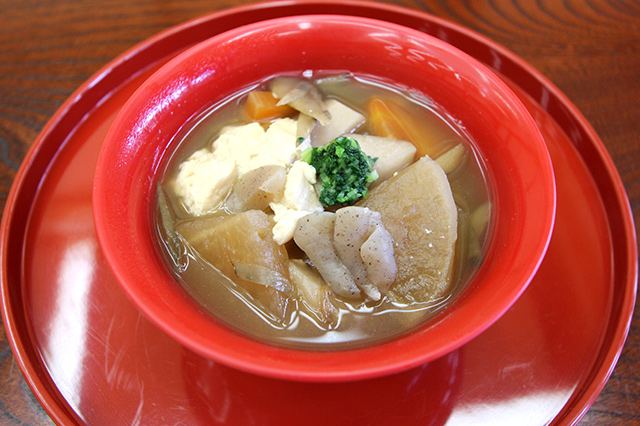
| Prefecture | Kanagawa |
|---|---|
| Region | Kanto |
| Japanese name | けんちん汁(けんちんじる) |
| Reading | Kenchinjiru |
| Home area | Kamakura, national |
| Main ingredients | It's a little hard to eat. It's a little hard to eat. |
| Recipe yields | Serves 3 |
History and Origins
The dishes that are cooked with oil, such as radish and carrots, are cooked after cooking. There are theories about its birth, and there are theories about how Japanese has become the Japanese language, and there are theories about how the "Kyojiji" made at the main temple in Kasai has always been called "Sai". Although lye is now eaten in many parts of Japan, it has been eaten in the main temple for over 700 years, and according to one theory, it has spread throughout the country as priests who have been trained in the main temple were sent to various places. Since the soup in the construction temple is a connoisseur dish, we don't use animal food and we don't even have to clean it up. Despite the ostentatious dish, many vegetables are used because they have been made without waste from the waste from other gravy dishes. In the lye there is a story of the duplicating of tofu in the lye, but the story remains from the fact that the first residence of the chief temple, the apprentice, picked up the tofu, washed it, and put it in the juice.
When It Is Eaten
It can be eaten throughout the year, but because it is root and warm, it is especially preferred during cold weather. In some regions of Kanto, they are eaten to match season events, such as the segmentation, the E-surgical course, and so on.
How It Is Eaten
After roasting the cut material in boiling oil, add the sauce and cook it with a weak cooking. When the vegetables become soft, add salt, soy sauce, and boil more, and mix tofu with your hands. There are various ranges added to the equipment and other items in the home and in the area.
Recipe (Serves 3)
Ingredients
- 40 g daikon radish
- 30 g carrot
- 30 g lotus root
- 30 g burdock root
- 30 g taro
- 1/8 konnyaku
- 1/6 blocks firm tofu
- a pinch daikon leaves (komatsuna)
- 400 ml dashi stock
- 2 tbsp sesame oil
- 1 tbsp1/3 soy sauce
- salt, to taste
- a pinch mirin
- a pinch sake
Method
- (See below for the recipe for making an obtuse.)
- (I don't want to cut the radishes into large radishes, carrots, and so on.)
- (It's only to wash the mud that we'll cut it for half a month, and not to skin it.)
- The first time I peel my skin, cut it to a small size, and wash it with salt.
- The drying process will be taken out and carved with stone when the phytoplankton has become soft.
- The pepper is boiled, and the chopsticks are used to drill holes, and the water is swallowed and spoon is used to cut a small bite. I dry the garlic in a pot and take in the water so it tastes good.
- Cotton tofu cuts water and makes water difficult to make.
- The large root leaves or small pines have hot water and cools with ice water. Take the water and cut it fine.
- Hot the cooking pot with steam oil, and then we can cook it in order.
- When the vegetables are fried with oil and a little fire passes through, put in an inert process. I'm also going to use dryers.
- Take the pot by adjusting the heat so that it does not boil.
- If the vegetables are cooked, cook them with a weak fire for about two hours.
- Salt, soy sauce, and salt to paste. Then add it. (After this I add tofu, so I season a little thick.)
- (If the vegetable tastes good, it's a weak fire in which tofu is tofu by hand.)
- I'll add a little sesame oil and give it a flavor and finish it.
- I'll put it on the bowl. The leaves are made by adding bluish root leaves at the end.
- It's a bit of a trick.
- I'll cut the cloth in a corner of about two centimeters. I put water, cloth, and cloth in the pan, and I stay overnight in the refrigerator. Set the pot on fire and lick the pot. I'll boil it for about 30 minutes. (I'll put ice water on the bowl to keep it cold.)
Source: MAFF “Uchi no Kyodo Ryori” (Our Regional Dishes) database.