Home / Saitama / Nibōtōhimokawa
Nibōtōhimokawa 煮ぼうとう
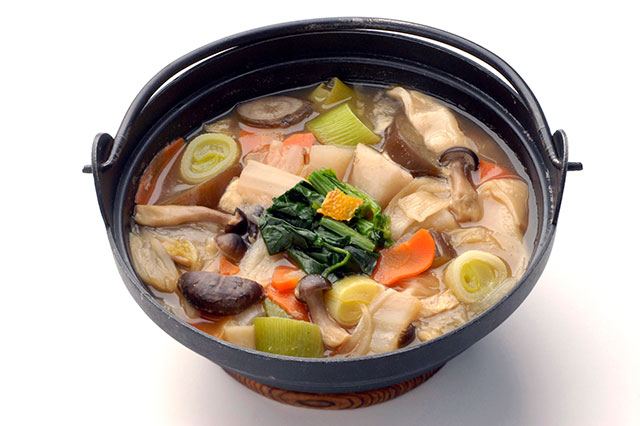
| Prefecture | Saitama |
|---|---|
| Region | Kanto |
| Japanese name | 煮ぼうとう/ひもかわ(にぼうとう/ひもかわ) |
| Reading | Nibōtōhimokawa |
| Recipe yields | Serves 4 |
History and Origins
In Saitama Prefecture, where wheat was produced a lot as the back product of rice crops, there are a wide variety of rice plants in many places. One of them is "cooking" that is eaten in the center of Deepagawa City. In middle-age and controlled county, there have been called "stamps" and "crushing" and "crushing" in the father-in-law community. It was once a family gathering around the edge and pans, and was eaten for dinner on a birthday day, which is now made at home as a warm meal in winter. Also known as a local businessman, Akira, who served from Akira, from Japan, is also in love in the city of Hajiji, a businessman who came from a local community, and is also known for his love of the food served at a school feeding center in Hajitown.
When It Is Eaten
Since in every region it's mainly family food, and a warm, cooked dish, it's basically been eaten from fall to winter. In the city of Deepa, you will find yourself known as the local great and the great.
How It Is Eaten
Add water and salt to the flour, lay down, thin with a stick, and make plain fat rice. Cut the local vegetables, such as daikon, carrots, cabbage, and chicken, and then cook them lightly with oil. Add the soup or water and boil the vegetables until they are soft and taste them on the soy sauce base. In Hajidani, we put in a lot of famous deep valleys.
Recipe (Serves 4)
Ingredients
- 50 g komatsuna
- 1.4 L water
- 3 tbsp1/2 soy sauce
- 1 tsp sake
Method
- We put water and finely polished fabrics into a pot and boil them with a heavy fire. When it is boiling, I will boil it for about eight minutes while taking a weak cook. I'll put it back on fire.
- I'll boil the okuana and cut it into size that is easy to eat.
- I'll roast carrots with it (out of oil) and continue with chicken.
- When the chicken color changes, I add a large root to it and roast it and put a root in it.
- I'll put in the cabbage cores, leaves, oilings, rices, fried rice, and a hot potato sauce and add one raw raw raw sauce to the dish.
- If the vegetable is cooked, it will taste with soy sauce and wine, and then add the string to it in the same way as you use it.
- If the string is on fire, put in the boiled pineapple.
Source: MAFF “Uchi no Kyodo Ryori” (Our Regional Dishes) database.