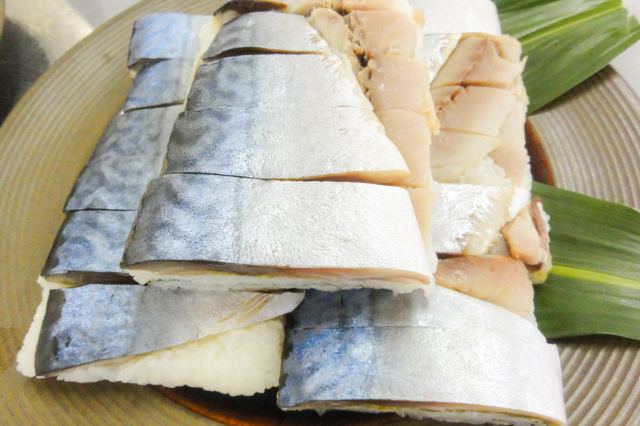
Sabanobōzushi 鯖の棒ずし
| Prefecture | Shiga (滋賀県) |
|---|---|
| Region | Kinki |
| Japanese name | 鯖の棒ずし(さばのぼうずし) |
| Reading | Sabanobōzushi |
| Home area | All within the county center of the lake north. |
| Main ingredients | And it's not just the food. |
History and Origins
The "The Fabulous Fabulous" is the local dish as a festival treat. There are many other things that are burned up, disappeared, and left unscathed, and used in the summer. The reason why there are so many dishes with Saba is that they were often obtained in northern and western lakes. There was a road to the Kyoto to transport fish from the ancient young bays, and a route through the western part of the lake. Many mascots are brought in, they're called "Safe Road," and there are many manufacturers along the street. Even on the long beach, I got Saba, Nisin, and Sake from Kaji Bay. However, the "Saki's Bar" was an essential dish for the festival of the Sasai and the Yamayama festival on the Long Beach. The rice of Shiga Prefecture is grown in several species. There are "Koshikkari" and "The Falling Fence" and "Kinya Kari" and "Kinjikaka" and "Kinjii" and "Kinjii" and "Kinji" and "Kinji" and "Kinai" and "Kinji" and "Kinai" among them, the most highly valued "A" in rice food-eating plants by the General Foundation of Japan's Gradients Association (1919). The honey is a product that Shiga Prefecture developed by itself. The rice that has grown up has a good deal of stickyness and sweetness, and is a delicious feature when cold.
When It Is Eaten
Savas arrive in season from fall to winter, so in the cold, "shoes of the camel" are often eaten. It's popular to be given as a souvenir and also as a return gift.
How It Is Eaten
Wash the salt sabbats in vinegar, put them down on three pieces, and soak them overnight. I'll peel off the skin and remove the skeleton. We'll steam the cooked rice and boil it together with vinegar. Spread the wraps, wrap them, and put them on the sabbatical. I'll hold the rice lightly on it. I roll it around, roll it around, stick it around, and mold it. Finally, when the rice and the sabbatical are licked, a knife with a knife that has been cut and stretched with vinegar.
Recipe — Serves 4
Ingredients
- 2 × 180 ml(290 g) rice
- 1 salted mackerel
- Mix: 120 ml vinegar
- Mix: 20 g sugar
- Vinegar: 70 ml vinegar
- Vinegar: 60 g sugar
- Vinegar: 8 g salt
Method
- The salt sabbatical is washed and taken off its head and dropped into three sheets. Remove the metacarpals and hipbones, and spend the night in the sweets that are used for vinegar.
- The skin of the sabbatical is removed from the head and the small bones are removed. Tightly around the thick part.
- When you're finished cooking rice and steaming it, put it in the hot season and mix it with a skid and keep it cool.
- You can spread out a wrap on the board, wrap it up, and put the saber down. Add a cut-off body to the missing tail. I'll hold a half of my rice on top of it with a light grip.
- I'll wrap it around, I'll stick it around, I'll stop both ends with rubber and I'll leave it there for a while. You should keep light heavy stones from above.
- After the rice has calmed down, a knife with a piece of vinegar is used to cut it out.
Dish data: Ministry of Agriculture, Forestry and Fisheries (MAFF), “Uchi no Kyodo Ryori” (Our Regional Cuisines) database, used under the Public Data License (PDL1.0); translated and adapted from the Japanese original.