Home / Ibaraki / Shimikonnyaku
Shimikonnyaku 凍みこんにゃく
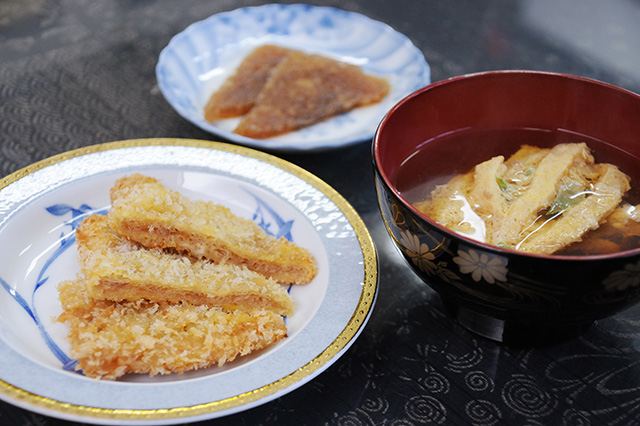
| Prefecture | Ibaraki (茨城県) |
|---|---|
| Region | Kanto |
| Japanese name | 凍みこんにゃく(しみこんにゃく) |
| Reading | Shimikonnyaku |
| Home area | Northern Area |
| Main ingredients | Oh, my God. |
History and Origins
The remote region of northern Ibaraki Prefecture is an old and densely cultivated region. It has a history of supporting the zXQQ 158X as a commercial product of the river. "Scroaking" has been created as a side job in northern Ibaraki Prefecture. During the Edo, explorers from the north and Tokimura from the Kumokusaka region are reported to have brought home the formula from the Tsunami. "Scroaking" is produced in a way that goes along with the cold temperature of the environment of Ibaraki Prefecture. We'll cover the hard winter fields between mid- December and February, and then we'll put them in a pile of potatoes, then we'll pour water, and then we'll freeze them by night. Then, after about 20 days of slow decompression in the daylight, the water in the hollow becomes spongy and "crushing." It takes a month to complete it and takes a long time to finish it, but since the late '60s, production has been greatly reduced, and it is now a rare food item produced only in northern Ibaraki Prefecture.
When It Is Eaten
"Frozen and frozen," known as the winter wind poem of Ibaraki Prefecture. It has been prized because it is a good food food that can be eaten long if kept dry. We have been enjoyed in many different ways in our homes, but generally there has been a practice of cooking "coo."
How It Is Eaten
After placing the "frozen" in the water for about 15 minutes, we'll boil it in boiling water for about ten minutes and then remove the pot and process it and put it in stews and pans. Because there is no taste or smell, you can match any dish and enjoy the unique flavor of the dish and its flavor and its juice. The common local dish is the "cooking" that is seasoned with soy sauce, wine, garlic, and sugar. In recent years, there have been many ways to prepare other boiled frozen peppers, such as fried peppers, snowballs, fly and glag, chows, and other things that have not been tasted, as well as absorbers, eggs and so forth.
Recipe — Serves 10
Ingredients
- *レシピは「凍みこんにゃくの煮しめ」
- 5 frozen konnyaku
- 3 tbsp sugar
- 3 tbsp soy sauce
- 100 ml water
- 2 tbsp sake
- 1 tbsp mirin
Method
- Put water in the ball and dip "frozen" in for about 15 minutes. After it becomes soft, it takes two or three times to drain it.
- I light up the frozen "frozen" that I've made in the past, and put it in boiling water for about 15 minutes to boil and cut off the water.
- I'll boil sugar, soy sauce, water, wine, and garlic, and then add two "frozen" to the boil.
- While the juice remains a little, I can put off the fire and cool down the "frozen" and make it light.
More About Shimikonnyaku
A traditional dish made from the region of Kyoji, which centers around the town of Okokoji, in northern Ibaraki Prefecture. It's a freaking thing.
Overview
The Kunami region is grown from ancient times, and in the days of Edo, it supported the Hajidashi scheme as a commercial. In the freezing season, a farmer in the north of Ibaraki Prefecture is the food that he has made as a side job in the desert.
It's a condensation and rescindation of the ice, and it's characterized by a spongy spongy flow of water. It doesn't taste good in itself, but because of its spongy shape, it sucks in the dust and so on. It's a food that enjoys the taste and the dusty flavor of chewing.
If you keep dry, you can save it for a long time, and are eaten in a variety of cooking methods.
History
In the Edo period, explorer Komura from Kuichi, Japan, is reported to have brought home the formula from Tsukiji.
It was used to be produced in China, such as China, but today it's only produced in northern Ibaraki Prefecture. At one time, there was fewer than one producer. Three manufacturers were made by 2022.
How?
It's made in the middle of December until about February.
Fill the fields with straw and place thinly cut pieces of water. At night, the cool temperature makes the conch freeze, and the sun freezes the conch slowly. If you repeat this for 20 days or so, it will be finished by freezing.
On the surface of the frozen ground, the muscle is carved, which is the mark of the straw that was laid below. The daily turning of the bowls, arranged on top of the cushions, is not mechanical, and everything is done by hand.
Cooking Example
There are various methods of cooking, but stewing is common.
It's used for raw fish, cucumbers, fly, gladtan, and garlic, as well as for eggs and eggs and absorbibles.
There's also a menu such as pizza and hamburgers designed to expand consumption.
It's so icey.
It's a food made by freezing the normal cucumber for over a day and is reduced to a simple version of freezing.
Text adapted and translated from the Japanese Wikipedia article 凍みこんにゃく by its contributors, licensed CC BY-SA 4.0.
Dish data: Ministry of Agriculture, Forestry and Fisheries (MAFF), “Uchi no Kyodo Ryori” (Our Regional Cuisines) database, used under the Public Data License (PDL1.0); translated and adapted from the Japanese original.