Takomeshi たこ飯
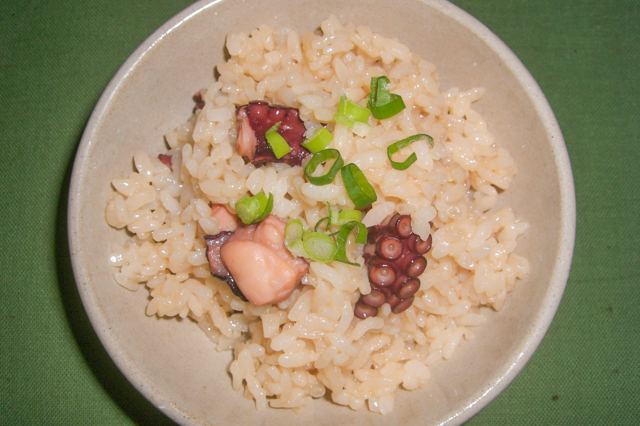
| Prefecture | Mie (三重県) |
|---|---|
| Region | Kinki |
| Japanese name | たこ飯(たこめし) |
| Reading | Takomeshi |
| Home area | Iseshima University. |
| Main ingredients | Taco, rice. |
History and Origins
The history of octopus food in our country is old, and in Mie Prefecture, the shell of the oysters has been found to be rich in shells. Isemiya's annual festival at Isemiya's Festival of Years also includes octopuses, along with dried sharks and shrimps. Also, the festival in October with the octopus and the salmon is served as part of the festival, and the custom of doing this at the home of an old Mr. Yasuke in Yasuke is still present. Thus, the octopus caught during the year has been used as a familiar food for ages. Mie Prefecture contains a lot of true and large-scale silkworms. There are various kinds of fishing, such as fishing nets, fishing nets, sea turtles, and sea turtles, which take a lot of fish in the year, and fish fish fish that use an anthills are among them. In fishing harbors, when it's cold, you can see the landscape where the dried octopus is shaken by the fluctuations. Takako, who grew up in the fast currents of Isegawa, is very strong and delicious, and especially the Okashima family, who is in the rough waters of Iseshima, is very popular. There is also a town in the city of Hanamoto. The names of the land are unspoiled, but they are said to be "on a stormy day, the octopus came up to the edge of the rice field" and "because the moonlit night had climbed up to the water. " It's also called "distress."
When It Is Eaten
The waters of Iseshima River and the sea of bird feathers mixed with Pacific saltwater are rich fishing grounds, where the octopus grow up with a rich presumption and are eaten locally. The tuna fish have been caught all year round using an octopus. Many are available in summer, but winter octopuses are soft and delicious, and they can be eaten by the "knit" that uses them all year round.
How It Is Eaten
This is a simple dish where raw octopus is cooked with rice. Materials may include carrots, but they don't contain very many tools. An octopus is supposed to use raw materials, but if it is not available, it can be dried and put back in, or put in small octopuses that cannot be sold, and so on, depending on where and how you live.
Recipe — Serves 4
Ingredients
- 350 g octopus (生)
- 3 cups rice
- 2 tbsp soy sauce
- 3 tbsp sake
- 1 tbsp mirin
- 1 tsp() salt
- as needed ginger
Method
- I'll keep the rice clean.
- The octopus removes its internal organs and takes up enough trouble with salt to remove the stain.
- An octopus that has been prepared will be cut to the right size, and will have a full amount of taste in about 20 minutes. (Salt comes later)
- Add some flavor to the rice, salt, and octopus in the rice bowl, as well as some flavors. It will taste better and water it.
- Finally, I put an octopus in and stir it gently and cook it.
- You can scatter finely cut blue on top when you put it in.
- The sai (1) uses a taste juice made with pepper juice to remove the scent. (2) If there is no raw silk, you can use it back and use it. (3) The raw material is only an octopus, but you can add carrots, lentils, and rice for your fifth meal, as long as you like. It's better not to use a dried-up, oil-heated, or boiled-up just to prevent the octopus's taste.
More About Takomeshi
The rice is rice from an octopus and is one of the local dishes. There's something to cook with an octopus, something to put or mix boiling octopus on rice, or something to combine both.
Also made from the Pacific octopus, at Ibaraki Prefecture.
The pine cone.
It's a cook-in-the-box. Although the origin is unknown, it is believed that fishermen on the fishing boat cut up the octopus and put it into their food. In the beginning, I was born in the sand, where there are many shrimps, crabs, oysters, and octopus growths. The 200-pound daco, or "tree sprout," which appears first in spring, is pressed and delicious. Also, since nutrients - containing water enters the ocean during the rainy season, it is thought that octopus growth and this season also have a unique flavor.
An example of materials and construction.
(Singing)
1 / 2 cup [1.4 L] of raw rice, 3 cups [1.3 L] of citrus oil, 4 oz [45 oz] of wine...
How?
I can't get rid of the dirty dishes just because they're simple and light. First, salting the leg of a live daco, hand-to-hand, and remove the surface slip. And I'll clean up the stains in the inhaler using my fingers. The octopus is cut to the right size and lightly beat with the knife's back. Next, wash the rice, put it on a monkey for about 15 minutes, and cut the water well.
Put the rice in the rice cooker and pour all the flavors and flavors gently together. Finally, put the octopus in and switch it on and cook it up.
If you use raw silk, it will be painted with a pretty color, like red rice. You can use your taste to pick up the sprouts and the blues.
Station valve
What is sold at the following station is famous.
Toshihara Station, Fukuyama Station, Fukuyama Station, Hawa Station, Shinji Station. The "single" is the Long Island Station valve that began to be released in 1953. - "I'll eat you." Using a canister of citrus. - "The Akira-sama-sama soup plate." I'll have rice later. - "three beach lunches." I'm carrying a slice of rice on the rice bowl.
Annotations, Sources
Text adapted and translated from the Japanese Wikipedia article たこめし by its contributors, licensed CC BY-SA 4.0.
Dish data: Ministry of Agriculture, Forestry and Fisheries (MAFF), “Uchi no Kyodo Ryori” (Our Regional Cuisines) database, used under the Public Data License (PDL1.0); translated and adapted from the Japanese original.