Home / Iwate / Tennenhoyanosunomono
Tennenhoyanosunomono 天然ほやの酢の物
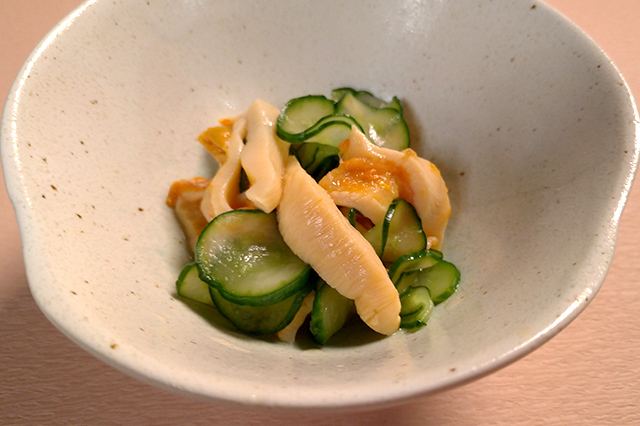
| Prefecture | Iwate (岩手県) |
|---|---|
| Region | Tohoku |
| Japanese name | 天然ほやの酢の物(てんねんほやのすのもの) |
| Reading | Tennenhoyanosunomono |
| Home area | Three - Land Coasts |
| Main ingredients | Oh, my God. Salt. |
History and Origins
Sou is known as "the pineapple of the sea" and as the food that has all the sweet, sour, salt, salt and bitter taste. There are also a lot of nutrients, such as zinc, vitamin E, and vitamin B12, besides the turpentine and glycogen. It's also characteristic that when the light falls, the odors and tear come out. It'll take three years to grow up. It's summer in the season, but it's also delicious when we have a January egg. Iwate Prefecture is also growing in the countryside, but natural creatures live in the depths of 20 to 30 meters. They require special diving techniques. There is a diving technique called "Souths," born over a hundred years ago in the northern tributaries of the sea, and the tongue of nature is very valuable because every diver is taken from the bottom of the ocean.
When It Is Eaten
It's usually eaten in May to August when it's caught.
How It Is Eaten
The meat is cut into easy size to eat, and the meat is cooked with two cups of vinegar, along with the garlic and salt. Since lye has a unique flavor, they generally like vinegar. Natural things are more tasty, even for raw or cooked or cooked food.
Recipe
Ingredients
- 2 ほや (殻つき)
- 1 cucumber
- vinegar, to taste
- a pinch salt
Method
- Take it off the shell and cut it to size that's easy to eat.
- The cucumbers are tapering and rolling the salt with a little bit of salt.
- I'll put 1 and 2 servings of vinegar on the vessel.
Dish data: Ministry of Agriculture, Forestry and Fisheries (MAFF), “Uchi no Kyodo Ryori” (Our Regional Cuisines) database, used under the Public Data License (PDL1.0); translated and adapted from the Japanese original.