Mamebujiru まめぶ汁
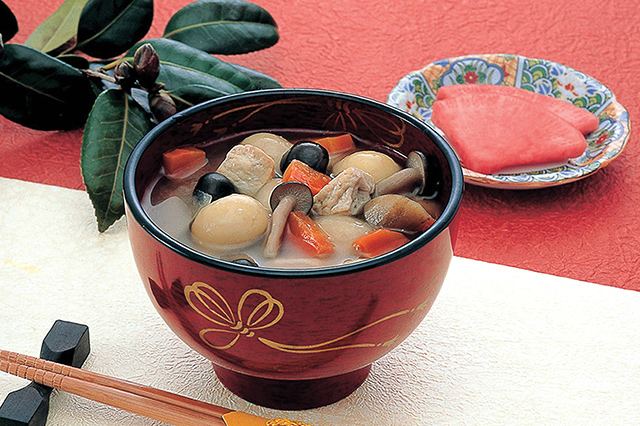
| Prefecture | Iwate (岩手県) |
|---|---|
| Region | Tohoku |
| Japanese name | まめぶ汁(まめぶじる) |
| Reading | Mamebujiru |
| Home area | Kumichi-san |
| Main ingredients | I'm not sure if you're going to be able to do that. |
History and Origins
The "Schin" is a local dish prepared with boiling and boiling oily juices, ingredients such as local vegetables and broth, and flour dumplings with peppers. It is said that during the Edo, when the crop was broken, he was eating a dumplings wrapped in flour as a substitute food for the Hale's noodles. There are theories that names are derived from "the size of beans" and from "the size of beans" and from "the desire to live in faithfulness and health" and "the desire to be healthy and healthy." Although different vegetables are used in the community and in the home, it is common for a dumplings to start with boiling and boiling cloths, to taste soy sauce, and to add glue to the dumplings. Sometimes you can add black sugar to the dumplings, and it is the unique taste of lye salt and black sugar at the same time.
When It Is Eaten
It is eaten mainly at home as a family dinner, such as a wedding feast or a New Year's celebration. It is said that when a person has a funeral, he will make a dumplings bigger and smaller in mourning. Even now, in winter, they are eaten at home.
How It Is Eaten
Even though I took it from boiling and boiling, I boiled it with a seam made of vegetables, baked tofu, garlic, and pepper flour. Depending on the area, the contents of the dumplings are just the crack and the black sugar or the garlic or the juice is different.
Recipe — Serves 4
Ingredients
- 200 g wheat flour
- 30 g shelled walnuts
- 70 g carrot
- 80 g burdock root
- 150 g grilled tofu
- 40 g aburaage (fried tofu pouch)
- 10 g kanpyo (dried gourd strips)
- 15 g dried shimeji mushrooms
- 45 ml soy sauce
- 15cm dashi kelp
- 5–6 niboshi (dried sardines)
- a pinch potato starch
- a pinch salt
Method
- We put the right amount of water into the water, and we put the rice and the salt in the dish, and we make the juice.
- Carrots, lentils, oils, baked tofu, and chocolates cut into half an inch long. I'll keep the dry dryer dry.
- (Salt a little salt in the flour, water in the size of a thumb, and a thumb-sized piece of dough that is round so it doesn't get stuck with the flour.)
- Put a bowl of soup and two vegetables in the pot, and when the vegetables are cooked, taste them with steam and salt, and add three pastes to the cooking. If the pillow has floated, I can taste it again.
More About Mamebujiru
The soup is a native dish eaten in Iwate Prefecture, or in Kyushu.
Overview
It's a dish of walnuts and black sugar cooked with vegetables, baked tofu, oils, and salts. The word "mass" refers to the walnut dumplings that are inside. It is made as a hale meal at the wedding ceremony, but it is distinguished from the dumplings by making the dumplings large and, for evil reasons, by making the dumplings small and the juice only in the dough.
Of course, it was reported in Old Yamamura and in the west of the old city of Kuichi, but since 2010 it has begun to be recognized throughout the city.
In 2011, I became a B-1 Glum Lice member as a permanent soup, and the 2013 Games were the highest in the world.
You made it.
It's a lot of flour, but it's a lot of sugar. When the flour is chopped in soft water, the flour is torn into pieces, and the dough is stretched out, and the nut and black sugar is put inside, and the flour is rolled to the size of the thumb while carefully making sure it does not appear in the middle. This is the "sniff." Cut and boil carrots, gooeys, ok, mushrooms in easy size. Where the vegetables have been boiled, add to the fried tofu and oil. When the paste is boiling, make it tastey with oil and paste it with dough.
Text adapted and translated from the Japanese Wikipedia article まめぶ汁 by its contributors, licensed CC BY-SA 4.0.
Dish data: Ministry of Agriculture, Forestry and Fisheries (MAFF), “Uchi no Kyodo Ryori” (Our Regional Cuisines) database, used under the Public Data License (PDL1.0); translated and adapted from the Japanese original.