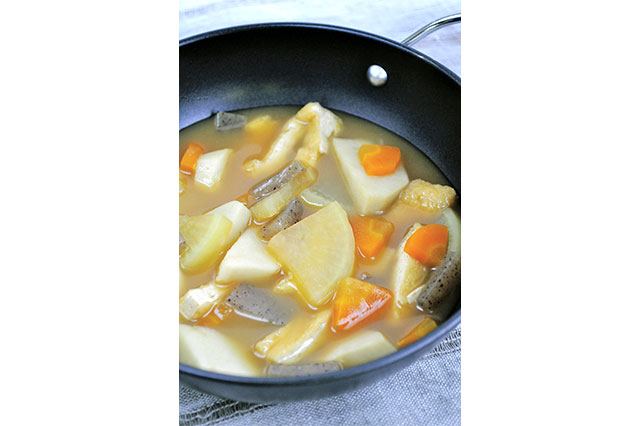
36 14 おざく
| Prefecture | Shizuoka (静岡県) |
|---|---|
| Region | Chubu |
| Japanese name | おざく |
| Home area | Mishima City, Busan Town |
| Main ingredients | And I'm going to start with a couple of things. |
History and Origins
The dish is a dish of vegetables cooked in soup, steam, steam, and sugar. When people gather for weddings, funerals and festivals, local food is prepared by neighbors who bring vegetables from their fields. It is said that since the vegetables were cut loosely and made, they came to be called "sniff." In winter, root vegetables were tasted better by frost and snow, and when they were made and boiled again, they were flavored with salt, and they were served when there were no lunches or convenience stores. In some areas, beans, tofu and meat are added.
When It Is Eaten
- Year of the year. Since you can get a lot of vegetable nutrition, you'll be at home, but you'll also be on the menu for school meals.
How It Is Eaten
The potatoes and carrots are cut, dried, and the vertebrae are turned back in water. It's a bit of salt and it's ripped apart. I'll roast the garlic in the pot, and I'll add oil to it, and then I'll roast the potatoes and carrots, and then I'll cook the mushrooms and then I'll put the juice in. When you're boiling, add oil, taste with sugar citrus, and boil until the soup is gone.
Recipe — Serves 5
Ingredients
- 400 g taro
- 350 g daikon radish
- 100 g carrot
- 60 g aburaage (fried tofu pouch)
- 100 g konnyaku
- 50 g shaved bonito flakes
- Mix: 5 cups water
- Mix: 1 tbsp sugar
- Mix: 3 tbsp soy sauce
- Mix: 1 tbsp light soy sauce
- Mix: 1 tbsp mirin
- Mix: 2 tbsp sake
Method
- I will cut each one into a thin five-millimeter slice.
- Oiling is cut short sevenmm wide and kept oiling out.
- I'll cut it in three sides and cut it in two.
- I'll put a 3 and a 3 and a 2 and a 2 and a 2 and a 2 and a 2 and a 2 and a 1 and a 2 and a 1.
Dish data: Ministry of Agriculture, Forestry and Fisheries (MAFF), “Uchi no Kyodo Ryori” (Our Regional Cuisines) database, used under the Public Data License (PDL1.0); translated and adapted from the Japanese original.