Home / Tokushima / Shiromisozōni
Shiromisozōni 白味噌雑煮
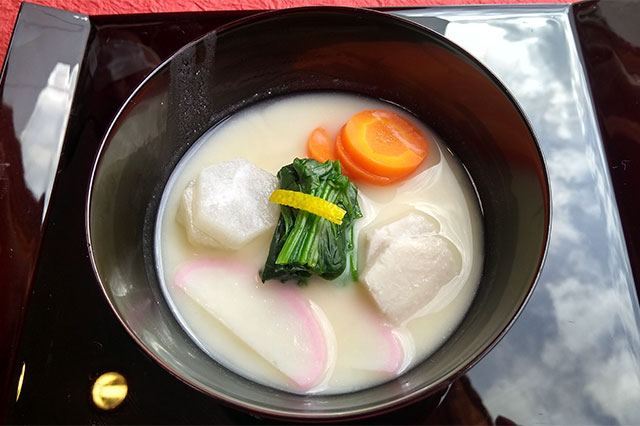
| Prefecture | Tokushima (徳島県) |
|---|---|
| Region | Shikoku |
| Japanese name | 白味噌雑煮(しろみそぞうに) |
| Reading | Shiromisozōni |
| Home area | All within the province. |
| Main ingredients | And I'm going to show you some of the things that you can do. |
History and Origins
Tokushima Prefecture jiffy is rich in character. For example, the "we're boiling" eaten in the valley is a soy sauce that comes from the past, and instead of a cucumber, it adds stone - hard tofu tofu tofu tofu tofu. In other places, there are many types of convex, convex, and even skimpy designs. One of them is often eaten as "white-chip soup." I'll melt the white pepper and finish it with boiling and boiling cloth. It's very good to add to the materials the same rich vegetables as the common citrus. It has a rich, gentle taste. By the way, I'm told that some families eat with a white sauce, black sugar, white pepper, and sugar in the negativity district.
When It Is Eaten
Like any other region, we eat on New Year's Eve. Also, it was common to add vegetables from the Abrana family, which used to be grown in December and March. Now it's hard to get a good home, so more homes are being made out of green vegetables such as yams, spring flowers, lentils, rice, and three leaves. When eating, soy sauce, roll, and so forth, will be on the same table.
How It Is Eaten
I've already prepared the dishes with boiling and boiling cloth. Put the hard root vegetables, such as carrots, rice and so on first and cook until they become soft. Then add soft tools, such as raw cucumbers, and melt the white pepper. To finish the finish, I add green vegetables such as okma and so on. A man can add a burnt bowl to some homes, or some families can be boiled. And also make it a good form, such as cutting into turtle shells, cutting carrots into plums, using round ones, and so on.
Recipe — Serves 4
Ingredients
- 4(160 g) round mochi
- 40 g kamaboko (fish cake)
- 4(12 g) taro (小さなもの)
- 80 g daikon radish
- 40 g carrot
- 40 g spinach
- 600 ml dashi stock
- 50–60 g white miso
- a pinch sudachi citrus
Method
- I'm going to cut the pumpkins into 1cm thick sunrises.
- The first one is to peel off the skin, cut up the top and bottom, and cut it to be six-horn. Or cut it into 1cm thick strips. I'll keep it in the undersour.
- The bowl is cut into a five-millimeter turtle plate and boiled.
- The carrots are 5mm thick cut or cut with a flower shape.
- I'll boil it and cut it three centimeters long.
- The bowl is gently boiled in hot water.
- Add the juice and add the carrots to the soup. If you get up, it will taste white.
- Place a bowl on the bottom of the bowl, and place a round bowl on it, and then add a bowl of carrots and garlic, and then add the juice.
- I'll peel the skin, cut it into pine leaves, and suck it in.
More About Shiromisozōni
Japanese native dish. It's a white-snap stew, eaten with Kyoto Prefecture, Osaka Prefecture, zXQQ023X, Kagawa Prefecture, etc.
Kyoto Prefecture
The stew that will be eaten in New Year's season at Kyoto Prefecture is a white pepper with round rice, with potatoes and potatoes and carrots in gold. A cucumber can be baked, but it is more likely that it will interfere with the taste of white pepper.
The round is the meaning of a full and long life, the head potato is the meaning of offspring, the head is the meaning of success, and the cone is full if you cut it in half, and the turtle is the meaning of long life. The bright red of carrots at gold time is used for magical purposes.
White pepper was a taste of citrus and was eaten only in relatively affluent families, since it was a short term in maturity and low salt content, but it did not last in the day. Although the three New Year's Day is a white stew eaten by each family, there is no custom of eating white pepper daily, and there are not many families who use white pepper for boiling.
In the past night, some cooks used to cook vegetables by boiling them from the previous night.
Osaka Prefecture
The stew that will be eaten in New Year's with Osaka Prefecture is a white pepper that will use condensation, seams and carrots. I won't burn the bowl. Dicons and carrots will be cut, but it also means "to be without a corner and fit full."
In room town, they were eaten by upper class celebrations and by Edo they were eaten by civilians. Osaka is popular with sweet white peppers, but it is often made in order to order and make a "knit" that is better than the common white pepper used for boiling. Also, it's more effective to make chissy than the white sauce that you usually eat.
For Osaka, the first time you eat the stew in a white bowl, and the second day you change the flavor and make the broth of the oil. This is a custom for "delightful and untiring" from the city of Osaka.
Once on the boat, they will eat a white dish, a second bowl of water in the cooking pot, and three days later, they will be called commercial stews because they will eat the gravy in the sun. It's also a good reason to burn the rice on the second day before it's done faster than to eat it.
Kagawa Prefecture
In Kagawa Prefecture, the rice is added to the citrus sauerkraut.
Text adapted and translated from the Japanese Wikipedia article 白味噌雑煮 by its contributors, licensed CC BY-SA 4.0.
Dish data: Ministry of Agriculture, Forestry and Fisheries (MAFF), “Uchi no Kyodo Ryori” (Our Regional Cuisines) database, used under the Public Data License (PDL1.0); translated and adapted from the Japanese original.