Azukizōni 小豆雑煮
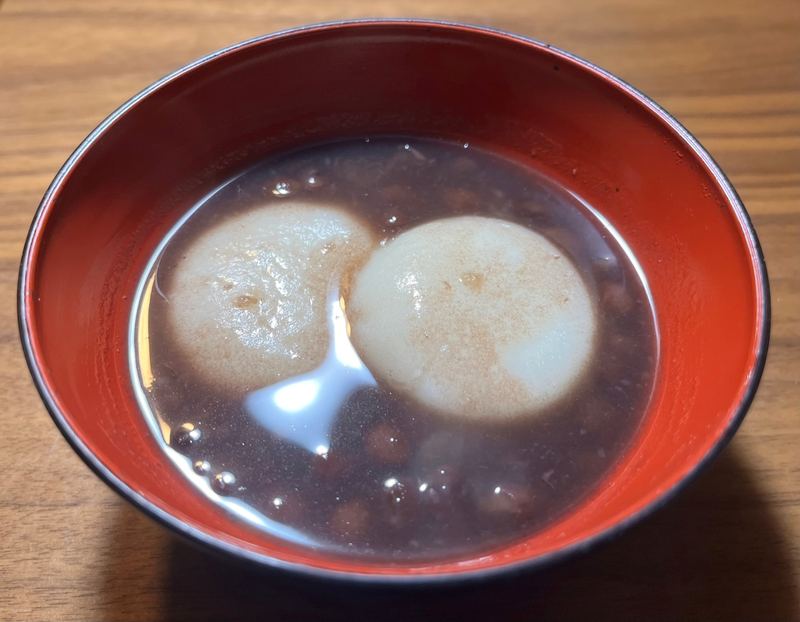
| Prefecture | Tottori (鳥取県) |
|---|---|
| Region | Chugoku |
| Japanese name | 小豆雑煮(あずきぞうに) |
| Reading | Azukizōni |
| Home area | Eastern, Central |
| Main ingredients | I'll have round beans. |
History and Origins
New Year's broth is rich in local flavors, and all over the country, there is a variety of turquoise, but the sauce of the bird is mainly from the juice of the beans and the soft, boiling bowl. The soup is so rich that the beans are very tender, and the juice is small, and the sweets are sweet with sugar and the salt is very salty. It used to be soup with a little salt in it, but now it's common to boil sugar from the start. However, it seems that the whole county has a lot of soy sauce and flavors in the mountains. I don't know the exact source of the "Small of Little Bean" but since it was supposed to be more effective in harming the red of the beans than it was in old times, it has been used as a food for Hale's day. The citrus will rise first in the morning, draw out the first young water from the year, and cook it in a pot with a clean fire. It is said that by being considered a sacred food that energizes humans, and by sharing it and eating it, he has become the leading food for the New Year's celebration as a means of forming family and family ties.
When It Is Eaten
The first morning, they were eaten with their rice. The salt of the soy sauce and the sweetness of the citrus soup are exquisite. A little bean is one of the ingredients in the areas of life, as it has always been in red food and so on. With that nutritionally good bean, we make bleats and eat them for the New Year's celebration.
How It Is Eaten
In other areas, it's close to what are called "bricks" and "kids." After taking out the little beans, add some steam and sugar to taste until they are soft. I put the boiled bowl in a different pot into the soup. Tastes vary slightly from home and from area to area, but in most areas they use soft, boiling bowls. In three morning towns in the central area, I make a bowl of hot rice from a mountain.
Recipe — Serves 4
Ingredients
- 4 round mochi
- 1/2 cups azuki beans
- 60 g sugar
- a pinch salt
Method
- The beans are put in plenty of water, and if they boil up, they throw them away and take out a little bit of it. I'll repeat this twice. After that, add two cups of fresh water and shake until it becomes soft.
- Add sugar and boil for seven minutes and eight minutes, and make it taste better. You can put a little salt in your favorite dish.
- Soy sauce is boiled in another pot, and when it's soft, add it to the two yuzu juices.
More About Azukizōni
Tasty soup, such as Tottori Prefecture and Shimane Prefecture. It's a muslin with a bowl of rice in the soup of the little beans.
Overview
It looks like bitter and lye, but when compared, the sweetness of the lye of the beans is smooth. When you compare the island root with the birdcatcher, the natto soup in the bird is closer to the lye.
Today, the sweetness of the citrus soup has increased, and there is little difference between the bitter and the bitter. And the ingredients are the same as the recipe.
It was not determined how the bean came to be used, but since it was supposed to be more capable of harming the red of the beans than it used to be, it is thought that it may have something to do with what has been used for Hare's day.
In October, the year of the rising sun, called the divine month, where the gods flocked from all over the country, the cayenne soup was served as a "The Shinto Festival" in this period. There's a theory that this Shinto belief became the root of the word "swift."
Even some of Kyoto Prefecture's subjugation and Okayama Prefecture have been eaten.
The "Diary of the XEdo" written by the right horse, who is left behind by the XEdo-axis, has a description of the plan that the 7th day of the New Year is to be a miniature bean stew. Today's mill doesn't have a little bean-snap stew, and it's not clear what the "Snap-Stain" here described was.
Tottori Prefecture
In Tottori Prefecture, it is the main stream in which citrus is used for lye soup. In 3 mornings in town, I put in a bowl.
There is a lot of lye juice, and the lye is a lot of small beans, and there are rare, but it can be salted instead of sweet with sugar.
In the lower part of the mountain, the three New Year's season is eaten in the sun, but in some areas the beans are boiled in another way after the second day.
For Tottori Prefecture, there are many places in the mountain area where you eat citrus and citrus, not citrus citrus turquoise.
Since the records of the log from the Edo's late bird - hunting districts were recorded and listed as " once eaten in New Year's, pea-snacked soup," we can see that it was eaten late this time, but it is not determined when it began.
In Shimane Prefecture, lye is used for lye soup. It's a dish eaten mainly by Matsue City and Fukuda City.
Once a person has put in rock seaweed, he will eat a broth of juice, and in some areas he will have a second day to eat a little bean stew.
As shown above, in the cloud region, they are eaten as Shinto in October of the old calendar.
In the Shimane Prefecture east and in the remote islands, you can put in citrus citrus soup, flowers, and seaweed made from sea cucumbers. In the west of the province, there was a soup of soy sauce with black beans, and in the mountains there were soup with tofu, connoisseurs and so on. Each bowl is used without burning a fire.
Ishikawa Prefecture
Tasty beans are being eaten in the Ishikawa Prefecture mountain climbing district.
Text adapted and translated from the Japanese Wikipedia article 小豆雑煮 by its contributors, licensed CC BY-SA 4.0.
Dish data: Ministry of Agriculture, Forestry and Fisheries (MAFF), “Uchi no Kyodo Ryori” (Our Regional Cuisines) database, used under the Public Data License (PDL1.0); translated and adapted from the Japanese original.