Igisu いぎす
| Prefecture | Tottori (鳥取県) |
|---|---|
| Region | Chugoku |
| Japanese name | いぎす |
| Home area | Central Area |
| Main ingredients | Drowned grass |
History and Origins
The "singing" is a dish of snub grass, also called a flower. It is said that in the bird Nara era, it was already sent to the morning courts as a gift. The green grass is an algae that flows to the coast in spring, a kind of grass. With many fine - threaded branches, which are separated one after the other, they grow up to be 20 centimeters long and up to the other. It's a thin thread with a pointed end. It thrives from summer to fall, and is washed up mainly in central and western fishing ports. The grass that you want to harvest is soon dried in the hot summer sun, and, while removing the algae and other materials, preserves wash and sun dry three or four times. The "kniting" is a dish of the same principle as the cold weather and the sea, which is naturally solid, even though it does not add coagulants, and native food based on the boiling of the grass is found in other areas as well.
When It Is Eaten
Many people have been led to follow the precepts, the festivals, the celebrations and the celebrations. Many people associate it with New Year's and Laws.
How It Is Eaten
I'll put the dry grass back in, cook it in a boil, put it in a container, place it in a mold, and then put it in a pot and then I'll put it in a pot and I'll put it in a bowl and I'll put it in a sauerkraut or pepper oil and so on. Sometimes we eat with dressing and black honey. It's the point to boil until the silk fibers become smooth. You look like a dog, but when you put it in your mouth, it's a rich smell of the sea, which makes you feel unique and must be cooked. It's a low-calority food product rich in water-solute fiber and minerals.
Recipe
Ingredients
- 25 g drowned grass
- 500 ml water
- sesame seeds, to taste
- soy sauce, to taste
- 酢 少量
Method
- After two or three washings of dry grass, they are soaked in water. Then give it to the monkey and remove the trash.
- Put the pot in, and put it on the fire.
- When it's boiling, it'll burn. I'll cook it for about 30 minutes.
- If you're quite well-dressed, then you can move to the bat and cool it in the refrigerator.
- If it hardens, cut it into size easily eaten pieces and put on a bait. When you eat, you'll have the soy sauce on.
More About Igisu
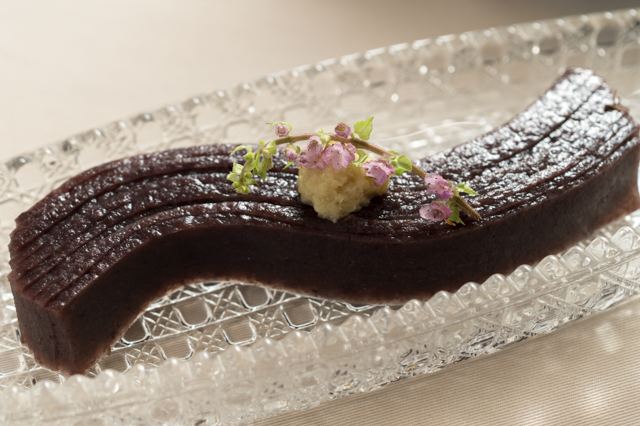
Tottori Prefecture native food for the central region. The salt is made from a salted seaweed plant called a seaweed plant. It's a solid food that is boiled and placed in a container.
It looks like a sheep.
There are also sales of grass to dry in supermarkets in the Tottori Prefecture central region, but in Tottori Prefecture it is scarcely eaten in eastern and western regions and Shimane Prefecture.
It is said that in the flying age and Nara period, the grass was also presented to the Grand Court of Japan as a gift. The green grass thrives from summer to autumn and is washed mainly in the middle of Tottori Prefecture and in the port of fishing in the west. The grass you want to harvest is dried by summer sun, and stored after washing and repeating some sun - dry water while removing the algae.
In other areas, we find the same principles as in the cold sky and in the sun, that make it solid naturally, without adding coagulants, and the basic local food that boils and hardens the grass is the same as in the ground.
Snacking is often acted upon by the dishes of zi-ki, New Year, festival, ceremony, ceremony, and even the crescendo. They can be served with vinegar, pepper, sesame oil, and other additives and black honey.
Even though it tastes so sweet, it tastes so sweet, it tastes so sweet, like Goma and so on.
Text adapted and translated from the Japanese Wikipedia article いぎす by its contributors, licensed CC BY-SA 4.0.
Dish data: Ministry of Agriculture, Forestry and Fisheries (MAFF), “Uchi no Kyodo Ryori” (Our Regional Cuisines) database, used under the Public Data License (PDL1.0); translated and adapted from the Japanese original.