Home / Chiba / Chikkotōfugyūnyūtōfu
Chikkotōfugyūnyūtōfu チッコ豆腐
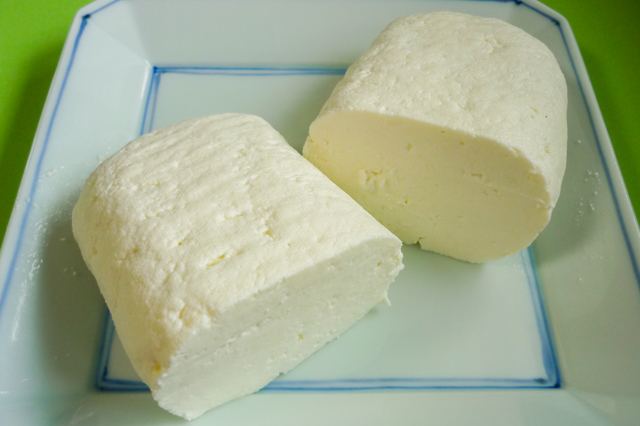
| Prefecture | Chiba (千葉県) |
|---|---|
| Region | Kanto |
| Japanese name | チッコ豆腐/牛乳豆腐(ちっことうふ/ぎゅうにゅうとうふ) |
| Reading | Chikkotōfugyūnyūtōfu |
| Home area | I'm sorry. |
| Main ingredients | Milk, vinegar. |
History and Origins
It is said that Japanese dairy farmers began to produce milk products from white cows. White cattle are rare species that are like camels, with long ears and white hair, and are now found only in Isegawa City. "Cicotofu" is a tofu made from cow's first milk that has long been eaten in the Chiba Prefecture area. The first milk of the newborn cow was cooked on fire, and it has been eaten as a form of Japanese traditional cheese. But it's a local dish that's been known to be used among dairy farmers. In some areas it comes from "Cicokaga melano" and "Citizens of Milk." (and they call it the Greatoka Tofu.) There is also a dish called "beef tofu" that is prepared to be sold in general instead of early milk, but there is also a variety of recipes and names, and it is a food culture that has long been born in areas where dairy farming has grown.
When It Is Eaten
Chico Tofu has been eaten among dairy farmers using the first milk that a cow was born with. Now it is heated, processed, and eaten extensively.
How It Is Eaten
I'll heat the milk on fire so it doesn't boil. When you separate the vinegar into the water and the "chikto Tofu" into the vinegar, you have to open the fire and remove the water. If you cut the water well, it will be finished. I'll put some soy sauce on it and eat it.
Recipe — Serves 4
Ingredients
- 1 L milk
- 4 tbsp vinegar
Method
- Put milk into the pan and put it on fire. When it turns to boiling, stop the fire and mix the cereal gently.
- When it becomes white, it will be wet and wet. I'll hold my position and cool down.
- When you eat it, put a soy sauce on it. It's delicious to put sugar on it or taste it with sugar and soy sauce. Thus, bean tofu is possible as a food material.
More About Chikkotōfugyūnyūtōfu
Milk tofu is a milk product that heats milk and breast milk into raw materials or adds vinegar and lemon juice and garlic and is hardened like tofu and powder. We call them first-natured tofu, cicada tofu, and cicada tomatono. Fat and protein are abundant. The process is a fresh cheese in which the milk of the cow is hardened and removed from the milk and is not mature. (not cheese when it's not made to remove milk.)
Overview
In five days after delivery, cow's first milk is restricted to human food, and cannot be shipped. It's built between dairy farmers to make good use of this unloaded first milk.
The first milk within three days will be solid with heat only. Other than the first milk of the third and third days, milk, milk, milk and special milk are made from coagulants, such as wheys and greasys, because they are so thin that they need to be solid.
Milk solidifies milk protein, but heat causes water to solidify the water, and the cassins become solid by adding sugars and acids. The solids are called card curds.
The acid - hardened cheese is eaten in relatively warm regions, such as Asia and South America.
You can eat it in similar recipes, treated as well as soybean tofu. They call themselves tofu, but they don't use beans. This is the same reason as tofu tofu and so forth.
History
It is said that the Japanese dairy was the beginning of Japanese farming. The white cow is a rare species, with its camel-like cobs, long - hanging ears, white hair, and Japan's rarest species, but the ones that came from the Edo era disappeared from the cattle plague of the Mexical Age, and now raised were introduced in 1995 by the Chiba Prefecture dairy farm.) The first cow's milk was cooked in the Chiba Prefecture, where dairy farming has been occurring since ancient times, called cicotofu. However, since they use first milk that can't be shipped to the government, it's a traditional Japanese cheese that has been introduced to dairy farmers as a local dish and is not available. In some areas, it is also called cicada melano and citrus tofu, which are derived from the "stretch matter." It's made so that you can sell it using regular milk instead of first milk, and sometimes it's called milk tofu. Although there are different methods and different names, this is the food culture that has been born in areas where dairy farming has always been.
Processing
And I'm going to give you an example.
Heat, such as a ball with the first milk in it, and then water it for about half an hour, it becomes as solid as tofu. There's also a way to boil it in a pot and then fold it into powder. After it has hardened, it can remove a transparent liquid called rythrum (or rythrum). Since the third day after birth, heat alone will solidify, so it's easy to add acid.
If you add a coagulant,
It is solidified by heating the first milk or the bottle and then adding salt and glue. Sometimes after being as solid as silk and tofu, you remove a transparent liquid called gravy. After heating first milk, milk, and milk, add vinegar, lemon juice and other acids and separate them into a thin, congealed lump and whey milk. If you filter out and remove this whey, then it will be finished. The same cheese made for milk in other countries is about 300kcal/100g.
Expenses
Use as It Is
I'm sorry. I'm sorry.
Like normal tofu, we eat with raw soy sauce. I'll cook the rice with the vegetables in the soup. We use vegetable salads, rice and vinegar as substitutes for eggs and fish. I'll boil it like a cook or a piece of powder. I'll put it in a vegetable or fish float.
It's delicious.
I'm sorry. I'm sorry.
The milk tofu is as thick as two centimeters thick as the 5 cm angle, and then you use a clean container to dip it into the taste bowl. Once you've swallowed it without a minute, I'll cover it up and hang it in a cool place. You can have a good meal from about a month's time.
Text adapted and translated from the Japanese Wikipedia article 牛乳豆腐 by its contributors, licensed CC BY-SA 4.0.
Dish data: Ministry of Agriculture, Forestry and Fisheries (MAFF), “Uchi no Kyodo Ryori” (Our Regional Cuisines) database, used under the Public Data License (PDL1.0); translated and adapted from the Japanese original.