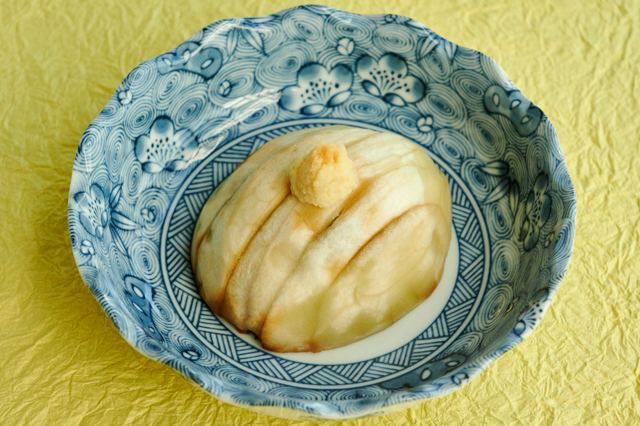
Fukashi Nasu ふかしなす
| Prefecture | Niigata (新潟県) |
|---|---|
| Region | Chubu |
| Japanese name | ふかしなす |
| Home area | All within the province. |
| Main ingredients | I'll do it. |
History and Origins
The Niigata Prefecture, the largest province in Japan, has a native dish called "swift" In some areas, it's called a "scroll." The steaming is cold in the refrigerator and the steam is melted, so it's the Shinga River to put on soy sauce and eat. It splits with its hands and eats with soy sauce and pontice. And many species of Niigata Prefecture are proud and cultivated in the country's highest quality. There are about 18 different kinds of dishes, each with different cooking properties. There are many kinds of species, such as rice, stew, and stew. The shape of a circle of the meat's meat is good for the shape of the veil. Of these, the haiku vegetable danami - covered sesame (symbols made in Nakashima / Nagaoka) are said to be best served by steaming. It's usually cooked or baked hard, but it'll be sweet as a Troy.
When It Is Eaten
What you can do is take it from summer to autumn. The cooling effect of my body was that I ate to avoid the summer heat. The rice bowls included such things as "sitting" and "shoeing" and "sniffing" with a veil, and "sniffing" and "cooking" as well as the dishes of summer as they served their ancestors.
How It Is Eaten
We expose half-cut veils to water and cover the ant. It'll be steamed for about ten minutes with a steamer. When the chopsticks pass by, I'll take them out and cool them down. I'll cut it in a refrigerator cold and easily eaten size, and then I'll use soy sauce and sesame oil. It's delicious if you eat it hot and not cold.
Recipe — Serves 4
Ingredients
- 2(300 g) eggplant
- Mix: soy sauce, to taste
- Mix: grated ginger, to taste
Method
- Wash the surface with water, remove the skin, double it, dip it in water, and pull out the pot.
- Put a lot of water in the steamer, use a heavy fire, and water it until it passes through the bamboo.
- After it's cold, cut to easy-to-eat size and add flavor A to it.
Dish data: Ministry of Agriculture, Forestry and Fisheries (MAFF), “Uchi no Kyodo Ryori” (Our Regional Cuisines) database, used under the Public Data License (PDL1.0); translated and adapted from the Japanese original.