Hōonkōryōri ほんこさん
| Prefecture | Fukui (福井県) |
|---|---|
| Region | Chubu |
| Japanese name | ほんこさん/報恩講料理(ほうおんこうりょうり) |
| Reading | Hōonkōryōri |
| Home area | All within the province. |
| Main ingredients | I'm not sure if you're going to be able to do that. |
History and Origins
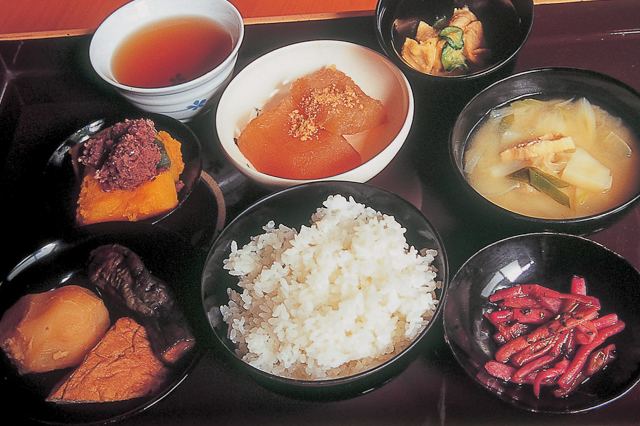
Fukui Prefecture has long been zealous in Buddhism, especially in the belief in pure worship, and has been responsible for the birth of the founder and father of the Sun, November 28th, January 16th, and from fall to New Year's Day, to the greatest annual service of each sect of the Sun Shikoku sect. In Fukui Prefecture, they call it "sama" and "sama." The meaning is to touch on the teachings of parents, to thank them and to give thanks to their virtues. It's different from what happens in temples, what happens in private homes, and what is held in community meeting places. During that reward period, the assembled people will be served a diet of beans and three vegetables, mainly fried and tofu, which is called "Safe" at the time of lunch and at dinner. It's called "Feed-a-School." Not only can we eat the food from the temple, but whenever it comes to Buddhist affairs and festivals, the local women gather together to make a great crowd. And even in their normal lives, they are rooted in Chinese cooking as a taste of citrus and citrus.
When It Is Eaten
They will be eaten as the fast of the "Genuji" that occurs from autumn through winter. The fast was set up as a local dish because it brought local harvests and was made with local recipes. It's also established as a common family food recipe. "Small-grained rice and vegetable stews are added to the table, besides the local local dishes and local dishes." Among other things, beans are attributed to the patron's preference and can be made from peas and peas.
How It Is Eaten
If you give an example of the typical "Sye" of the "I'm Soo" menu, you can make a whole night's meal of peas, or you can boil it with the ingredients. There's peppers on the menu. Also, if you make the soup sweet with sugar and steam, you can add the rice that has been boiled with salt.
Dish data: Ministry of Agriculture, Forestry and Fisheries (MAFF), “Uchi no Kyodo Ryori” (Our Regional Cuisines) database, used under the Public Data License (PDL1.0); translated and adapted from the Japanese original.