Home / Shimane / Hoshidaikonnonishime
Hoshidaikonnonishime 干し大根の煮しめ
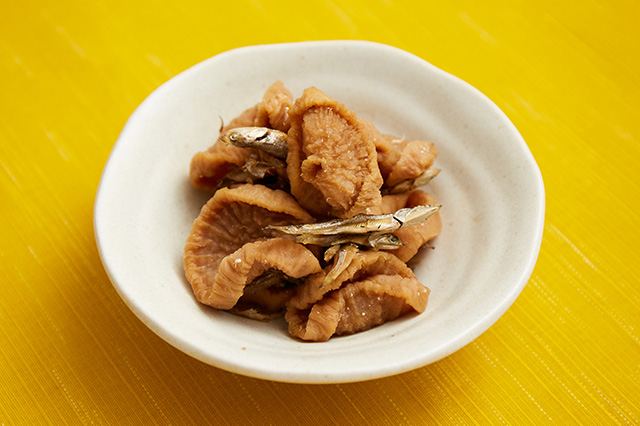
| Prefecture | Shimane (島根県) |
|---|---|
| Region | Chugoku |
| Japanese name | 干し大根の煮しめ(ほしだいこんのにしめ) |
| Reading | Hoshidaikonnonishime |
| Home area | (Laughter) |
| Main ingredients | Dried roots |
History and Origins
In Shimane Prefecture, there is a steady inheritance of dry and stored food. The large roots harvested from autumn to winter in particular, due to the lack of vegetables available when they came out of winter and came out in spring, began to dry as a food reserve. There's a lot of variation in one big save. For example, in a different area, the thick roots divide into four pieces and then fall down to dry roots. The small radish was cut into pieces and cut into large ones. Drying will save your life, as well as reduce your water content and reduce the nutritional value of flavor, sweetness, and calcium. There is also a way to preserve raw roots in the snow and for food until spring. The dry roots are made all over Shimane Prefecture, but "Salk-coasted" is a local dish made mainly in the Hikoku region.
When It Is Eaten
The dried root is a survival diet where old man's wisdom is alive. The dry root, which increases the nutritional value by drying, is regularly eaten in the average household.
How It Is Eaten
The dried roots are also used as tools for cooking, such as curry rice, vinegar, salads, sweets, cucumbers, eggs, and so forth. The peeled radish is cut off and the middle is cut with vegetable chopsticks and so on. The main root of the hole is joined by the two ends, inters and repeats the process. I'll dry it out at the front of the house for about a month and then we'll steam it once. After the steaming, we dry it cold again, making a sweet, dry root. I'll take out the dry root from the side, put it back in hot water, and roast it with oil. The soup you put back is delicious when you cook it with rice, wine, lentils, soo sauce and sugar.
Recipe
Ingredients
- 20 dried daikon radish
- recipe, to taste
- 30 g dried sardines
- 2 tbsp sake
- 1 tbsp sugar
- 2 tbsp soy sauce
- oil, to taste
Method
- Wash the dried roots in water and keep them in the water for about 30 minutes.
- If you put 1 in the pot, put a lot of water in the fire, and boil it, the fire will be turned off and cooled.
- The rectum will be made and used as a lye.
- After the main root has been put back in oil, put the re-salt into the pot until it is pressed, and boil it in the middle of a bowl with a bowl of steam and steam.
- Add sugar and soy sauce and cook until the soup is gone.
- I'll remove the skin and cut it into a half inch thin. (2) Cut through the center with a slice of chopsticks, and tie it alternately. (3) We'll hang them in a nice breeze for about three weeks and dry them. (4) We'll boil the water in the pot and put it in the hot water for about five minutes. (5) We're going to dry the front place again for about two weeks. If you want to save it for long periods, use the heat to dry it in Karacal.
- I'll put 30 minutes in the water, water and dry roots in the pot, put them in the fire, and then put them on the fire, and then they'll get back. (2) The re-cuperation is fresh and will be used as juice. (3) Recovered dried radish is delicious when you add oil and steamed soup, and soup, wine, lentils, and soy sauce. (4) It can be used for a variety of dishes, such as curry rice, vinegar, salads, sweets, soups, eggs and so on.
Dish data: Ministry of Agriculture, Forestry and Fisheries (MAFF), “Uchi no Kyodo Ryori” (Our Regional Cuisines) database, used under the Public Data License (PDL1.0); translated and adapted from the Japanese original.