Houba Meshi ほうばめし
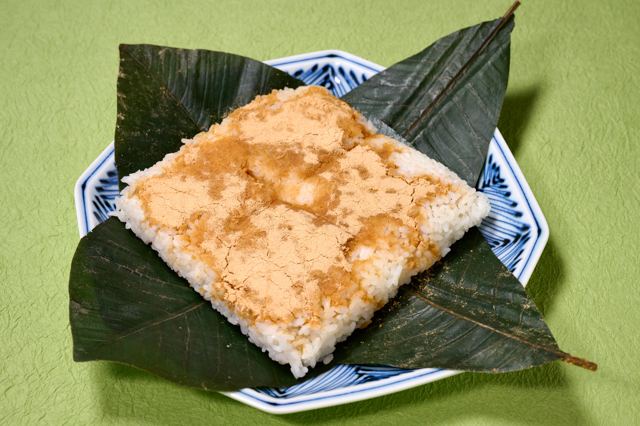
| Prefecture | Fukui (福井県) |
|---|---|
| Region | Chubu |
| Japanese name | ほうばめし |
| Home area | All within the province. |
| Main ingredients | It's not just the leaves. It's the leaves. |
History and Origins
In Fukui Prefecture, we once celebrated the completion of the community rice plant with a big smile. What I was able to do at that time was to wrap up hot rice and sweet powder in the leaves and make them over a weight. By using the leaves, besides making the aroma more palatable to hot foods, it is easy to carry and save. That is why they were eaten not only as well as as the seat of the rice plant but also as an energy supply between the hard work of paddies. Also, it is said that mild flour was used as a fertility prayer because it resembles rice grains that grow in rice. It's a simple "Pictureing" but it's chosen by the Food and Agriculture Organization at the time.
When It Is Eaten
It's about the beginning of May and the late part of May when fresh leaves are obtained and rice plants are planted.
How It Is Eaten
The leaves as large as possible, and the leaves in the water for a while, will be soaked in and out of the pot. We'll put the other side of the leaf in ten characters in two pairs. At the center of it, I lightly slice the rice mixed with sugary powder and wrap it around it like I fold both leaves. It's straw, light, heavy stones, push it from above for a while. I'll mix the leaves with the rice and put the scent of the leaves on the dish. The trick is to use hot rice so that the leaves change color.
Recipe — Serves 8
Ingredients
- 800 g cooked rice
- 4 tbsp kinako (roasted soybean flour)
- 2 tbsp sugar
- a pinch salt
- 16 ほお葉
- 棕櫚の葉 適当 (しゅろ)
Method
- The leaves are washed and dry. Put it in the water for a while, and take the broom.
- I'll mix the powder, sugar, and salt.
- Take a pair of leaves, grab a dozen letters on the back of the leaf, place a thinly held rice or a light dish around it, fold both leaves together.
- Lightly heavy stones and leave them until the leaves change color.
Dish data: Ministry of Agriculture, Forestry and Fisheries (MAFF), “Uchi no Kyodo Ryori” (Our Regional Cuisines) database, used under the Public Data License (PDL1.0); translated and adapted from the Japanese original.