Home / Ibaraki / Imogaranoitameni/imogaranogomokuni
Imogaranoitameni/imogaranogomokuni いもがらの炒め煮/いもがらの五目煮
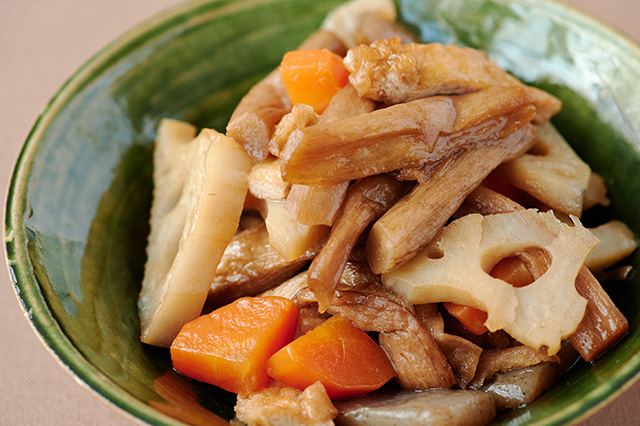
| Prefecture | Ibaraki (茨城県) |
|---|---|
| Region | Kanto |
| Japanese name | いもがらの炒め煮/いもがらの五目煮(いもがらのいために/いもがらのごもくに) |
| Reading | Imogaranoitameni/imogaranogomokuni |
| Home area | All within the province. |
| Main ingredients | I'm going to have to do it again. (Laughter) |
History and Origins
In this case, it's the dried part of the leaves, such as the lily potato, that's used to dry out. The names vary according to each county, and since they are so often referred to on the potato stem, there are areas in which they are called "I want" or "I want it" or "I don't want it." Because of the dryness of the peppers, they were made for storage and were also used for the annual vegetables. Ibaraki Prefecture has been using mild climates and rich water all year round, farming has been established more than in the past, and harvests of many vegetables have long been available. In the meantime, there is much food reserve to keep you alive, such as a variety of dishes, such as "claws," "frozens," and "screwd vegetables," so that you will not tire of eating the abundant vegetables until you have eaten them tastefully. When using "knit" for cooking, I use it back in water. Like "Steam's Cooking" and "Snap's" are used in various dishes.
When It Is Eaten
It's eaten as a regular vegetable all year round, but "Koo-coo soup" is a table-seat dish that is also served when everyone is together for New Year's or celebration. Also, in the northern part of the country, during wintertime, there are more opportunities to eat "Snocks" and the walnuts are often used as tools for "Snocks".
How It Is Eaten
If you want to dry it, it will give you a fresh taste when you put it back in water, and it will taste good, and it'll taste good for stews, garlics and vinegars. The carrots, soy sauce, and so on, with a good amount of soup and a good amount of salt, make the ingredients taste delicious. It doesn't taste good, but when you put it in stew, soup, and so forth, it makes it taste delicious, so it can be adapted to a variety of dishes. There are also plenty of food fibers, and when you eat, you can enjoy your teeth.
Recipe — Serves 4
Ingredients
- 50 g taro stems
- 120 g lotus root
- 100 g carrot
- 1 aburaage (fried tofu pouch)
- 1 konnyaku
- 150 ml water
- Mix: 2 tbsp sugar
- Mix: 2 tbsp 1/2 soy sauce
- Mix: 2 tbsp sake
- Mix: 1 tbsp mirin
- 2 tbsp oil
Method
- I'll wash them in water and keep them in water for about 30 minutes.
- The carrots are cut.
- I'll save you a short book of oil, a small amount of pepper, and a lot of hot water.
- Heat oil in the pan, roast 1, 2, 3 and add water.
- A is added, and the soup is included until the soup is gone. To improve the flavor of the gums in the pot, you should cook without boiling the lid.
Dish data: Ministry of Agriculture, Forestry and Fisheries (MAFF), “Uchi no Kyodo Ryori” (Our Regional Cuisines) database, used under the Public Data License (PDL1.0); translated and adapted from the Japanese original.