Jakoten じゃこ天
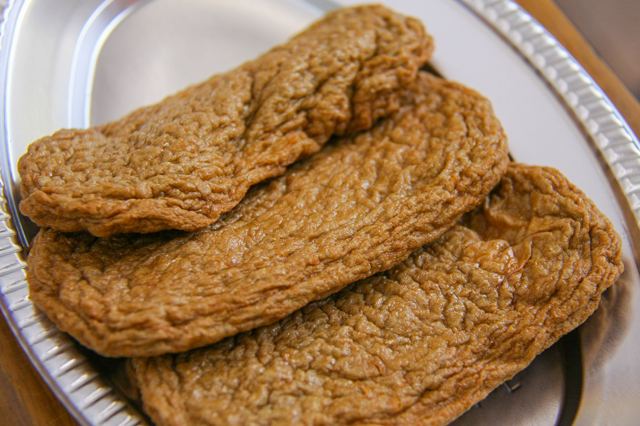
| Prefecture | Ehime (愛媛県) |
|---|---|
| Region | Shikoku |
| Japanese name | じゃこ天(じゃこてん) |
| Reading | Jakoten |
| Home area | Southern Forecast |
| Main ingredients | It's not just fish, eggs, oil. |
History and Origins
In Japan, where abundant fish are obtained from the sea, and in Japan, there are many products made from fish, and in Japan there are "Suki" typical. From ancient times on, Iwashima has called the fish's fried fish's fish 'sow' or, like the mistletoe, 'the skin and bone'. There are also theories that since it was made of various kinds of fish caught in a net, it was named "Creak" and that it was changed into a "Creak Heaven" and that it came from a source called "Nujie." The very beginning of the product is said to be due to the fact that Iseshima's First Masters of Japan, Toshishigi, had his mother, Ichishima, brought him from Iseshima.
When It Is Eaten
Cooking is well eaten throughout the year, regardless of the time when cooking is very varied. In particular, in the south, it is essential to the daily table. It's not only a piece of candy but also a bottle of wine.
How It Is Eaten
If you grind the skin and bones as well as the skin and bones of small fish, add flour, eggs, and salt to it, then you can put it in a hard mix, and it will be fried with oil that will shape the small fish. Because the fish are full of bones, such as calcium and minerals, they have a nutritional quality. There are ways of eating fried chicken, besides eating fried chicken as well, such as the way you dropped soy sauce through the fire and then put it together with the pepper. To the extent that you can say it, it has "Sunki" in it. Also, the kale, which used the "moon sky" instead of meat, is a major domestic dish in the wild. They can be made into udon, or they can be made into bread in the kneading sky and fried with oil, and they can be turned into "snacks."
Recipe — Serves 4
Ingredients
- 200 g エソの皮
- 1/2 tsp salt
- wheat flour, to taste
- 1/2 egg
- oil for frying, to taste
Method
- The skin of the eso is chopped fine with a knife, and it is well done, add salt, flour, eggs, and then mix tightly.
- We'll put them together in a small mold and then fried them with oil.
More About Jakoten
Jakoten (じゃこ天) is made from small fish that are blended into a paste and then fried. It is a special product of Uwajima in southern Ehime Prefecture. Jakoten has a long history, having been eaten since the Edo period.
History
According to the Jakoten Book, jakoten was invented in 1614. Originally Date Hidemune made his craftsman make steamed fish pastes in 1615. The craftsmen made steamed pastes of Uwajima fish. Hidemune was a daimyō of Uwajima. He loved steamed fish pastes when he was in Sendai so he wanted to eat them in Ehime.
Process
Hotarujako, which are small white fish, are good for making jakoten. Hotarujako is the Japanese name for Acropoma japonicum, a member of the bioluminescent fish family Acropomatidae, called glowbelly or lanternbelly in English. Hotarujako is also called haranbo in Uwajima.
First, the heads, viscera and scales of the fish are removed. Then, the remaining parts are minced including the bones. Seasoning is added and the minced fish is ground into a paste. Next, it is shaped into rectangular patties by using a wood frame. The patties are fried for several minutes until they become brownish. The pieces of jakoten are now ready.
Eating
When jakoten is eaten, it should be broiled using a frying pan or shichirin (portable clay stove). It should be eaten with soy sauce and grated daikon radish. Jakoten is used in nimono, udon, and salad, among other dishes, and goes well with alcoholic drinks.
Text adapted from the English Wikipedia article Jakoten by its contributors, licensed CC BY-SA 4.0.
Dish data: Ministry of Agriculture, Forestry and Fisheries (MAFF), “Uchi no Kyodo Ryori” (Our Regional Cuisines) database, used under the Public Data License (PDL1.0); translated and adapted from the Japanese original.