Home / Ehime / Kijinikutokiriboshidaikonnomazegohan
Kijinikutokiriboshidaikonnomazegohan きじ肉と切り干し大根の混ぜご飯
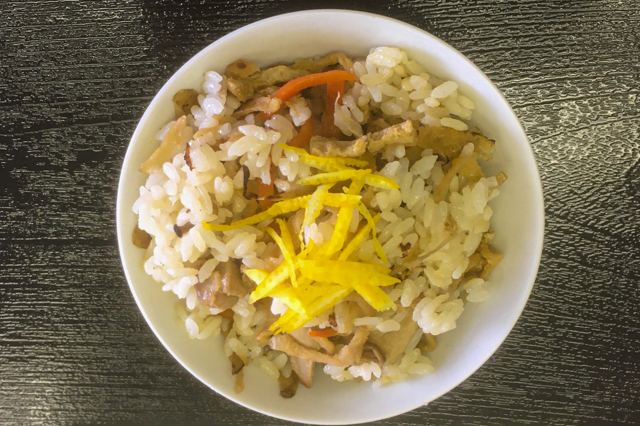
| Prefecture | Ehime (愛媛県) |
|---|---|
| Region | Shikoku |
| Japanese name | きじ肉と切り干し大根の混ぜご飯(きじにくときりぼしだいこんのまぜごはん) |
| Reading | Kijinikutokiriboshidaikonnomazegohan |
| Home area | Itaoku. |
| Main ingredients | It's a very simple process. |
History and Origins
In Japan, Kiji has been close enough to appear in Japanese old stories, including the "Gystaro." Kiji doesn't live on a migration, but on a permanent bird that lives close to the home. In Japan, it has been known as the most noble bird of all time as a national bird, and its meat has long been eaten as a precious food. However, changing the environment in Rizyama has reduced the amount of food and the opportunity to eat. Kiji has a strong smell, but when you roast or boil it, it makes it a bit easier. Meat is easily chewy and elastic and tasty, but it's very light. It's white and has less fat, so it's good for maturity. I mixed that meat with the sun in the sun, which I made with a large piece of raw vegetables, with a great amount of fresh meat. The "mixing of raw meat and dried roots" is "seat of chicken."
When It Is Eaten
Kew is low in calories, high in protein, essential amino acids and minerals. It's been eaten as a valuable food for ages. The cutting roots can be cut into strips from the root from the end of autumn to winter and dried with plenty of sunlight. It's a health food rich in fiber and calcium.
How It Is Eaten
I'll boil the stew and take the juice out. Cooked meat, rice, carrots, carrots, thinnuts, and returned dried radish, daisies and so on. Add the garlic sauce and cook until the soup is gone. I'm going to scatter the skin with a slice of a slice. This is how they serve the juice in the krill, but they use frozen bouillon in school meals. Some stores have been provided through the year by freezing. The meat is also eaten in bowls and dishes.
Recipe — Serves 25
Ingredients
- 1.5 kg(10 × 180 ml) rice
- 1 きじ肉
- 1 きじガラ
- 200 g burdock root
- 160 g carrot
- 120 g dried daikon radish
- 4 bunches shimeji mushrooms
- 2 aburaage (fried tofu pouch)
- 1 じゃこ天
- yuzu peel, to taste
- 60 ml vegetable oil
- Mix: 2 dashi kelp
- Mix: 22.5 g salt
- Mix: 50 ml cooking sake
- Mix: 75 ml dark soy sauce
- Mix: 90 ml light soy sauce
- Mix: 120 g sugar
Method
- Put 6L in the pot and boil the garlic and take the juice out. Rice is washed half an hour before cooking.
- Cut the meat into two centimeters. I'll cut the carrots and thins into a thousand slices.
- After washing the dry roots and immerse them in water for 15 minutes, we will cut them down.
- The hammer drops the stone and divides it into cells. Then I'll cut them into thousands.
- The rice has taste A and 1 flavors, and it is cooked with juice. Just like normal water.
- You can cook salad oil, roast meat, add vegetables and sweets. (Stretch vegetable in turn)
- If the fire goes through, add B and 1 sauce and 60 oz of soup, and cook until the soup is low.
- I mixed the tools in the rice and cut them into pieces to scatter the pistils.
Dish data: Ministry of Agriculture, Forestry and Fisheries (MAFF), “Uchi no Kyodo Ryori” (Our Regional Cuisines) database, used under the Public Data License (PDL1.0); translated and adapted from the Japanese original.