Jibu-ni じぶ煮
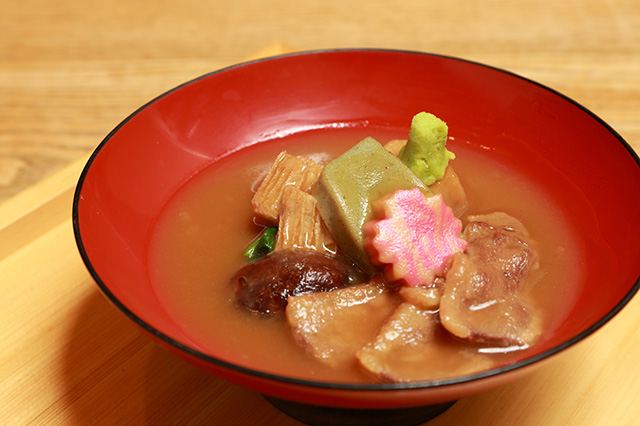
| Prefecture | Ishikawa (石川県) |
|---|---|
| Region | Chubu |
| Japanese name | じぶ煮(じぶに) |
| Reading | Jibuni |
| Home area | All within the province. |
| Main ingredients | I'm not sure if you want to eat chicken, chicken or chicken. |
History and Origins
The "bullet stew" is a stew that is represented by Ishikawa Prefecture. I will boil and eat such vegetables as rice and rice. It's so obvious that the meat has a design because it has flour on it. A military dish that has been eaten since the time of Edo. The birth of a child is a myth. The theory that the right side of the island, the Christian Oyama, learned and passed on to Kasaka from the missionaries, the theory that the right guard of Kojiro, who worked as a soldier in the service of his champion, was passed on from Korea, and the theory that the Russian people who drifted away from the island were passed on to them. And there is no theory as to the origin of the name "screw soup." There are many theories, including the pseudo-verbals of the Okazu right-hand side of the Okazu Gate and the "smelling" of the "smelling" sound. In his book Cooking, he wrote some dishes and recipes. The modern "boiled soup" is attributed to the recipes of the birds in writing. It is said that over the years, for some reason, the name of the dish has been changed from the bird to the "snack-up soup." When 3,000 men were invited to the reception of the Lord of Kaji's residence and of the King's house, they were told that there was a bowl of meat, meat, rice, and so on.
When It Is Eaten
While it is believed that it began as a warrior's dish, in the fall of winter, the common folk stopped the migration from the continent and were making a "bunny soup." As time went on, I was able to use my husband's style and style to prepare the food for the presentation. From this point on, it is said, it is possible to have thin hands, wide - mouthed, shallow, and private bowls. Even at home, they are eaten as hospitality and as a special day dish. It's also provided with local food, such as rice and rice.
How It Is Eaten
It is cooked with citrus chopped meat and flour and is cooked with soy sauce and soy sauce. This wheat will add the flavor of the meat, and it will boil in the juice even in cold winter. In some seasons, the early fishfish can be added. By using it as a spice, it blends with soft, bitter meat. Soy sauce can be used for expensive food, and when you cook at home, it can be used for blends or chicken or other things.
Recipe — Serves 4
Ingredients
- 120 g(12 slices) 鴨肉
- 1 sudare-fu wheat gluten
- to taste ) 4 taro
- 4 fresh shiitake mushrooms
- 1/4 bunches seri (Japanese parsley)
- to taste ) 4 slices fu (wheat gluten)
- Mix: 2 tbsp light soy sauce
- Mix: 2 tbsp dark soy sauce
- Mix: 2 tbsp mirin
- Mix: 2 tbsp sake
- Mix: 1 tbsp sugar
- Mix: 2 1/2 cups dashi stock
- wheat flour, to taste
- as needed wasabi
Method
- Cut the meat, cut the chicken, and boil it. The elyses are skin-stained rice, and the raw grain is made from stone and is used in jewelry knives. The green vegetable is boiled and boiled with a boil, and then cut into two centimeters.
- Put A in the pot, cook it, boil it, boil it, boil it, boil it.
- A lot of flour in the dough, put it in two, and bring it up when it's cooked or cooked.
- You can put two or three on a vessel and put vegetables on it.
- With water flour in the soup, the concentration will be increased by four and the salt will be raised to the oven.
More About Jibu-ni
Jibu-ni (じぶ煮, 治部煮) is a Japanese dish that is part of the regional cuisine of Kanazawa and the surrounding Ishikawa region. It is a stew made from duck or chicken meat coated in flour, wheat gluten, vegetables, and mushrooms all simmered together in dashi stock. It is often served as part of kaiseki.
Text adapted from the English Wikipedia article Jibu-ni by its contributors, licensed CC BY-SA 4.0.
Dish data: Ministry of Agriculture, Forestry and Fisheries (MAFF), “Uchi no Kyodo Ryori” (Our Regional Cuisines) database, used under the Public Data License (PDL1.0); translated and adapted from the Japanese original.