Kenoshiru けの汁
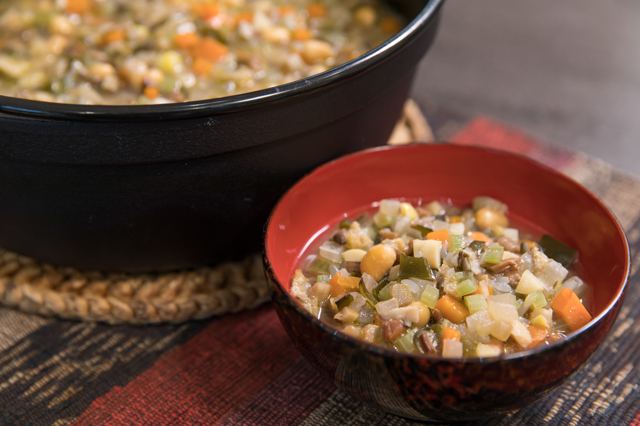
| Prefecture | Aomori (青森県) |
|---|---|
| Region | Tohoku |
| Japanese name | けの汁(けのしる) |
| Reading | Kenoshiru |
| Home area | Tsugaru |
| Main ingredients | I'm going to try to make sure that you're doing all the right things. |
History and Origins
A typical native dish for the Tsugaru district. There are various theories about its origin, such as the Tsugaru dialect, which means "no" and "no" means "no." It's been said that we found and ate the materials that were carved in rice during the time when rice was precious. Some believe it was inherited from the age of Tsugaru, about 400 years ago. Originally, it was a New Year's meal, and the brides who were pursued by caring for their families and by visitors on New Year's Eve made them for the men when they returned home in New Year's Eve. It's said that as a nutritious food, she broke the frozen juice and reheated it and ate it for days.
When It Is Eaten
In New Year's Eve, a genocidal dish called Tsugaru is called "the seven-weed of the Tsugaru." It's also a saving food that women at home make to relax in the New Year's. On the morning of New Year 16 in the old calendar, the whole family eats together after they bow down before Buddha. They make large quantities of them in large pans and have the habit of eating them fresh for four or five days. It's a different way of making food and products from home, and there's enough of a "Kinji' Talk" to meet women locally.
How It Is Eaten
The cooking begins when you cut a lot of root vegetables, yams and mushrooms into a fine, fine - looking eye. In the past, I carved wooden tubs, horse feeders, and so on. I'll put a large pot with iguys cooking and boiling cloth, add ingredients and water, and boil it. It's also characteristic of the "snap" that's crushed soy sauce. The longer it is preserved and reheated, the more it tastes. So it's better to divide from a large pot into a small pot and eat it over a few days.
Recipe — Serves 10
Ingredients
- 2 kg(2) daikon radish
- 600 g(1/3) carrot
- 350 g(1/4) burdock root
- 500 g(1/3) bracken
- 600 g(1/3) butterbur
- 150 g(1/3) aburaage (fried tofu pouch)
- 800 g(1/3) frozen tofu
- 600 g(1/3) soybeans (水煮または蒸し)
- 2 kelp (konbu) (だし用)
- 1 kelp (konbu) (具用)
- 400 g red miso
Method
- I put raw cloth and water in an iron pot and I put them all up every other night. The amount of water will be enough for all the ingredients to give off the slipper.
- I boil the straw from the water and keep it cool. I'll put the wipe in the water and salt it out.
- The material cloth is baked in the fire or broken by hand. The frozen tofu will be frozen at normal temperature.
- Soy sauce is a stew, and it is ground into pieces and made of straw.
- I'm going to cut the cross off into two centimeters long. Big roots, carrots, frozen tofu, soaps and so forth, with little eyes, and fine oiling and everything.
- Then take the fabric and cook it thoroughly from the water. When the fire is over, we put in hot, frozen tofu and mix it with a crumb.
- When it's boiling, add four bowls and mix them together and cook them further. I'll melt the taste buds and put in a pan of sequester oil and cloth for use in boiling.
- When mixed, it is mixed with wax to prevent boiling of the paint. We make a lot of food to reheat it and divide it into pieces several times.
More About Kenoshiru
In Akita Prefecture, it's called the best soup, the best chicken. Tweeted root vegetables, mountain vegetables, frozen tofu, oiled soups, and yuzu and citrus sauce. The soup is made from silica. The name is derived from the "Kell's Soy sauce."
(The seven weeds of other regions are made for the holiday meal of New Year's Eve.) It's also a role to keep cooking and other household chores in order to rest.
Origins
In the city of Aomori Prefecture, when Mr. Tohoku's son, Koyama, who is said to have been found in Yoichi, was attacked by a connoisseur in the time of the war, there was a tradition of the origin of the food eaten by the army members in the castle before they fell.
Cooking.
The ingredients are daisies, carrots, walnuts, goubs, frozen tofu, oiled, bloated blue beans. Although there are some differences in materials, depending on the area and the family, it is common to find that vegetables and soybean products are boiled in citrus juice.
The dried and salt deposits, including beans, are water-driven. All the ingredients except soybeans are chopped in fine pieces and boiled in soy sauce. During this time, I'll brush the watery peas in a bowl. When the vegetables are cooked, I'll add a steamed paste to make them tastey and then finish them.
It's connected to the event.
In the Tohoku region, the New Year celebrates the New Year as the New Year of Women. Tsugaru soup was made within the 15th of New Year, and on the morning of the 16th, he first gave it to the god Buddha and ate it with white pepper. I made a lot of that juice in a large pot for days, and every day I divide it into small bowls, add a taste, and eat. This also means resting a housewife who is pursued by any household routine. It was once said that when he carved the ingredients of the juice from the rose, he would sing a bird-sharp song. It was meant to pay for it.
In the first place, on New Year's 7th, the seven-year-old plants are thought to be from their origin, seven different kinds of vegetable sap found in China's Book of Youth.
In other words, the practice of the 15th of New Year's Eve (New Year's Eve) was called the 15th of New Year's, and this was a seven-seed corn-seeded plant. (See also the article on choo beans.)
Kimura's claim is that the juice has changed the custom of the ancient seven-day-old.
Source of the Language
There are various sources of the word, but it is thought to have been called lye juice because it was eaten with the cucumber.
In Akita Prefecture, it's called "the best juice." Since "if" is the dialect of Akita, it also means "Schiki".
The singer, Shinzo Ozawa, argued against the "song" theory as "song" refers to the juice nut and has never heard of any juice to eat with anything." Ozawa took note of the word "refuge" in the Song of the Fabulous, and the juice claimed that the juice of the grass was"
On the other hand, in the southern part of the country of the Aomori Prefecture, the juice is not for the New Year's meal but for the daily meal, so it doesn't make sense to use it as a "soy sauce." So, in the province of Southwest, "Ke's juice" is thought to be the opposite of Hale's.
It's a similar dish in other places.
In the south coast of the Hokkaido, it is customary to eat a bowl of rice in the broth, and a bowl of citrus juice in the broth and boiling sauce, as well as a small New Year's or legal procedure, and also called "Your Juice."
There is a "Kuyu's juice" that has been spread by the people of Tsuzuokaoka, who moved in late Edo in the area of the old city of Nitura, Japan, and is now called the "Kuyu's" district. Also selected as the 100-year hood approved by the Cultural Organization in 2022.
There was a similar dish called "a big citrus" in the Setahara region of Miyazaki Prefecture.
Text adapted and translated from the Japanese Wikipedia article けの汁 by its contributors, licensed CC BY-SA 4.0.
Dish data: Ministry of Agriculture, Forestry and Fisheries (MAFF), “Uchi no Kyodo Ryori” (Our Regional Cuisines) database, used under the Public Data License (PDL1.0); translated and adapted from the Japanese original.