Mameshitogi 豆しとぎ
| Prefecture | Aomori (青森県) |
|---|---|
| Region | Tohoku |
| Japanese name | 豆しとぎ(まめしとぎ) |
| Reading | Mameshitogi |
| Home area | Southern |
| Main ingredients | And I'm going to show you some of the things that I've been working on. |
History and Origins
Cooked and crushed blue beans with rice flour and sugar. "The fairy" was made of rice and ground to powder, and was also referred to as the root of the present plant, and was a divine gift throughout the country. In the southern part of the country, cold weather often struck, and rice was so valuable that it allowed them to add soy beans and so they became known as "Spee Fairy." Every home had a lot of beans to make for taste. I'll give it to the mountain gods and farmers on Halle's day, pray for health and crops, then boil and burn.
When It Is Eaten
In Aomori Prefecture, when you enter December, the "God's Age" event will continue. It was customary to hold a festival like a festival on the third and fifth days, as in the seven days, as in the Kings, the Black, the Nine, and the Mountain God, on the twelveth. In the southern part of the country, the Lord's gift at this time was to be a "pey fairy" and, as he spent a day in God's service, he thanked God for the year and prayed for the peace of the new year.
How It Is Eaten
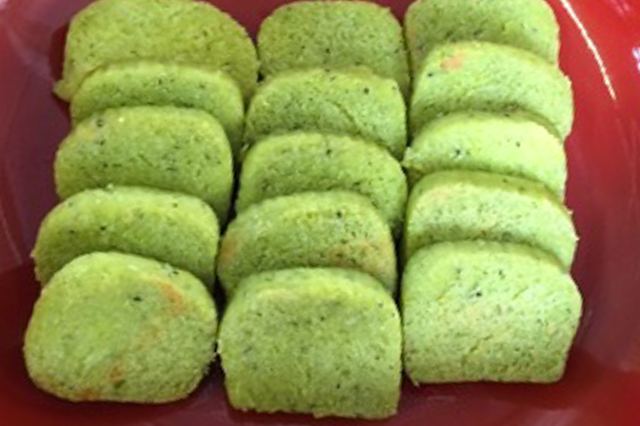
Mix boiling blue beans and rice flour, mix sugar and salt with a mixture of sugar and salt, and put them together in a soft water, and then put them together in a conch. Cut into about an inch thick, and if you just eat it, you'll have a soft taste, a sweet taste, and a little flavor when you cook it. Soy sauces are made of different colors and sweets. In many cases, I use blue beans to finish them in a graceful and refreshing look of bright blue green and white rice.
Recipe — Serves 50
Ingredients
- 6 cups green soybeans
- 1 kg(5:5) flexible
- 2 cups sugar
- 3 cups water
- 40 g salt
Method
- A blue bean will boil and cool a full night's water.
- Add blue beans, sugar, water, and salt to the mixer. (BREATHING)
- Put two blue peas in the flour, and we'll rub it a lot.
- Cut the shape into a cone or a column and about one centimeter thick.
- You may eat it as it is, but if you cook it and eat it, it's flavory and delicious. When you put the rice in, it makes you taste better, and people who don't like the blue smell of beans and young people like it.
More About Mameshitogi
The bean fairy comes from the southern region of Aomori Prefecture, the northern regions, the northern regions, the northern regions, the northern parts of Iwate Prefecture, and the southern part of the southern part of the country.
Overview
The word "scarlet" is literally the food that is used to crush and roll rice with water, and then point to food that is like dumplings.
This is made from beans, made from beans, eaten from the Edo era of Yadoji period, and prepared as a Hale meal on Hale's day to the mountain god and farmer. In areas where rice cannot be harvested as a similar food, fairy tales were sometimes made.
According to The Hearer's Meal, it's the "Stretch" because it's a gift of the age of the Iwate Prefecture in the north of the Iwate Prefecture, besides the Blackness of December 9th, the before - December 19th - and the offering of 12 on the evening of the mountain god's annual evening. In the case of a gift, it's called "a fairy" in honor of it, and it's also called "a fairy" in the language of beans or simply "a fairy." I liked him as a snack.
Even in the southern part of Aomori Prefecture, we gave a bean-symmetric fairy at various annual events following December.
In addition, in the Aomori PrefectureXXZX157X, there is a "feeding," which is a plain native sweet with a stick in the bowl of rice powder, and it is quite different. This difference is thought to have been due to the effect that the relatively crop of rice in the Tsugaru region and the cool east wind had on the situation of the small rice harvest in the area of 380.
It is common to use blue beans mainly in the fall when harvesting soybeans, but sometimes they are used in black, tea beans, and so on.
It used to be made in the cold months from December to March, but now it is possible to buy it as a souvenir in the year.
How?
Although different details vary from community and family to family, there are generally reports of how to make them:
I'll put the soybeans in the water overnight and boil them. If the beans are too hard, they leave a bluish smell, and if they are cooked too much, they lose their teeth and their flavor, so they adjust to a softness.
It's cold. We ground the beans with a mill, mix the juice sugar of rice powder and beans, and then we make them into this shape.
They like to eat the cuts as they are, as well as to burn or burn them. It used to be made in cold weather to keep the sun out and to make it with fresh beans again. Because it's raw candy, you need to be careful if you want to save it.
Text adapted and translated from the Japanese Wikipedia article 豆しとぎ by its contributors, licensed CC BY-SA 4.0.
Dish data: Ministry of Agriculture, Forestry and Fisheries (MAFF), “Uchi no Kyodo Ryori” (Our Regional Cuisines) database, used under the Public Data License (PDL1.0); translated and adapted from the Japanese original.