Home / Ishikawa / Makononitsuke
Makononitsuke 真子の煮つけ
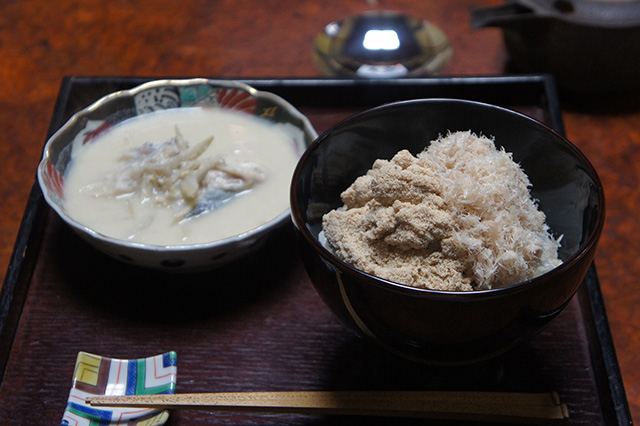
| Prefecture | Ishikawa (石川県) |
|---|---|
| Region | Chubu |
| Japanese name | 真子の煮つけ(まこのにつけ) |
| Reading | Makononitsuke |
| Home area | All within the province. |
| Main ingredients | Masako, the son of Tara. |
History and Origins
In Ishikawa Prefecture, "tara" usually refers to madala, not a stammer. When the cold becomes severe, the eggs are ready to hatch, and the Tara at this time of the year is especially delicious. The local people are also told that there's nothing to eat, and parts from head to entrail are used in cooking. They're also eating dried sticks for New Year's food. If fishing is very successful, the fishing season will be the best between December and February. Its taste is old enough to be called "Sympathy Tara" even in folk songs. In Sugishi's Baji City, there will also be a festival. The "Salting of the Shinko" is one of the typical recipes that goes up and down. Masako means eggs. It's been eaten since the Edo and is famous for its finely loosened eggs, which are wrapped in tassels, but it's simply boiled with soy sauce. Now it's known in large areas as a rare experience. The nadala, whose length is more than one meter and whose weight is more than ten kilograms, will be nearly 30 centimeters long. It is wrapped in a black skin and has more effect on the eyes than on the eggs of the bubonics.
When It Is Eaten
It's eaten around winter when the eggs are laid. When the time comes, the fisheries and supermarkets sell the eggs, and they're cooked at home. In the port town of Osama, on February 11 in the old New Year's Eve, the "Enoch Festival" will be held, and the "Auto" and "Sunships" will be used in local restaurant and host facilities. The whole course of "Then the Great" is full of cooking, including the regular "Sup-sour" and the cooking with the rice.
How It Is Eaten
I'll boil the rice with the oil and garlic after I have cut the rice. The seasoning is so strong that it's good for rice bowls and wine bowls. If you cut it small, it will tear apart. It will be as if the flowers have bloomed, so you can boil it without putting the knife in, and then cut it with a large knife.
Recipe — Serves 4
Ingredients
- 450 g fish roe
- 250 ml dashi stock
- 3 tbsp sake
- 3 tbsp soy sauce
- 3 tbsp sugar
- 3 tbsp mirin
Method
- Masako cleans the water and cuts off the bimbreasts.
- It's in a pot and I'll boil it with the juice and flavor.
- Put the Makoko in gently, drop it in an aluminum foil, and boil it in a low fire for about 25 minutes.
Dish data: Ministry of Agriculture, Forestry and Fisheries (MAFF), “Uchi no Kyodo Ryori” (Our Regional Cuisines) database, used under the Public Data License (PDL1.0); translated and adapted from the Japanese original.