Home / Kagawa / Manbano Kenchan
Manbano Kenchan まんばのけんちゃん
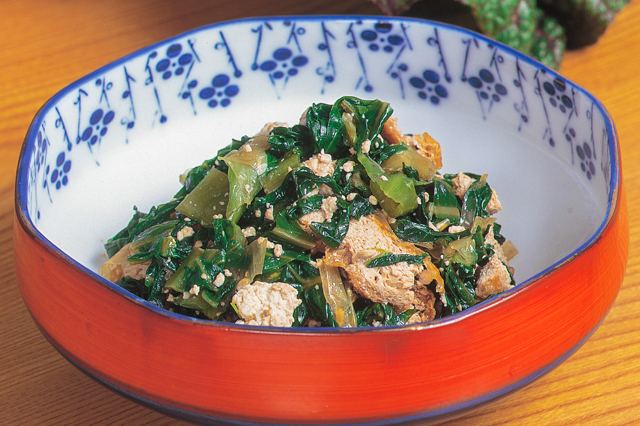
| Prefecture | Kagawa (香川県) |
|---|---|
| Region | Shikoku |
| Japanese name | まんばのけんちゃん |
| Home area | All within the province. |
| Main ingredients | I'm going to have to do it. |
History and Origins
It's a typical dish for native food at Kagawa Prefecture in winter. The dau is a type of vegetable from October to April and is characterized by its unique accumulator. It's grown all over the province, and you can see it in your own garden. If you take a leaf from the outside of the stock, it will grow one after another, so it will be named "All." It's also said to be a thousand leaves and a hundred holes in the same meaning. In the Toshiji region, the Japanese are called "heavy" and in the West Praise districts, a hundred haikus are called "hea" by their accents. In winter when there are fewer vegetables, large green and dark purple leaves are spread out, but it gets cold and you get more tender and sweeter when you press the frost many times. It is rich in nutrition and contains a lot of vitamin C. Kiki is said to have put tofu in a finely chopped vegetable oily soup and cooked tofu, and cooked with it, and cooked like a dishy garlic. In the West Praisers region, tofu is looked upon as snow and is called "the white snow flower."
When It Is Eaten
The tadpole is made in the kitchen, and it is often made in the kitchen, and when it gets cold it is soft and sweeter, so it can still be made daily in the homes of the winter.
How It Is Eaten
The daisy will boil and then remove the pot from the water. Small boilings will produce good juice if you add them to your head. Large boils will be used after removing the head, the intestines, and the bones. Heat the oil in the pan and roast the cutest mink after boiling the stew. Add tofu and oil, and cut the tofu and cook it even more. Finally, you can boil it with soup and flavor and pick it up. Materials and flavors vary from home to home.
Recipe — Serves 4
Ingredients
- 8 まんば
- 1 aburaage (fried tofu pouch)
- 1/2 blocks tofu
- a pinch niboshi (dried sardines)
- 1 tbsp vegetable oil
- 2 tbsp 1/2 soy sauce
- 2/3 cups dashi stock
Method
- I'll boil the turtle in water, cover it with soap and cut it to about one and a half centimeters.
- Tofu is light water, and oil is cut into a short three-inch book.
- Hot oil in the pan, boil it, and roast until you get the flavor of the flavor.
- Tofu is made from tofu, oil is raised, and tofu is ground with a wooden thumb to cook.
- Add some soup and seasonings, and then boil and pick up some.
- I'm going to put it on the vessel.
More About Manbano Kenchan
The daisy is a Kagawa Prefecture native dish, "The Taste of the Praised Winter."
Overview
It's a dish that is cooked tofu and oiling along with a vegetable called mamba. One of the home dishes prepared for the winter supply of green - yellow vegetables, and the Japanese meal in the Tokugawa River is familiar even with school meals.
The mamba boils in salted hot water and gives it a shot to cool the water. The unkempt mamba is cut into about two centimeters wide, draining water, oiling, boiling, boiling oil in a hot pot and then adding steam to the taste. I'll add to it by adding watered tofu and let it boil.
Because of the difficulty of the weather and freshness of food at home, home opportunities are becoming less and less available.
Origins
"The Nintendo" reads "All the Leaves." It's called "yoh" in West Praise, but it's said that it's "a hundred-stabs." And in some areas, I also call it, "Khito" too. Both the leaves, the leaves, and the thousands are named after the intention of adding "a lot of leaves." "One leaf after another."
And in Western Japan, vegetables that are old-fashioned and not rare.
"Steak" is the root of the word and forms the flow of a condimented dish with oiled tofu and vegetables.
It is called "the snow plant" in West Praise, but "The snowflower" is the nickname for the tofu that fell and scattered in the snow.
Although the "snap" of the dish is common, and it is common to use katana or cassona as food, it is unique to mix them together to make them into a stew, and it is unique to see nothing like Kagawa Prefecture. Mizuzuzu Takanaki is commonly used in cucumbers.
Even though there used to be "Pursue Garden" as the traditional Takana of the blessed species, it's extinct. It is said that the Takanaka is stronger than the Mizuzuzuzu Takanaki and that she spent the night without a doubt.
Text adapted and translated from the Japanese Wikipedia article まんばのけんちゃん by its contributors, licensed CC BY-SA 4.0.
Dish data: Ministry of Agriculture, Forestry and Fisheries (MAFF), “Uchi no Kyodo Ryori” (Our Regional Cuisines) database, used under the Public Data License (PDL1.0); translated and adapted from the Japanese original.