Tonjiru めった汁
| Prefecture | Ishikawa (石川県) |
|---|---|
| Region | Chubu |
| Japanese name | めった汁(めったじる) |
| Reading | Mettajiru |
| Home area | All within the province. |
| Main ingredients | It's not like you're going to have to do it. |
History and Origins
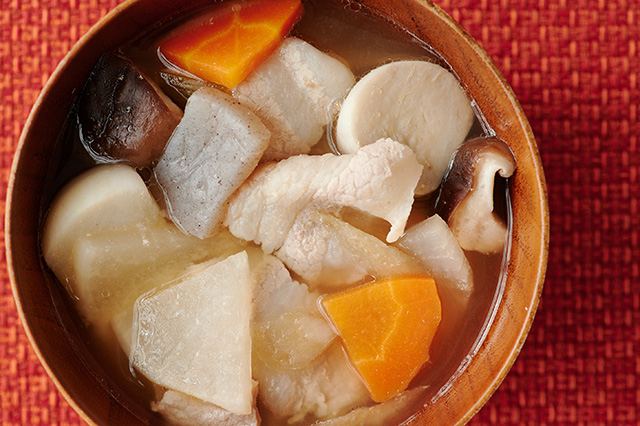
"Cooked" is a dish used with root vegetables, such as radish, carrots, and so forth. What's different from the traditional pig juice is that it uses the chicken, not the potatoes. However, since there is no strict rule on the root vegetables used, they are easily eaten by families all over the state. The unique name comes from such things as "If you do it, put in your tools." "When you do it, cut off the equipment." It is also said that a lot of tools were used that farmers began to process large quantities of vegetables. "In the case of "Akira Akira, who represented the province, was released in 1894 by Akira, Akira. The tadpoles used in the "cook" tools are identified as one of the brandy vegetables promoted by Kanazawa City. The history of cultivation at Kanazawa City is old, and it is estimated that during the end of the era, it was the seeds potato and the way they were grown. In the year 1877, land production became a reality, and more than 100 tons of early digging was shipped to the Kyoto, root, Osaka, Kobe, and so on. Since the introduction of the Sequoia Seymour Reservation Act (a mass preservation under the high heat and humidity) in the year 1952, it has become the main energy vegetable in the sandhills of northern Kanazawa.
When It Is Eaten
They use the vegetables in season and are eaten the year after year. Since it's easy to cook, I often go to the family table. Every family has different flavors, such as citrus, sesame oil and so on.
How It Is Eaten
We eat pork and all kinds of vegetables, boil them in soup, and cook them when they are soft. The radish and carrots are cut, cut in half, cut in half, and so on. If you work on a vegetable to cut them, you can enjoy the flavor and flavor changes. There are times when the potatoes come in too often.
Recipe — Serves 4
Ingredients
- 80 g pork
- 50 g daikon radish
- 30 g carrot
- 1/4 burdock root
- 1/4 konnyaku
- 2 taro
- 2 shiitake mushrooms
- 1/4 green onion
- 4 cups dashi stock
- 35 g miso
Method
- The pork is cut to size easily eaten.
- Large root, carrots, and so on, lily potatoes are cut into pieces, or half-months, and they are cut into water.
- I'll cut it with a board and boil it to the right.
- It's made into a pot, boiled in the soup, mixed in with a layer of ingredients, mixed in with a pot, and cooked until the vegetables are tender.
- I'll pick up the taste and then pour it into the bowl.
More About Tonjiru
Tonjiru or butajiru (豚汁; "pork soup") is a Japanese soup made with pork and vegetables, flavoured with miso. It is a more substantial version of miso soup, with a larger quantity and variety of ingredients.
Common ingredients
Tonjiru is usually made by stewing thinly sliced pieces of pork, alongside vegetables, in dashi stock, and flavoured by dissolving miso.
Common additional ingredients include burdock root, konjac, seaweed, spring onions, daikon radish, carrot, tofu including fried tofu (aburaage), tubers such as potatoes, taro or sweet potato, and mushrooms such as shiitake and shimeji.
On rare occasions, mildly degreased (not crispy) bacon can be used in place of pork. Instant butajiru is also available.
Name
The Japanese kanji character for pig (豚) can be pronounced either as ton (the on'yomi way), or as buta (the kun'yomi way), resulting in two ways to say the name of the dish (豚汁), tonjiru and butajiru. While tonjiru is much more common and used by most people in Japan at around 70%, butajiru is dominant in Hokkaido and Kyushu, along with a majority in the Toyama and Mie prefectures, with a small minority in most of the remaining prefectures of Western Japan.
A version of the dish, containing sweet potatoes, as served to skiers in the ski resorts of Niigata Prefecture up until about 1960, is known as sukii-jiru ("skiing-soup").
Text adapted from the English Wikipedia article Tonjiru by its contributors, licensed CC BY-SA 4.0.
Dish data: Ministry of Agriculture, Forestry and Fisheries (MAFF), “Uchi no Kyodo Ryori” (Our Regional Cuisines) database, used under the Public Data License (PDL1.0); translated and adapted from the Japanese original.