Misonikomiudon 味噌煮込みうどん
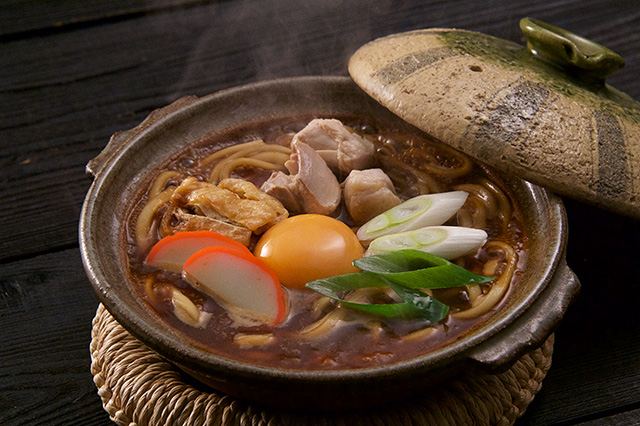
| Prefecture | Aichi (愛知県) |
|---|---|
| Region | Chubu |
| Japanese name | 味噌煮込みうどん(みそにこみうどん) |
| Reading | Misonikomiudon |
| Home area | All within the province. |
| Main ingredients | I'm going to have to take you to the kitchen. |
History and Origins
"The Yusaki" is one of the typical noodles food of Aichi Prefecture. I'll put a strong rice rice in the rice sauce. I'll cook it. "Knocked rice" was a family dish, but it was offered at a restaurant in Amemiya during the Meiji period. It is said that after that, food was often eaten in areas centered around Nagoya City. It is the taste and flavor of the Japanese Japanese delicious dish, which represents Aichi Prefecture. It takes almost all the beans from the raw product, and it produces zygote and ripens for a long time. Also, Japanese Japanese Japanese Japanese taste is more nutritious than other Japanese taste buds, and in three rivers there was a strong root culture of red with its health benefits. So there are many native dishes in Aichi Prefecture, and "sour soup" is one of their typical dishes. Just like a "basin," so it's made of flour and water alone, and doesn't use salt. This is because you don't use salt, so it will not be soft in the soup, and it will remain solid.
When It Is Eaten
Cold winters are eaten, not to mention throughout the year.
How It Is Eaten
In the home, we often use soy sauce. While materials vary from home to store, the general way to eat them is to pack eggs before they are ready to boil and boil them last. After you've finished eating udon, you might add some rice and make it an uncle. It's also a big feature of making "sakin rice" in a pot. It's very warm, so it's not surprising that you can eat it in a hot state forever, of course, but at the beginning and end, you'll enjoy changing the flavor of your noodles.
Recipe — Serves 2
Ingredients
- 2 heads boiled udon noodles
- 500 ml dashi stock
- Mix: 3 tbsp red miso
- Mix: 1 tsp sugar
- 1 aburaage (fried tofu pouch)
- 60 g chicken thigh
- 2 egg
- 40 g kamaboko (fish cake) (赤)
- 20 g green onion
Method
- The meat will be cut small, the oil will be boiled quickly, oil will be cut, and cut short.
- The chick will cut the half-moon thin cut and the comb will be cut in half.
- It's a pot of earth, and it's made to boil in the fire.
- I'll boil with a blend of A and 1.
- When it's done, add some rice and cook it for about five minutes.
- I'll put an egg in, cover it, and boil it.
More About Misonikomiudon
Japanese noodles cooked in citrus soup. They are often boiled in a pot of earth, and are of the kind that boils with rice. Red peppers are often used, and there are mainly tools for onions, onions, chicken, chicken, chicken and so on.
Overview
The citrus citrus bowl is found in many parts of Japan, including Aichi Prefecture, which is a typical local food for the region. Most of them use local flavors, but because of the Aichi Prefecture in the soy sauce, other local flavors are offered in the name of the country's boiled rice or the country flavored rice. Also, as a broth of citrus juice, there is the same Aichi Prefecture stew and zXQQ088X, which are clearly distinguished from the fermented soup.
Aichi Prefecture
Overview
In the Tokyo area, centered on Nagoya City, it is characterized by the use of mainly manufactured and consumed red peppers. Although it has been claimed since 2005 that it was part of the Chrysanthemum of Nagoya, it is already naturally popular nationally as a souvenir, and is generally referred to as "smelling" only when it comes to the taste of this bean sauce. And if you simply say "saki" in this area, it means "saki" in this area.
Origins
The theory of the Japanese Wartime and the Japanese Kotataru's diet, which was passed on to Tokugawa by a member of the Shida family after the destruction of the Tokugawa family, and the theories of women who worked in the textile industry around the city of Aichi Prefecture, which was used to cover the area of the city, were based on the theory that the vegetables were boiled with bean juice and were cooked with bean juice.
Soy sauce.
It's hard to taste when it is boiled, compared to the wheat or rice sauce that comes out in other areas. There are many dishes that are based on taste-based dishes in this area. One of them is the citrus rice. In other places, the citrus citrus, made from rice, is usually made from the white rice, and it is usually only in this area that the beans are used, such as the strong red citrus. However, even in bean-souring, it is usually the practice to be offered a small amount of white pepper blended and flavored. There are also stores in Tokyo that provide a portion of the seasoning sauce.
It is said to be rich in flavors, and it is characterized by the strong juice of the flavor, in order to make sure that the juice from the sierra is strong.
Noodle
Unlike regular noodles, the rice-soured noodles do not use salt with flour and water alone. If you don't put salt in the noodles, it's to prevent the salt from boiling into the juice of the sauce and getting too bitter. There are shops that offer noodles in a variety of ways, but there are those that make them boil into a hardness that is different from the common noodles.
Sometimes they use candy on the noodles or they offer it with hand-to-hand so as to hold on to the flavor.
If you enter a restaurant in Nagoya, most stores have a menu lined with rice and some stores have soft noodles.
Materials
For the tools used, such as chicken, moon watchers, onions, sea cucumbers and pumpkins are common tools. It depends on the shop, but eggs are often placed in the center of the pot. Eggs can cost extra money. Sometimes I put a bowl or a piece of rice or a piece of rice or a piece of rice or a piece of rice or something. In stores, the menus are made of rice, bowls, cucumbers, and so on. There are shops that use gobows, chicken cheeses with Nagoya coach, tofu with tofu and so on.
Powder
I often use peppers and peppers as a spice. In some stores, I have either or both.
Dinner.
It's not unusual to eat with food. Sometimes they feed on the leftover juice or they cook with rice.
"There's no rice"! It's depicted in a scene shouting to the clerk.
A clay pot.
I'll boil the rice in a small pot for myself, and I'll put the hot pot on the table. Just like the rice bowl and the rice bowl, without making rice or soup separately, the boiled soup is eaten in the same state.
The lid of the pot is not used while it is boiling, but it may be used for the purpose of retaining heat until the meal begins before it is served or served at the end of the soup or at the table. Also, there are some of these lids that have no air holes. In this case, when the meal starts, we will use this lid as a dish to lick and cool it. The absence of air holes is to prevent the juice from leaking out of the hole. It's also because of the efficiency of not setting up a plate.
Other
There are also instant foods sold in this area, such as bag-nuts and cup-nuts.
A chain store.
The chain of yuzu citrus is in operation, and the two stores of Yamamoto and Yamamoto's general family are in operation, so they are sometimes described as male. The chain began to expand before the Yamamotomoto book shop, and the general writer in Yamamotomoto went after him.
Main Office List
The main company: Aichi PrefectureXZZQQ02XZ02X, Yamamoto, Yamamotomoto, Yamamoto, Yamamoto, Yamamoto, Yamamoto, Yamamoto, Yamamoto, Yamamoto, ZX096XXXXZZQ022X, Group Book Office, ZZQZZZZZZZZQ2X2X, Central 2X.
It's called "The Mountain Bookmaker."
In addition to the two-sided Yamamotomoto book store, the whole bookmaker and Yamamotomoto, there are independent stores that crown Yamamoto shop. Nagoya City000) explains the tread as follows.
In the second proof period, there was a shop named "The Mountain Book" in the main building. We can see it on the map of 1992. The island of Kishi-un and his wife, who took over the Yamamoto book. Without leaving a trail, Masako and her husband, Mida Snowki, who worked at the store, took over the shop and made the bookstore grow into "The General Master of Yamamoto." The Muratas had four children, and each of them had four children, who took over the headquarters of Yamamotomoto. I'm going to start with you and I'll start with you and I'll count you and your husband in second grade.
According to a summary of the company's general bookkeeping company, the company's joint company, Yamamotomoto, describes the birth of the industry's creation in the year 14 of the year. After a break during World War II, he resumed his business after the war, and a gift bookstore was established for 29 years. (The general business of the member of the Yamamoto-Schiki family, the Yakuza-Schiki-Sai, was founded in 1944 as the "Food Company of Yamamoto-Sai," and the executive director of the Koda family, the member of the member of the membership of the Japan Company's Japan Bookmaker's Complete Book of Bookkeeping, which was replaced in the year 50).
He then set up a department store with a "Handazu" shop, and set up a shop in the mountains, in Tokio, and a large hands shop in Tokushima. (It's the first and second and third generations of Mishimas, and the third and third generations of them.) The person who will be the best of the grandchildren is opening the door.
This is the year of the shop that Iseshima Hotel bought the store's license. In 1952, Ichiichiro, a dry-sized town who was distributing chandeliers to the main bookstore, opened a shop in Tadashi Street in direct root and, in the year of his opening work, he went out with permission from Mr. Iseshima for the Department of Yamamoto. The company's founder was in the 35th year of Showa.
Text adapted and translated from the Japanese Wikipedia article 味噌煮込みうどん by its contributors, licensed CC BY-SA 4.0.
Dish data: Ministry of Agriculture, Forestry and Fisheries (MAFF), “Uchi no Kyodo Ryori” (Our Regional Cuisines) database, used under the Public Data License (PDL1.0); translated and adapted from the Japanese original.